
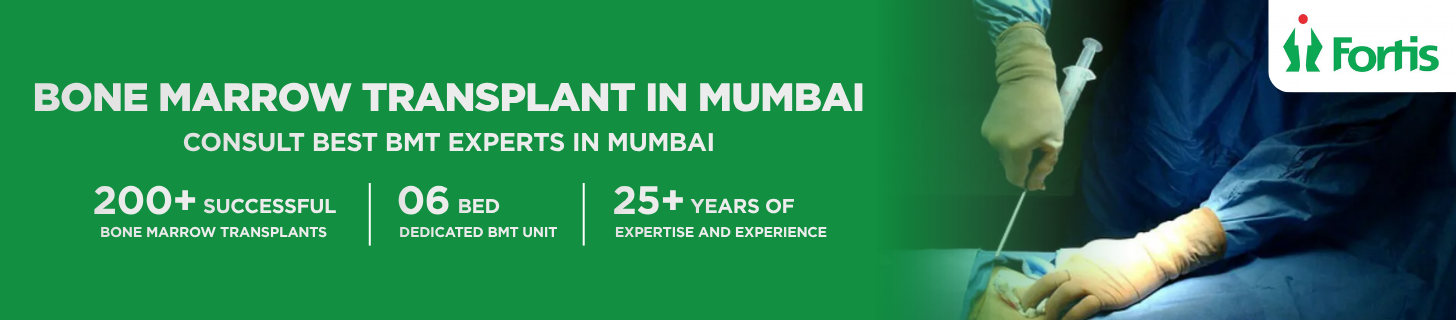
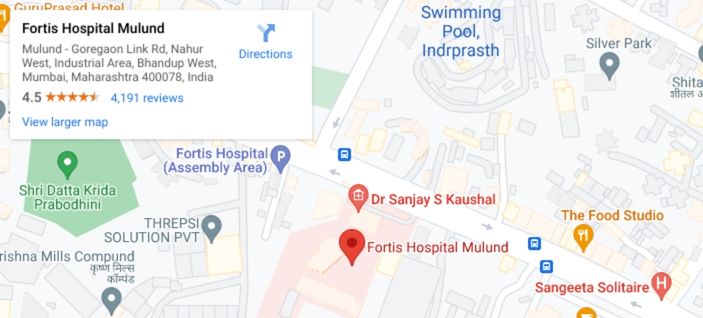
Fortis Hospital, Mulund, Mumbai



Best Bone Marrow Transplant Treatment in India
Fortis Hospitals Mumbai, Bone Marrow Department provides comprehensive care for patients of all age-groups requiring bone marrow transplantation to treat a variety of blood disorders including cancers. Our transplant team comprises of experts with extensive experience in performing modern transplantation techniques for adults and children, such as autologous transplant (with patient’s own cells), allogeneic transplant (with donor cells) and/or cord blood transplant (with umbilical cord cells). Centre’s state-of-the-art bone marrow transplant facility utilises a collaborative approach, working across departments like hematology, infectious diseases, oncology and pediatrics, to provide customised care to patients based on the clinical condition, for example, a bone marrow transplant can also be performed as an outpatient procedure at the hospital.
The 6-bedded unit, is the largest such unit in the eastern suburbs of the city. The infrastructure in this wing has been planned and executed, keeping the patient at the centre of care. The design is of international standards incorporating world-class, robust infection control practices.
Our Bone Marrow Transplant Team

Why Choose Us
-
 25+ Years of Expertise and Experience
-
 Dedicated 6-bedded unit
-
 Cutting-Edge Techniques, Technologies and Facilities
-
 Expert Team of Bone Marrow Transplant
Get Treatment for
-
Blood Cancers (Leukemia, Lymphoma, Multiple Myeloma)

-
Aplastic Anemia & Bone Marrow Failure

-
Genetic Disorders and Immunodeficiency Diseases

Our Team of Experts
-
 Dr. Subhaprakash SanyalDirector Hemato-oncology & BMTHaematology
-
 Dr. Hamza DalalConsultant HaematologyHaematology
Our patient’s stories
FAQs
-
What is a bone marrow transplant (BMT) ?A Bone Marrow Transplant, also known as a Hematopoietic Stem Cell Transplant (HSCT), is a medical procedure that involves replacing damaged or diseased bone marrow with healthy stem cells. These stem cells can come from the patient themselves (autologous transplant) or a compatible donor (allogeneic transplant).
-
What is the purpose of a Bone Marrow Transplant ?The primary goal of a Bone Marrow Transplant is to treat various conditions like certain types of cancer (leukemia, lymphoma, multiple myeloma), severe aplastic anemia, and genetic disorders that affect the production of blood cells.
-
How does a bone marrow transplant work?The procedure involves three main stages: a. Conditioning: High-dose chemotherapy, radiation, or a combination of both is administered to destroy the diseased marrow and suppress the immune system to prevent rejection. b. Transplantation: Healthy stem cells are infused into the patient's bloodstream, where they migrate to the bone marrow and start producing new blood cells. c. Engraftment: It is the phase where the transplanted stem cells begin to grow and produce healthy blood cells.
-
What types of bone marrow transplants are there?There are three main types of Bone Marrow Transplants: a. Autologous Transplant: The patient receives their previously collected and stored stem cells. b. Allogeneic Transplant: Stem cells come from a healthy donor whose tissue type closely matches the patient's. c. Syngeneic Transplant: The stem cells come from an identical twin of the patient.
-
How is a donor matched for an allogeneic transplant?Human leukocyte antigen (HLA) testing is performed to determine the compatibility between the patient and potential donors. The more closely the HLA markers match, the better the chance of a successful transplant.
-
What factors determine the cost of a bone marrow transplant in India?The cost of a bone marrow transplant in India varies depending on factors such as the type of transplant, the hospital where the procedure is performed, and the patient's medical condition. Additional expenses may include pre- and post-operative care, medications, diagnostic tests, and hospital stay.
-
What is the success rate of bone marrow transplants in India?The success rate of bone marrow transplants in India varies depending on several factors, including the type of transplant, the patient's medical condition, and the expertise of the medical team. Generally, matched sibling donor transplants have a success rate of around 90%.