Get the right diagnosis & care, at the right time
Our doctor look beyond just symptoms - to arrive at the care you truly need.





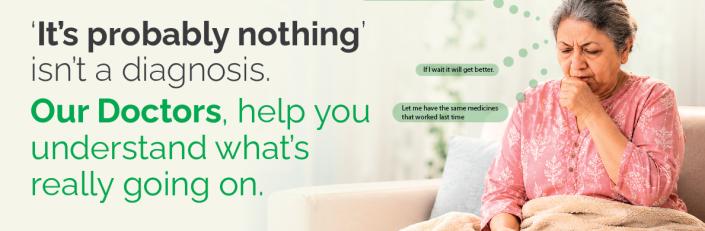
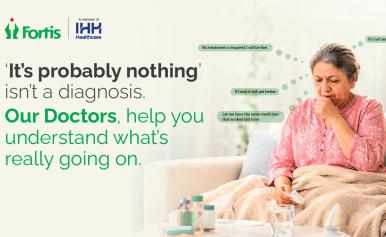
It starts innocently enough. A cough that has lasted a little too long, a recurring headache, unusual fatigue, acidity that keeps coming back or a pain you haven’t felt before. You mention it at home and someone says, “Take this. It worked for me.” You speak to a friend and hear, “I had the same thing. Don’t worry.” Your neighbour has a home remedy. Your local chemist suggests a tablet. Soon, everyone has an opinion about what you should do.
And because the advice comes from people you know and trust, it feels reassuring. But their experience is not your diagnosis.
The same symptom can mean very different things for different people. Your age, medical history, medications, allergies, lifestyle and overall health can all change what the right next step should be. What worked for your parent may not be right for you. What helped your friend may not address what’s actually causing your symptoms. And while a local chemist can help you with medicines, they may not have the complete picture of your health needed to determine whether you actually need one.
That’s why health advice shouldn’t be based on who has experienced something similar. It should be based on understanding what’s happening to you.
Unfortunately, that's not the end of this problem. Today, we have become used to searching for symptoms online and self-medicating that its actually leading to the existing health issues further escalating.
A doctor doesn't just look at the symptom you came in with. They ask the questions that put it into context: when did it start, what makes it better or worse, have you experienced something similar before, and what else has changed? These questions aren't simply about collecting more information. They help build a picture of your health story.
That's important because the same symptom can mean very different things for different people. Two people with the same cough may need completely different care. One may need treatment for a bacterial infection, while another may simply need rest and fluids. Your age, medical history, medications, lifestyle and overall health can all change what the right next step looks like.
AI can identify possibilities. A doctor uses clinical judgement to understand which possibility matters to you.
SELF-DIAGNOSIS CAN TAKE YOU IN THE WRONG DIRECTION.
Sometimes, searching for your symptoms makes you fear the worst. Sometimes, it gives you exactly the reassurance you were looking for. Both can be misleading.
Fear of a serious diagnosis can make you avoid a consultation altogether. You may worry about being over-diagnosed, undergoing unnecessary tests or hearing something you don't want to hear. So you wait. You tell yourself it will go away, that you'll see a doctor if it gets worse, or that it's probably nothing.
But avoiding a consultation doesn't make a symptom less important. It can delay treatment for something that is treatable or allow a serious condition to go unnoticed while it progresses. The longer you wait for an answer, the longer you may be waiting to act on it.
BECAUSE A DOCTOR SEES MORE THAN A SEARCH RESULT.
A doctor can notice what an algorithm can't: the way you look or sound, the way you move, a physical sign you may not realise is significant, or a change from your previous visit. They bring these observations together with your medical history, examination and test results to make informed decisions.
Should you investigate further? Is treatment needed now? Can you monitor it for the moment? Is there something that needs urgent attention? These decisions require more than information. They require clinical expertise, experience and judgement.
AND THE CARE DOESN’T END WITH A DIAGNOSIS.
A search result gives you information on a screen. A doctor gives you someone to turn to. Someone who can explain what is happening, answer your questions, monitor how you're doing and adjust your care as your health changes. That continuity matters because good healthcare isn't just about treating what's happening today. It's also about managing existing conditions, identifying risks early, recommending appropriate preventive screenings and helping you make choices that can protect your health in the future.
That's the difference between getting information and receiving care.
DON’T GUESS YOUR WAY THROUGH YOUR HEALTH.
When something feels different, don't rely on a search result to tell you what it means. Consult an expert, get the right questions answered and understand what's right for you.
SO, WHAT'S THE REAL SOLUTION TO ANY HEALTH CONCERN?
Only doctors can provide personalised, evidence-based care. A doctor doesn’t simply hear your symptom and suggest a medicine. They ask when it started, what makes it better or worse, whether you’ve experienced something similar before and what else may have changed. They bring those answers together with your medical history, examination and, when needed, test results to understand what matters and what needs to happen next.
Because feeling better isn’t always the same as getting better. And waiting for a symptom to become worse before seeking medical advice can delay attention for something that may need to be addressed.
This is where we at Fortis Healthcare believe a consultation should begin—not with an assumption, but with understanding. Our doctors look beyond the symptom to understand the individual behind it, bringing together clinical expertise, medical history, examination and, when required, the right investigations to help determine what needs attention and what doesn’t. Because good healthcare isn’t simply about treating what is happening today; it is about making informed decisions about your health and helping you understand what comes next.
So the next time someone says, “I had the same thing,” or your local chemist says, “Take this, it will be fine,” remember: they may mean well, but your health deserves more than a familiar answer.
You deserve someone who will listen to your symptoms, understand your story and use clinical judgement to guide you towards what is right for you.
Don’t ask everyone about your health. Ask the right person.
Consult First.

























67-year-old patient undergoes successful removal of artificial denture from stomach at Fortis Vasant Kunj
~The entire procedure took 15 minutes to remove the denture from

A Tale of Resilience: 97-Year-Old Woman Undergoes Total Knee Replacement, Defying Age and Adversity

North India’s 1st Tennis-Ball-Sized Rare Facial Tumour Removed from 39 Years-Old Kenyan Female at Fortis Vasant Kunj

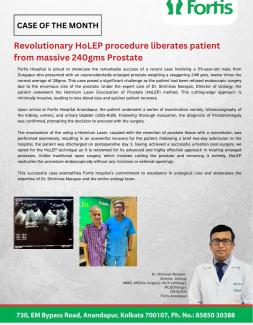
Revolutionary HoLEP procedure liberates patient from massive 240gms Prostate