
Deep Brain Stimulation (DBS) is a cutting-edge neurosurgical treatment that helps manage certain movement disorders when medications are not working well enough or consistently enough to manage symptoms. The procedure includes placing thin electrodes in targeted areas of the brain and connecting them to a neurostimulator that sends programmed electrical pulses to regulate abnormal brain activity. At Fortis Hospital, Mulund, Mumbai, Dr. Gurneet Singh Sawhney, Director – Stereotactic & Functional Neurosciences and Senior Consultant – Neurosurgery & Spinal Surgery provides specialized evaluation and DBS treatment with focus on careful patient selection, precise surgical planning, programming and long-term follow-up.
DBS does not cure Parkinson’s disease or halt its progression. The primary goal is to help manage relevant symptoms and improve day-to-day functioning.
Why Choose Us
-
 25+ Years of Experience
-
 Patient-Centered Approach
-
 24/7 Emergency Care
-
 Cutting-Edge Techniques, Technologies and Facilities
-
 Expert Neurosurgeons & Neurologists
Conditions Treated by Deep Brain Stimulation
- Treatment
- Benefits
-
Parkinson’s Disease
May help to manage tremor, rigidity, slowness of movement, dyskinesia and troublesome motor fluctuations or “OFF” periods.
-
Essential Tremor
May help reduce severe or disabling tremors that are not adequately controlled with medications.
-
Dystonia
May aid in reducing involuntary muscle contractions, abnormal movements and postures in selected patients.
-
Obsessive-Compulsive Disorder (OCD)
May be considered in highly selected cases of severe, chronic and treatment resistant OCD.
-
Epilepsy
Some patients with drug-resistant epilepsy may be considered for this when drugs and other treatments have not provided sufficient seizure control.
-
Depression
DBS offers hope for those with treatment-resistant depression by improving emotional regulation.
-
Tourette Syndrome
May be considered in selected severe cases to help decrease disabling motor and vocal tics.
-
Alzheimer’s Disease
Early evidence suggests DBS may enhance memory and cognitive function by stimulating brain areas affected by Alzheimer’s.
-
Cluster Headaches
DBS targets hypothalamic regions to reduce the occurrence and pain of cluster headaches, offering relief to sufferers.
-
Traumatic Brain Injury
DBS may aid in recovering cognitive and motor functions in patients with persistent impairments from brain injuries.
-

Better control of tremor, rigidity and slowness of movement
-

Reduction in motor fluctuations and “OFF” periods
-

Reduction in dyskinesia and involuntary movements
-

Improved mobility and ability to carry out everyday activities
-

More consistent symptom control throughout the day
-

Potential reduction in certain medications under specialist supervision
-

Adjustable and programmable stimulation according to individual symptoms
-

Treatment settings that can be modified as the patient’s condition changes
-

Improved independence and overall quality of life in suitable patients
Our Team of Experts
-
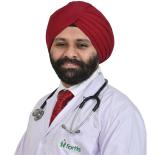 Dr. Gurneetsingh SawhneyConsultant Neuro SurgeryNeurosurgery
FAQs
-
Why Choose Fortis Hospital, Mulund ?At the Fortis Hospital, Mulund, we offer world-class deep brain stimulation surgery for people with movement disorders. Our multidisciplinary team includes the expertise of world-renowned neurologists, neurosurgeons, neuropsychologists, psychiatrists, clinical psychologists, specially trained nurses, and other specialists. Our doctors may use deep brain stimulation to treat people who have Parkinson’s disease, dystonia, OCD, essential tremor, epilepsy, and other chronic conditions that do not respond to medications and other therapies. Our specialists have deep expertise in making sure only the right patients get deep brain stimulation. Our specialists ensure that the treatment plan you receive at our DBS Center carefully balances the risk of surgical procedures in your specific situation, thereby preventing undergoing unnecessary treatment.
-
What conditions does the Deep Brain Stimulation Center at Fortis Hospital, Mumbai treat?The Deep Brain Stimulation Center at Fortis Hospital, Mulund treats a range of movement disorder conditions, including Parkinson's disease, epilepsy, dystonia, essential tremor, obsessive-compulsive disorder (OCD), Huntington's disease, Tourette syndrome (TS), and chronic conditions.
-
Is DBS a cure for Parkinson’s disease ?No, DBS is not a cure for PD. It is a treatment that helps relieve the motor symptoms of PD, as well as some of the non-motor symptoms. It is called a symptomatic therapy; it does not change disease progression.
-
What is DBS ?Deep brain stimulation (DBS) is a neurosurgical procedure involving the placement of a medical device called a neurostimulator, which sends electrical impulses, through implanted electrodes, to specific targets in the brain (the brain nucleus) for the treatment of movement disorders, including Parkinson's disease, essential tremor, dystonia
-
How DBS works?The connections in the brain circuits are similar to the electrical wiring in your house or car. If one circuit malfunctions, it can disrupt the entire system. Research has shown that in PD there are faulty signals in several brain circuits. These faulty or disruptive signals seem to underpin many of the symptoms of PD (e.g., slowed movement, tremor, and stiffness). When electricity is introduced into the circuit it “disrupts the disruption,” restoring order and improving disabling symptoms. The electric current is thought to inhibit cell firing, excite the axons (the pipes), and release calcium from brain cells called astrocytes. Calcium seems to trigger a series of reactions that leads to the release of chemicals called neurotransmitters and the stimulation of blood flow
-
What symptoms does DBS help ?DBS can help improve the motor symptoms of PD. Typically, these are: Tremor. Complete or partial tremor suppression Rigidity, or stiffness Bradykinesia, or slowness of movement
-
Who is a right candidate for DBS ?It is recommended for people who have PD with motor fluctuations and tremor inadequately controlled by medication, or to those who are intolerant to medication, as long as they do not have severe neuropsychiatric problems. Selection of the correct DBS target is a complicated process. Multiple clinical characteristics are used to select the target including – identifying the most troublesome symptoms, the dose of levodopa that the patient is currently taking, the effects and side-effects of current medications and concurrent problems.
-
What are the risks and complications of DBS?The major complications include hemorrhage (1–2%) and infection (3–5%). The potential exists for neuropsychiatric side effects after DBS, including apathy, hallucinations, hypersexuality, cognitive dysfunction, depression, and euphoria