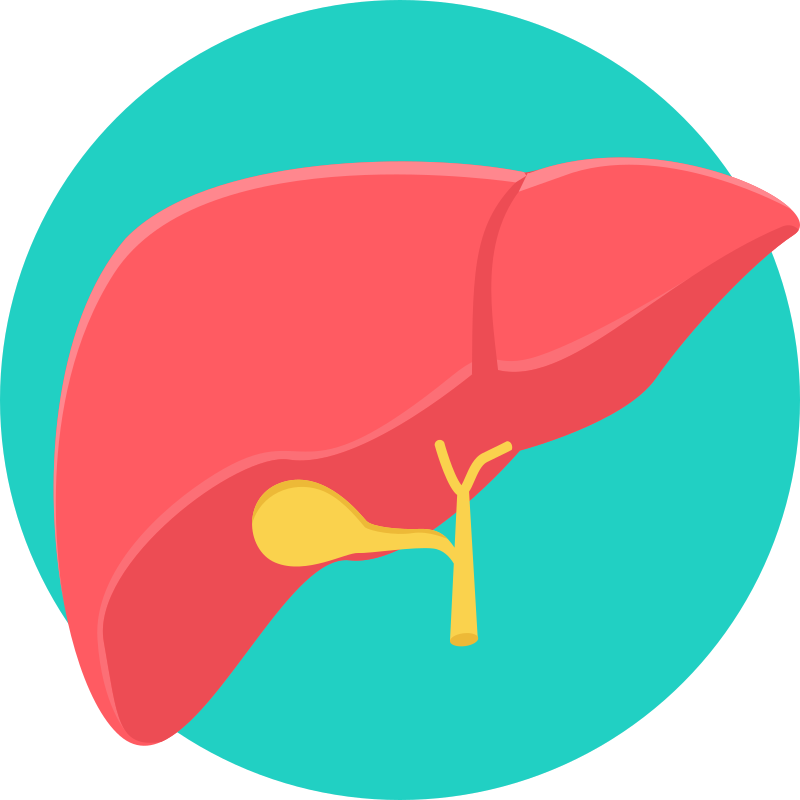
The wondrous liver is adept at flushing out poisonous substances from the body. But, it cannot handle fat deposits. This is why when your diet is laden with fat and this unhealthy dietary habit accumulates abnormal amounts of fat over the years, it leads to non-alcoholic fatty liver disease. This disease is usually a metabolic disorder leading to obesity and diabetes. All that this disease requires is a little handholding by the liver specialists at Fortis Centre for Hepatobiliary Sciences and Liver Transplant who will put you on a healthy diet and exercise regimen for weight loss. Only in extremely morbid cases where losing weight is difficult, bariatric surgery for weight loss is recommended and conducted under the expert eye of the bariatric surgeons.
Fatty liver disease
Treatment
Alcohol has adverse effects on the liver. It can singularly scar the liver and cause irreparable damage, endangering your life. With extreme alcohol abuse, the liver can develop cirrhosis, often not reversible. According to the team of expert hepatologists at Fortis Centre of Hepatobiliary Sciences and Liver Transplant, a person who has alcohol-related cirrhosis and doesn’t stop consuming alcohol has a less than 50 percent chance of surviving for five more years.
In most cases of cirrhosis, there is an accumulation of fluids in the abdominal cavity causing Ascites. This is a sign that the liver is failing. A person developing ascites has a very low survival chance and the only option to resort to save the patient is a liver transplant.
Liver disease covers an array of diseases that can vary in severity. From mild injuries to severe liver cirrhosis, there are several conditions which need immediate medical attention. As a matter of fact, untreated liver injuries prove to be a gateway towards cirrhosis or liver scarring – also termed as end-stage liver disease. Here are some causes of liver cirrhosis
Hepatitis (A, B, C, and others) which may affect the functioning of liver cells.
Wilson’s disease – also termed as a disorder of copper metabolism.
A genetic defect with a missing enzyme that may result in liver disease – often referred to as Alpha-one anti-trypsin deficiency.
An inherited metabolic disorder known as Glycogen storage disease (type I, III, IV)
A disorder of tyrosine metabolism referred to as Tyrosinemia