MRI provides high-quality soft-tissue imaging during radiation treatment.

MR-LINAC at Fortis Hospital, Gurugram: Advancing Precision Cancer Care
MR-LINAC at Fortis Hospital, Gurugram: Advancing Precision Cancer Care
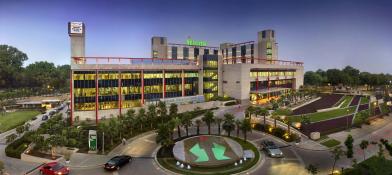
Fortis Hospital, Gurugram has introduced the Elekta Unity MR-Linac, an advanced technology that combines high-field Magnetic Resonance Imaging (MRI) with radiation therapy. Introduced in September 2024, it was the first MR-Linac in North India and the second in India, representing an important advancement in image-guided radiation therapy.
What is MR-LINAC?
MR-Linac is a hybrid radiation therapy system that integrates a 1.5 Tesla MRI scanner with a high-energy linear accelerator. Unlike conventional radiation therapy systems that primarily rely on CT-based imaging for treatment guidance, MR-Linac enables clinicians to visualise tumours and surrounding soft tissues with the enhanced contrast provided by MRI.
This capability is particularly valuable when tumours are located near critical organs or in parts of the body where the tumour may change position or shape during treatment.
Real-Time Tumour Visualisation
One of the key advantages of MR-Linac technology is the ability to obtain MRI images during the treatment process. This allows the radiation oncology team to monitor the tumour and nearby organs while radiation is being delivered.
Tumours can move because of breathing, digestion or changes in the body's internal anatomy. MR-Linac technology can help the clinical team account for these changes and make appropriate treatment adaptations based on the latest imaging information.
Personalised Radiation Therapy
MR-Linac supports a more adaptive approach to radiation treatment. At Fortis Hospital, Gurugram, each treatment session can begin with a fresh MRI scan. The latest images can then be used to assess the tumour's current position and anatomy before treatment delivery.
This approach can help clinicians plan radiation more precisely and reduce uncertainty associated with changes in tumour position or surrounding organs. Treatment decisions are individualised according to the patient's cancer type, anatomy and clinical requirements.
Cancers That May Benefit
Fortis Healthcare lists several tumour types for which MR-guided radiation therapy may be considered, including prostate, liver, pancreatic, rectal, breast, lung, and head and neck cancers. The technology can be particularly useful for selected tumours that are difficult to clearly visualise with conventional imaging or that may move during treatment.
Advanced Technology, Expert Care
The MR-Linac programme at Fortis Hospital, Gurugram brings together advanced imaging, radiation delivery and specialised clinical expertise. The hospital's Radiation Oncology team includes radiation oncologists, medical physicists and technologists who work together to plan and deliver personalised treatment.
For eligible patients, MR-guided radiation therapy may offer the ability to visualise the tumour more clearly, adapt treatment to anatomical changes and deliver radiation with greater precision. However, whether MR-Linac is appropriate depends on the patient's specific diagnosis and clinical condition and should be determined by the treating oncology team.
Benefits of Gamma Knife


Helps clinicians target the tumour while better identifying nearby healthy organs.

Treatment plans can be adapted based on changes in the tumour and surrounding anatomy.

Helps account for movement caused by breathing and other internal changes.

MRI can distinguish certain tumours and organs more clearly than conventional imaging.