
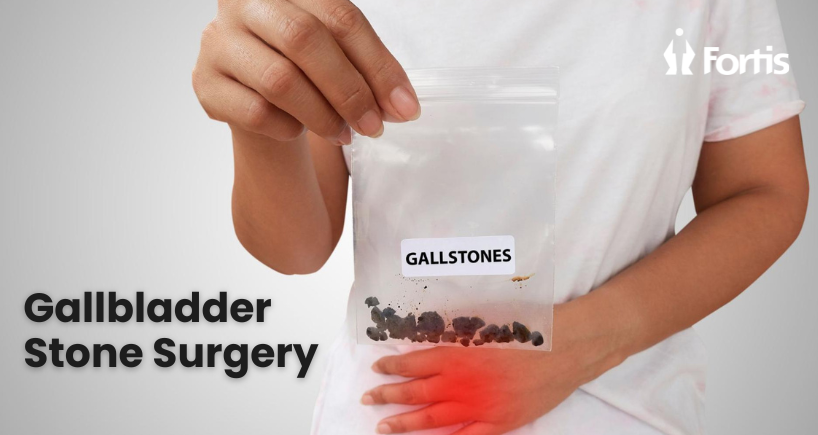


One of the Best Gallbladder Stone Surgery in Navi Mumbai
Gallbladder Stone Surgery at Fortis Hospital, Vashi
Gallbladder stone surgery is one of the most common procedures performed worldwide to treat symptomatic gallstones and prevent further problems. While gallstones are not always painful, they can get lodged in the biliary tract and block your bile flow, causing sudden pain and serious complications. If you’re dealing with severe or recurring gallstone pain and are advised to have gallbladder removal surgery, the gastroenterology specialists at Fortis Hospital, Vashi, are here to provide you with expert surgical treatment that suits your unique needs and preferences. Our experienced surgeons specialize in minimally invasive procedures, such as laparoscopic and robot-assisted techniques, and other advanced options to help you achieve the best possible outcome.
Keep reading as we explain what gallbladder stone surgery is, why and how it’s done, the benefits and risks of having this procedure, as well as why you should choose Fortis Hospital, Vashi, for gallstone treatment.
What is Gallbladder Stone Surgery?
Gallbladder stone surgery is a surgical procedure that involves removing your entire gallbladder (cholecystectomy), a small, pear-shaped organ just beneath the liver, to treat gallstone disease. Your gallbladder stores the digestive fluid (bile) that your liver produces. With gallbladder removal surgery, your liver sends bile directly to your small intestine. Since the gallbladder is not a vital organ, you can continue to live a normal life without it.
Sometimes, surgeons may remove just the stones from the bile ducts when patients are not in a safe condition for gallbladder removal surgery.
Why Do You Need Gallbladder Stone Surgery?
You may be recommended surgery to remove the gallbladder when gallstones block your bile ducts and cause other problems – such as persistent or intensifying abdominal pain, and inflammation or damage to pancreas, liver, or gallbladder – posing significant risks to your health. You may not require immediate treatment unless gallstones cause symptoms.
Gallbladder removal surgery is the most effective treatment for gallstones, which do not go away on their own and can recur with non-surgical treatments. The good news is, you can live well without your gallbladder, although you might experience some temporary issues, like trouble digesting fats and heavier meals, which should gradually improve over time. Left untreated, gallstones can worsen over time and lead to complications, such as cholecystitis (inflammation of the gallbladder), pancreatitis (pancreas inflammation), cholangitis (bile duct inflammation), and, in rare cases, gallbladder cancer.
What Types of Gallbladder Stone Surgery Does Fortis Hospital, Vashi, Offer?
At Fortis Hospital, Vashi, our surgeons typically perform this procedure using minimally invasive methods, such as laparoscopic cholecystectomy, which provides patients with less pain, minimal scarring, shorter hospital stay, and faster recovery time compared to open gallbladder removal surgery.
However, if laparoscopic surgery is not suitable for you, our surgeons may perform open gallbladder removal surgery.
If you can’t have gallbladder removal surgery, our doctors may use other options to break up or remove stones. These include:
- Endoscopic retrograde cholangiopancreatography (ERCP)
- Shock wave lithotripsy
- Medications as a temporary measure (only in rare cases due to their low success rates)
How is Gallbladder Stone Surgery Done at Fortis Hospital, Vashi?
Generally, there are two ways to remove a gallbladder – laparoscopic and open surgery.
At Fortis Hospital, Vashi, our surgeons will advise the best approach for you, based on multiple factors, such as your age, medical history, and other considerations, like whether you’ve had a previous surgery.
Before the Procedure
Before undergoing surgery, our surgeons will review your symptoms and medical history, and order a series of lab tests, including blood tests, ECGs, X-rays, ultrasounds, or CT scans, to ensure this option is the right choice for you.
Following proper evaluation and once deemed fit for this procedure, they’ll provide detailed instructions on how to prepare for your gallbladder surgery. They will also discuss the benefits and risks of the procedure with you, ensuring you’re well-informed and prepared to undergo surgery.
During the Procedure
You’ll be given general anesthesia for either method to put you to sleep, so you’ll not feel any pain while undergoing surgery.
Laparoscopic gallbladder removal (cholecystectomy) or keyhole surgery – it is the gold standard and takes about 60-90 minutes.
During the procedure, your surgeon will:
- Make 3-4 small incisions in your belly to insert the laparoscope with a built-in camera and other surgical instruments. The camera sends images of your inside abdomen to a monitor, enabling surgery to be performed with precision.
- Inflate your abdomen with cardon dioxide gas to expand the space.
- Remove your gallbladder using the scope and other tools through one of the cuts.
- Release the gas and close the incisions.
Open gallbladder removal surgery – this approach may be used if it’s unsafe for you to have laparoscopic surgery.
During surgery, your surgeon will:
- Make a large cut under your right ribs.
- Use standard surgical tools to remove your gallbladder.
- Close the cut with stitches.
An open gallbladder surgery usually takes 1-2 hours or even longer, depending on your specific condition. It requires a longer hospital stay and recovery time compared to a laparoscopic procedure.
After the Procedure
You’ll be taken to a recovery room while you wake up from the anesthesia. You’ll be given medications to manage pain. If you had an open cholecystectomy, you may need to stay a few days recovering in the hospital. Patients who had laparoscopic gallbladder surgery usually go home the next day.
What is the Recovery Time from Gallbladder Stone Surgery?
Recovery time varies, depending on the type of surgery you had and your overall health. You may be able to return to work in 1-2 weeks if you had a laparoscopic cholecystectomy. Open gallbladder removal surgery normally takes 4-6 weeks to recover.
What are the Possible Risks and Complications of Gallbladder Stone Surgery?
As with any surgery, cholecystectomy carries a small risk of complications, including:
- Infection
- Bleeding
- Swelling of the pancreas
- Reaction to anesthesia
- Bile duct injury, causing leakage of bile to abdomen
- Injury to blood vessels
At Fortis Hospital, Vashi, our surgical team adheres to the strictest techniques and protocols, reducing the risk of complications.
Why Choose Fortis Hospital, Vashi, for Gallbladder Stone Surgery?
- Expertise – the gastroenterology and hepatology specialists at Fortis hospital vashi have extensive experience diagnosing and treating all types of digestive conditions, including gallstones. Our surgeons are among the nation’s best, performing high volumes of gallbladder, bile duct, liver, and pancreatic surgeries every year with exceptional outcomes.
- Minimally Invasive Options – our surgeons treat gallstones and other digestive conditions, using a range of minimally invasive techniques to speed up your healing and reduce your risk of post-surgical side effects.
- Innovative Treatments – our specialists use the latest treatment options to treat gallstones when surgery is not possible or necessary.
- Collaborative Care – we have a wide range of world-class specialists who work together for you to provide you with comprehensive and personalized care.
Conclusion
A gallbladder removal surgery can offer relief from pain and prevent gallstones from coming back. It is typically safe, especially with minimally invasive techniques, like laparoscopic cholecystectomy, which offers reduced risk of complications, faster recovery, and better outcomes for patients.
If you or a loved one is struggling with gallstone pain and needs surgical treatment, the gastroenterology specialists at Fortis Hospital, Vashi, can help. Our specialists will craft a personalized treatment plan for you and support you throughout your entire journey.
Categories
Clear allMeet the doctor

- General Surgery | General and Minimal Access Surgery | Robotic Surgery | General and Laparoscopic Surgery | General Surgery | Bariatric Surgery
-
 15 Years
-
 1300
1300
 Available at 1 different locations

Related Blogs
View all
Single Incision Laparoscopic Surgery (SILS) for Hernia Repair

Understanding Gallbladder Stones: Causes, Symptoms, and Treatment Options
Understanding Hernia - Causes, Symptoms, and Treatment Options
Gallstone Complications: When to Seek Medical Attention

Common Myths and Misconceptions About Bariatric Surgery

Understanding Appendicitis: Causes, Symptoms, Risk Factors & Treatment
Understanding Varicose Veins: Causes, Symptoms, Risk Factors & Treatment Options



Keep track of your appointments, get updates & more!

