
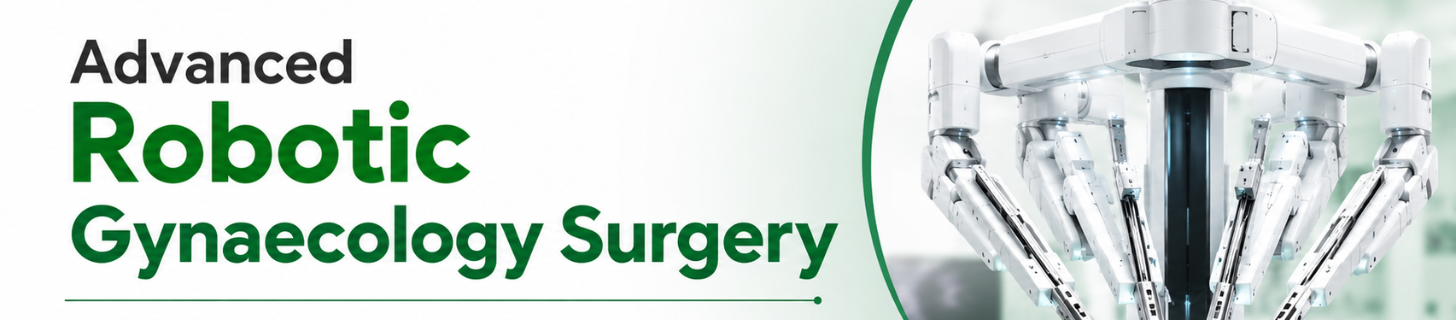
Centre of Excellence: Robotic Gynaecology
Robotic surgery has become the gold standard for complex gynaecological procedures, offering unmatched precision for fertility preservation and pelvic reconstruction. As part of Fortis Healthcare’s legacy of clinical excellence, the robotic gynaecology programme at Fortis Hospital Mohali is led by a director-level team that has pioneered advanced da Vinci procedures in the region since 2017. Backed by Fortis's world-class institutional infrastructure and strict clinical protocols, this is one of the most established women's-health robotic programmes in North India. For women across Mohali, Chandigarh, and Panchkula, this corporate healthcare ecosystem ensures that a minimally invasive choice translates directly into a superior clinical outcome: significantly reduced blood loss, faster recovery, and the uncompromising preservation of fertility and pelvic function.
Conditions & Robotic Procedures
Benign Gynaecological Conditions
We treat the full spectrum of non-cancerous uterine, ovarian, and pelvic conditions robotically, utilizing Fortis’s advanced intraoperative safety standards to remove disease while protecting reproductive organs wherever possible.
- Uterine Fibroids – Robotic Myomectomy: Meticulous removal of fibroids while leaving the uterus intact. The robotic system provides high-definition 3D visualization and Endowrist instruments, allowing Fortis surgeons to precisely map out and shell out the fibroids from deep within the muscular walls. The primary use case is women who wish to retain their fertility, as the robot enables a high-quality, multi-layered suture reconstruction of the uterine wall that maximizes structural integrity for future pregnancies.
- Multiple / Large Fibroids – Robotic Reconstruction Myomectomy: Engineered for cases involving numerous, deeply embedded, or massive fibroids that are typically deemed unsafe for standard laparoscopy. The robotic arms offer the dexterity required to perform complex tissue handling and extensive suturing from difficult angles. This minimizes blood loss and mitigates the risk of converting to an open, large-incision surgery, ensuring a safer recovery for complex cases in the Tricity region.
- Adenomyosis – Robotic Hysterectomy: A definitive treatment for severe, debilitating adenomyosis when childbearing is complete. The robotic approach is highly advantageous here because adenomyosis often causes the uterus to become enlarged, vascular, and adhered to surrounding tissues. The robot's tremor-filtration and precision cutting allow for clean dissection away from the bladder and bowel, significantly reducing the risk of complications compared to conventional methods.
- Uterine Adenomyoma – Robotic Adenomyomectomy: The targeted removal of focal adenomyotic tissue while completely maintaining the healthy surrounding uterine structure. Because adenomyomas do not have clear margins like fibroids do, they require an expert touch to differentiate diseased tissue from normal muscle. The superior magnification of the robotic platform ensures the surgeon removes the maximum amount of diseased tissue while preserving the healthy uterine framework necessary for hormonal and reproductive health.
- Endometriosis (Stage III/IV) – Robotic Excision: Meticulous excision of deep-infiltrating endometriosis lesions rather than simple superficial ablation. Advanced endometriosis often distorts pelvic anatomy, freezing organs together with dense scar tissue. The robotic system allows for ultra-precise micro-dissection, enabling surgeons to carefully peel endometriosis plaques off critical structures like the ovaries, bowel, ureters, and bladder without damaging them, which is vital for long-term pain relief and restoring fertility.
- Ovarian Cysts – Robotic Cystectomy / Oophorectomy: Highly precise cyst removal designed to maximize the retention of healthy, functional ovarian tissue. The robot's micro-forceps allow the surgeon to strip the cyst wall away from the delicate ovary with minimal thermal energy or traction. This prevents damage to the patient's ovarian reserve, ensuring that crucial egg production and natural hormone levels are protected.
- Ovarian Torsion – Robotic Detorsion & Ovarian Preservation: An emergency surgical intervention to untwist a compromised ovary and restore its blood supply. The extreme dexterity of the robotic arms allows for a swift, gentle untwisting of the adnexa without causing further trauma or tearing to the already fragile, congested tissue. This significantly increases the chances of salvaging an ovary that might otherwise be lost to tissue death.
- Ectopic Pregnancy – Robotic Ectopic Surgery: Precise management of a pregnancy implanted outside the uterus, typically in the fallopian tubes. The high-definition visualization allows the surgeon to perform a delicate linear incision on the tube (salpingostomy) to remove the ectopic tissue while preserving the fallopian tube itself, preserving natural conception pathways wherever clinically feasible.
- Pelvic Adhesions – Robotic Adhesiolysis: The careful, layer-by-layer release of dense post-operative or inflammatory scar tissue to restore normal pelvic anatomy. The robot's steady, tremor-free movements are critical when separating organs that have fused together, protecting the thin walls of the intestines and bladder from accidental injury while relieving chronic pelvic pain.
- Tubal Surgery – Robotic Salpingectomy / Salpingo-oophorectomy: Targeted removal of a damaged fallopian tube or ovary when preservation is no longer safe or possible (e.g., severe hydrosalpinx or chronic infection). The robot allows for immediate and definitive sealing of blood vessels with minimal spread of heat to surrounding structures, ensuring the remaining reproductive organs stay perfectly healthy.
Pelvic Organ Prolapse & Pelvic Floor Reconstruction
(One of the Highest Series of Robotic Mesh Surgery in India) Fortis Mohali's pelvic-floor programme is among the highest-volume robotic mesh reconstruction series in the country — a level of experience few centres across the broader Fortis network or North India can match, directly influencing the long-term durability of the repair. Women travelling from across Chandigarh, Panchkula, and Punjab for prolapse correction benefit from this concentrated expertise.
- Pelvic Floor Disorders – Robotic Sacrocolpopexy: The undisputed gold-standard mesh repair for lasting, anatomical support of the pelvic organs. The robotic system excels here because the procedure requires deep, precise suturing near the sacral bone and major blood vessels. The robot gives the surgeon the exact angles needed to securely anchor the mesh, providing a repair that resists recurrent prolapse far better than vaginal surgery.
- Uterine Prolapse – Robotic Sacrohysteropexy / Pectopexy: An advanced, uterus-preserving prolapse correction tailored for women who wish to avoid a hysterectomy due to personal choice or future childbearing plans. The robot allows the surgeon to seamlessly suspend the intact uterus using a specialized lightweight mesh or ligament attachment, restoring normal anatomical positioning while preserving natural anatomy.
- Vaginal Vault Prolapse – Robotic Sacrocolpopexy with Mesh: A durable, long-term repair designed for women who have developed a prolapse of the vaginal top following a previous hysterectomy. The robotic platform enables flawless dissection of the narrow space between the bladder and the vagina, allowing for safe, extensive mesh placement that re-anchors the vault to the sacrum with minimal risk of mesh exposure or erosion.
- Multi-compartment Prolapse – Robotic Comprehensive Pelvic Reconstruction: A highly complex, single-sitting surgical correction for patients experiencing simultaneous prolapse of the bladder (cystocele), uterus, and rectum (rectocele). The multi-quadrant capabilities of the robotic system allow the surgeon to address all affected areas efficiently through the same tiny incisions, completely rebuilding the pelvic floor support network in one comprehensive procedure.
Gynaecologic Cancers (Gynae-Oncology)
Supported by Fortis’s comprehensive oncology board, robotic surgery for gynaecological malignancies combines complete oncologic clearance with faster recovery — allowing patients to begin any further required therapies sooner.
- Uterine Cancer (Endometrial Cancer) – Robotic Hysterectomy with Staging: Complete removal of the cancerous uterus along with precise lymph node staging. The robot’s extreme magnification allows for ultra-clear visualization of the pelvic lymph nodes, facilitating a thorough dissection and mapping process through tiny keyhole incisions, lowering the risk of post-operative lymphedema.
- Cervical Cancer – Robotic Radical Hysterectomy: Extensive, precise radical resection of the cervix, uterus, and surrounding parametrial tissue while preserving the vital pelvic nerves that control bladder and bowel function. The high-definition 3D camera allows the oncologic surgeon to confidently achieve clear margins while sparing microscopic nerve bundles, drastically improving the post-operative quality of life.
- Ovarian Cancer – Robotic Staging & Cytoreduction: Comprehensive surgical staging and targeted tumor debulking for carefully selected, early-stage cases. The robot provides the visualization needed to inspect the entire peritoneal cavity, liver capsule, and diaphragm for microscopic tumor deposits, ensuring highly accurate cancer staging.
- Complex Gynae Cancers – Robotic Debulking Procedures: Designed for advanced or multi-organ pelvic malignancies requiring extensive, meticulous dissection across tissue planes. The robotic platform provides the surgeon with the stability, precision instruments, and visibility required to safely separate tumors from major pelvic blood vessels and adjacent organs, maximizing tumor removal while minimizing surgical trauma.
Fertility-Preserving Robotic Surgery
Robotic surgery is transforming fertility preservation, especially for young women with complex conditions. The enhanced 3D precision allows Fortis surgeons to preserve healthy ovarian tissue and uterine integrity while completely removing disease — outcomes that are extremely difficult to achieve with traditional open surgery. For younger patients across the Tricity and wider North India, this institutional expertise can be the difference between preserving the option of a future pregnancy and losing it.
- Fertility-Sparing Myomectomy: Removal of fibroids while preserving the uterus for future pregnancy, backed by deep, multi-layered muscle suturing.
- Endometriosis Excision with Ovarian Preservation: Complete disease removal without damaging the fragile ovarian reserve or the blood supply to the ovaries.
- Ovarian Cystectomy with Tissue Preservation: Cyst removal that maximizes the retention of healthy, hormone-producing ovarian tissue.
- Ovarian Detorsion in Young Girls: Rapid, precise emergency salvaging of twisted ovaries that might otherwise be lost to ischemia.
- Adenomyomectomy: Removing invasive adenomyosis tissue while maintaining a functional uterine cavity and structure.
- Robotic Trachelectomy: Early-stage cervical cancer treatment that removes the malignant cervix but completely preserves the uterus and fertility options.
Advantages of Robotic Gynaecology at Fortis Mohali
- Superior fertility preservation: Microsurgical precision protects the reproductive organs and ovarian reserve from unnecessary trauma.
- Minimal visible scarring: Small keyhole incisions hidden within natural skin creases ensure an excellent cosmetic result.
- Reduced adhesion formation: Minimal tissue handling and precise bleeding control lower the risk of post-operative scar tissue that can cause secondary infertility.
- Faster return to routine life: Most patients experience minimal discomfort and are able to resume their normal daily activities within 2–3 weeks.
- Enhanced outcomes in prolapse surgery: Our high-volume robotic mesh programme delivers some of the most durable and reliable pelvic floor repair results in India.
- Ovarian function preservation: Particularly critical for young women needing surgery for deep endometriosis, sudden ovarian torsion, or complex benign masses.
The Expertise Behind the Programme
Robotic gynaecology outcomes depend far more on the surgeon than the system. At Fortis Mohali, procedures are performed by a director-led gynaecology team — including Dr. Swapna Misra (Director, Obstetrics & Gynaecology) and Dr. Divya Awasthi (Additional Director) — supported by one of India's premier da Vinci ecosystems with nearly around 4000 robotic surgeries performed by our internationally trained team. It's this combination of massive institutional volume, multi-disciplinary hospital backing, and specialist depth that makes Fortis Mohali a leading choice for robotic women's-health surgery in Mohali, Chandigarh, and North India.
Robotic surgery is suitable for many — but not all — patients. Your Fortis gynaecologist will confirm the right surgical approach for your specific clinical condition during your personal consultation.
Request a Call Back — 72728 72728
fortis mohali
FAQs
Is robotic surgery safe if I want to preserve my fertility?
Yes, robotic surgery is highly recommended for fertility preservation. Procedures like robotic myomectomy (fibroid removal) or endometriosis excision utilize microsurgical precision to minimize trauma to the uterus and protect your ovarian reserve. This approach also significantly lowers the risk of post-operative scar tissue (adhesions) that can negatively affect future fertility
How does a robotic hysterectomy or myomectomy compare to open surgery?
While both achieve the surgical goal, robotic surgery offers a vastly superior patient experience. Instead of a large abdominal incision and a 6-8 week recovery, robotic surgery involves a 1 to 3-day hospital stay, significantly less pain, reduced blood loss, and a return to normal activities within 2 to 3 weeks.
Will I have large visible scars after robotic gynaecology surgery?
No. Robotic procedures utilize tiny incisions, typically ranging from 5 to 12 millimeters. In most gynaecological surgeries, these small incisions are strategically placed in natural body creases (like the bikini line or navel), making them barely visible once they have fully healed.
Is robotic surgery effective for severe endometriosis?
Yes. Endometriosis often involves complex scar tissue deeply intertwined with nerves and pelvic organs. The Da Vinci Xi’s 3D 10x magnification allows the surgeon to clearly distinguish and completely excise (remove) the diseased tissue without damaging healthy surrounding organs or the ovarian reserve
Is robotic gynaecological surgery covered by medical insurance?
Yes, the majority of private and corporate health insurance policies cover robotic gynaecological procedures when deemed medically necessary. We also accept international insurance for medical tourists. Our insurance team will help verify your coverage prior to scheduling the surgery.