
Fortis Institute of Robotic Urology & Uro-Oncology, Mohali | Chandigarh
Urological surgery is decided by millimetres. The nerves that control continence run in a bundle along the surface of the prostate. The blood supply to a kidney can be clamped for only so long before healthy tissue is lost. A ureter is thinner than a drinking straw and unforgiving of a clumsy suture.
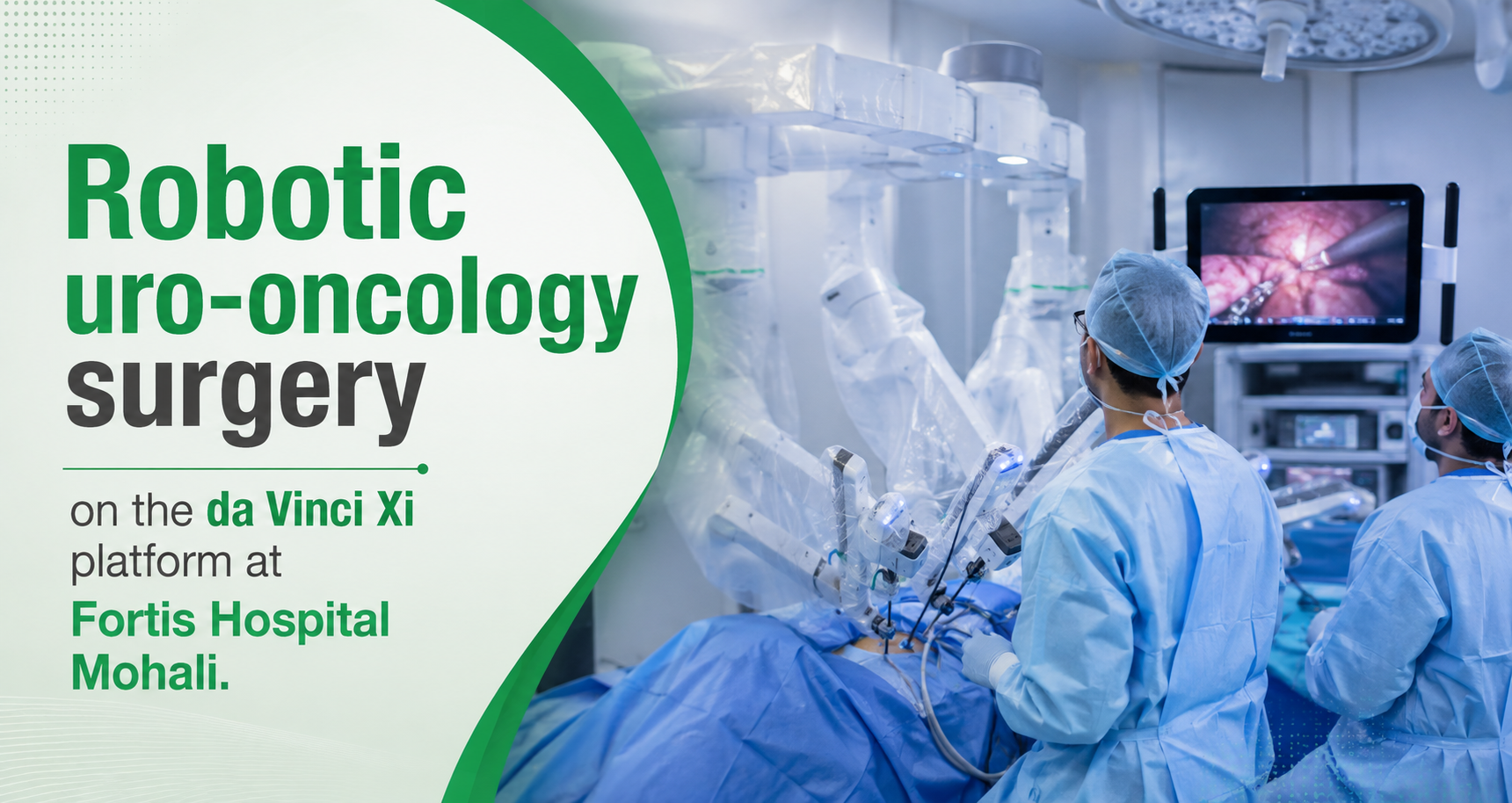
That is the anatomy the Fortis Institute of Robotic Urology & Uro-Oncology at Fortis Hospital Mohali works in every day — using the da Vinci Xi platform, with 3D vision at up to 10x magnification and wristed instruments that articulate through a full range of motion inside spaces a human hand cannot enter.
In July 2026, Intuitive designated Fortis Hospital Mohali a Total Program Observation (TPO) site — the second in India and the first outside a metro city. Surgical teams from other hospitals now travel to Mohali to observe how a complete robotic program operates: case selection, theatre workflow, team coordination and post-operative pathways. It is an external, manufacturer-level assessment of the whole program, not a claim about any one surgeon.
For men and women across Mohali, Chandigarh, Panchkula and Punjab, the practical value is this: a robotic urology service delivered inside a full tertiary hospital, with nephrology, medical and radiation oncology, interventional radiology, critical care, dialysis and transplant services in the same building.
Why Robotic Surgery in Urology
The urinary tract sits deep in the pelvis and retroperitoneum, hemmed in by bone, bowel and major vessels. Open surgery reaches it through a large incision. Standard laparoscopy reaches it through small ports but with rigid instruments and a flat 2D image.
The robotic platform is designed for that geometry specifically:
- 3D, high-definition vision at up to 10x magnification, so nerve bundles, vessels and tissue planes are seen rather than inferred.
- Wristed EndoWrist instruments that articulate where rigid laparoscopic tools cannot — essential for suturing a urethra, a renal defect or a ureteric anastomosis deep in the pelvis.
- Tremor filtration and motion scaling, converting a large hand movement into a small, steady instrument movement.
- Stable, surgeon-controlled camera, eliminating scope drift during long reconstructions.
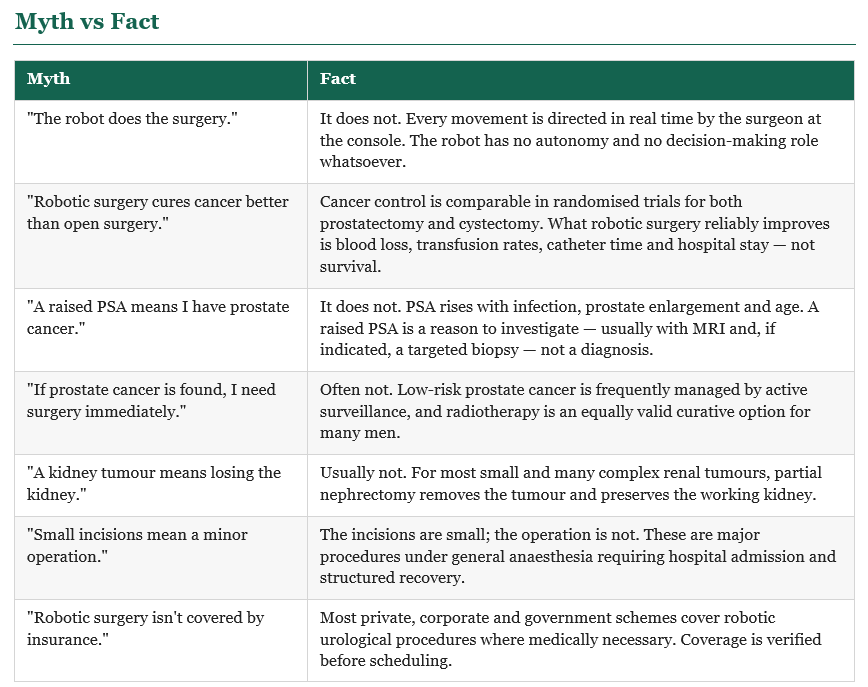
What the evidence actually shows. Across urology, the perioperative advantages of the robotic approach are consistently demonstrated: less blood loss, lower transfusion rates, shorter catheter time and shorter hospital stay. Where the honest picture is more nuanced is long-term function — in randomised trials of prostatectomy, urinary and sexual function at 12 and 24 months were comparable between robotic and open surgery. The robot’s real contribution is that it makes complex reconstruction feasible through keyhole incisions, and it makes difficult cases — a central renal tumour, a redo ureter, a tumour thrombus in the vena cava — approachable without a large open wound.
We would rather tell you that accurately than overstate it.
Conditions Treated & Robotic Procedures
Uro-Oncology (Prostate, Kidney & Bladder Cancer)
For urological cancers, robotic surgery pairs complete tumour clearance with the nerve- and organ-sparing precision that protects long-term quality of life. Every case is planned in a multidisciplinary uro-oncology board — surgical, medical and radiation oncology, radiology and pathology — because the right treatment for a urological cancer is not always surgery at all.
Prostate Cancer — Robotic Radical Prostatectomy
Nerve-sparing removal of the prostate, aiming to preserve urinary continence and erectile function while achieving complete cancer clearance. Robot-assisted prostatectomy is now the most widely used surgical approach worldwide. The magnified 3D view is what allows the neurovascular bundles to be dissected off the prostatic capsule under direct vision. Randomised evidence shows less blood loss, lower transfusion rates and shorter hospital stay than open surgery, with comparable continence, sexual function and cancer-control outcomes at two years.
Not every prostate cancer needs surgery.
Low-risk disease is often best managed by active surveillance, and radiotherapy is an equally valid curative option for many men. Where surgery is the right answer, robotic surgery is how we do it. Where it isn’t, we will say so.
Kidney Cancer — Robotic Partial Nephrectomy / Tumour Enucleation / Retroperitoneal Partial Nephrectomy
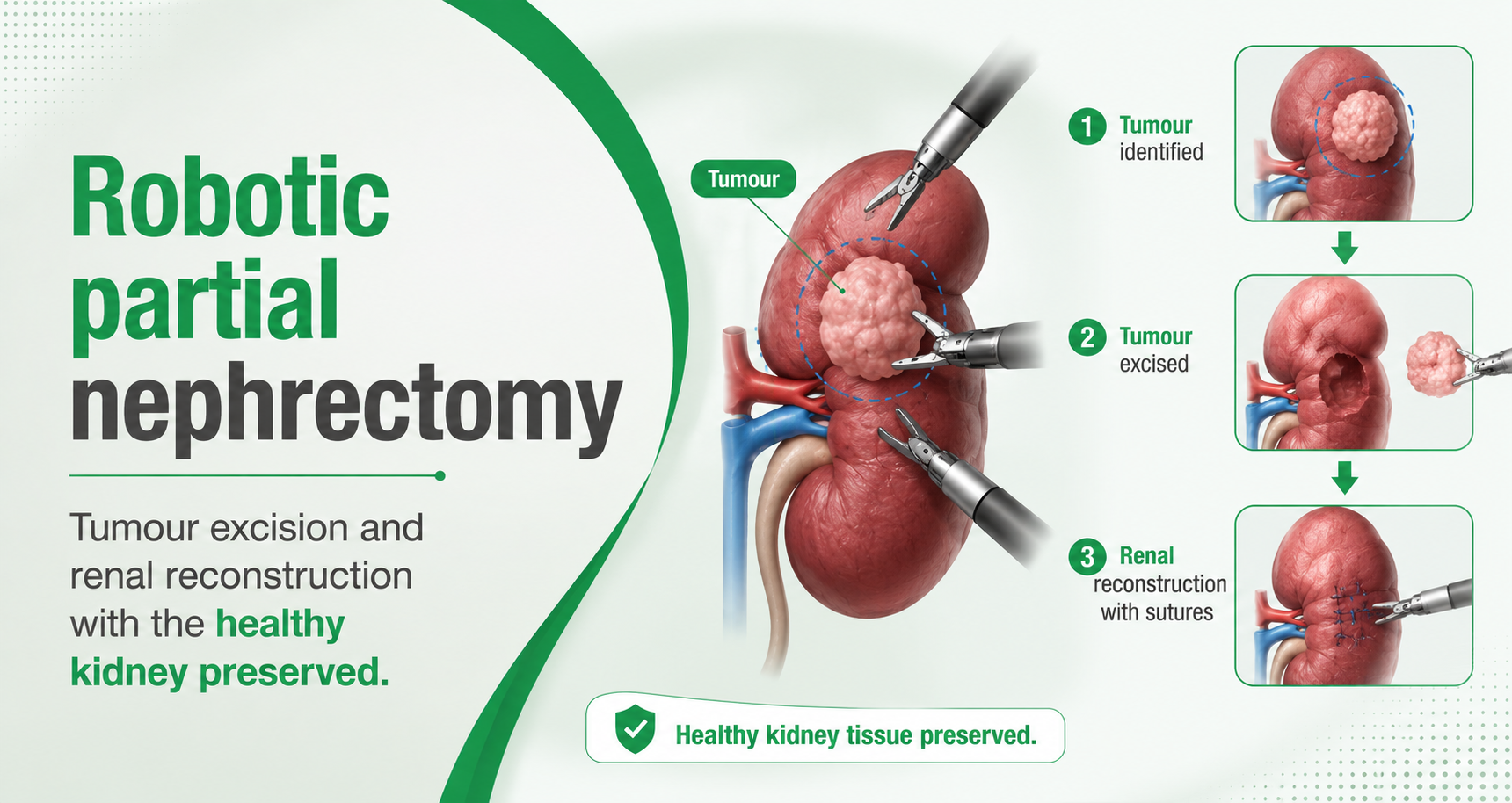
Only the tumour-bearing portion of the kidney is removed and the remaining kidney reconstructed, preserving renal function. This matters most in patients with a solitary kidney, bilateral tumours, diabetes or existing chronic kidney disease. Partial nephrectomy is the guideline-preferred option for small renal masses wherever it is technically achievable, and precise reconstruction under a limited clamp time is exactly what the robotic platform supports. The retroperitoneal approach avoids entering the abdominal cavity altogether in selected posterior tumours.
Complex Renal Masses — Robotic Tumour Resection
Central, hilar or deep-seated tumours that are difficult to reach and difficult to reconstruct. These are the cases where the difference between a partial and a total nephrectomy is often the surgeon’s ability to suture accurately in a confined space.
Bladder Cancer — Robotic Radical Cystectomy with Intracorporeal Urinary Diversion / Neo-Bladder
The bladder is removed and a new bladder or diversion is constructed entirely inside the body, without opening the abdomen to do so. Randomised evidence — the RAZOR trial for oncological non-inferiority and the iROC trial for recovery — supports the robotic approach, with the iROC trial reporting more days alive and out of hospital in the 90 days after surgery. Transfusion rates are consistently lower. Open cystectomy remains an entirely appropriate option, and for some patients it is the better one; that decision is made case by case.
Adrenal Tumours — Robotic Adrenalectomy
Minimally invasive removal of adrenal masses, including hormone-secreting tumours such as phaeochromocytoma, where controlled dissection and early vascular control matter for intraoperative haemodynamic stability. Performed with anaesthesia and endocrinology input.
IVC Tumour Thrombus — Robotic Thrombectomy
Among the most demanding operations in urology: extracting tumour thrombus that has grown from a kidney tumour into the inferior vena cava. Performed in selected cases with vascular and critical care support on standby.
Reconstructive & Functional Urology
Beyond cancer, robotic surgery restores normal urinary drainage with durable repairs through small incisions.
UPJ Obstruction — Robotic Pyeloplasty
Reconstruction of the blocked junction between the kidney and the ureter to restore free drainage and protect kidney function. Pyeloplasty is a suturing operation from start to finish, which is why it translates so well to the robotic platform.
Ureteric Strictures — Robotic Ureteric Reimplantation / Reconstruction
Precise repair of a narrowed or injured ureter — including strictures following previous surgery, stones or radiotherapy — avoiding open reconstruction and preserving the kidney above.
Vesicovaginal and Complex Fistula Repair
Robot-assisted repair of urinary fistulae, where the tissue planes are scarred and the closure needs to be watertight and tension-free.
Robotic Kidney Transplant
Kidney Transplant — Robot-Assisted Transplantation
In selected recipients, the donor kidney is implanted through a small incision rather than the conventional large open approach. The main advantages reported are lower wound-complication rates and less post-operative pain — particularly relevant in obese or diabetic recipients, where open transplant wounds heal poorly. Recipient selection is made jointly by the transplant surgical and nephrology teams, and conventional open transplantation remains the standard approach for most patients.
Advanced & Minimally Invasive Prostate Care (BPH)
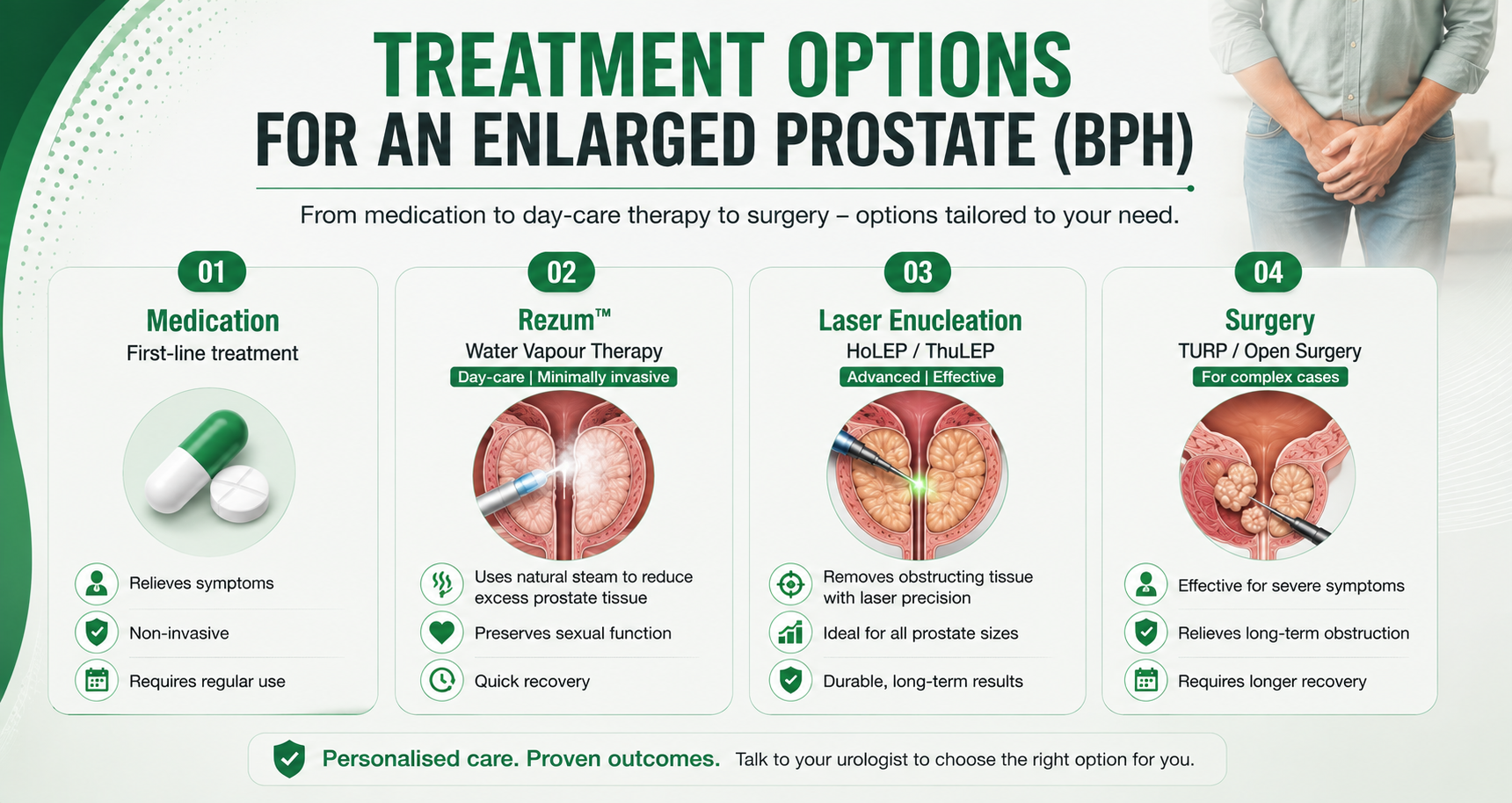
Not every prostate condition needs major surgery. Benign prostatic hyperplasia — an enlarged prostate causing poor flow, urgency and night-time waking — has a range of treatments, and the most invasive one is rarely the right first answer.
Rezūm Water Vapour Therapy — a day-care procedure using targeted steam to shrink excess prostate tissue and restore normal flow. It is particularly useful for men who are at higher surgical or anaesthetic risk, and for men who want to preserve ejaculatory function, which conventional prostate surgery frequently affects.
Laser enucleation of the prostate — for larger glands, endoscopic laser enucleation offers a durable, catheter-free result without an abdominal incision.
Offering both robotic surgery and these less invasive options under one roof is what allows the department to match the procedure to the patient rather than to the equipment available.
Advantages of Robotic Urology at Fortis Mohali
- Nerve-sparing for continence and sexual function — magnified vision allows the neurovascular bundles to be dissected under direct view in prostate surgery.
- Maximum kidney preservation — precise partial nephrectomy with controlled clamp time and accurate reconstruction, critical for a solitary or already-compromised kidney.
- Lower blood loss and transfusion rates — consistently demonstrated across prostatectomy and cystectomy in randomised trials.
- Complete intracorporeal reconstruction — neo-bladders, pyeloplasties and ureteric repairs completed inside the body, without opening the abdomen.
- Shorter catheter time and hospital stay — watertight reconstruction supports earlier catheter removal and earlier discharge.
- Feasibility in difficult anatomy — obesity, previous surgery, central renal tumours and redo reconstruction, where open surgery would otherwise be the only option.
- Full hospital backing — nephrology, oncology, interventional radiology, dialysis, critical care and transplant services on site, 24/7.
Individual outcomes vary with diagnosis, stage, anatomy and general health.
Who Should — and Should Not — Consider Robotic Surgery
Robotic surgery is frequently the right choice for prostate, kidney and bladder cancer surgery, for complex reconstruction, and wherever preserving continence, sexual function or kidney function is a priority.
It is not automatically the right choice. Open surgery may be preferable for very large or locally advanced tumours, for patients who cannot tolerate the steep head-down positioning and prolonged pneumoperitoneum a robotic procedure requires, or where extensive prior surgery has left the abdomen hostile. Some conditions do not need surgery at all. Suitability depends on your diagnosis, imaging, kidney function, cardiac and respiratory fitness, and anaesthetic assessment — which is what the consultation is for.
The Team Behind the Program
Robotic outcomes depend on the surgeon at the console. The platform executes decisions with precision; it does not make them.
Dr. Dharmender Aggarwal — Uro-Oncology & Robotic Surgery, Fortis Hospital Mohali
Fellowship-trained robotic uro-oncologist; Royal College of Surgeons of England; ERUS- and ORSI-certified in robotic surgery. Practice focused on robotic surgery for kidney, bladder and prostate cancer, including complex partial nephrectomy and intracorporeal urinary diversion.
Dr. Rohit Dadhwal — Senior Consultant, Urology, Andrology & Robotic Surgery, Fortis Hospital Mohali
MCh Urology, AIIMS New Delhi; uro-oncology training, Mayo Clinic, USA. Among the earliest adopters of Rezūm water vapour therapy in India, alongside robotic and reconstructive urology practice.
The department operates within the wider Fortis Institute of Robotic Surgery at Mohali, sharing theatre teams, robotic nursing staff and anaesthesia protocols with gynaecology, gynae-oncology, GI and thoracic robotic services — the institutional volume that keeps a robotic program safe.
Book a Consultation
If you have been diagnosed with prostate, kidney or bladder cancer, told you need surgery for a blocked kidney or an enlarged prostate, or want a second opinion on a plan you have already been given — a consultation will tell you what your realistic options are, including the ones that do not involve surgery.
Request a call back — 72728 72728
Fortis Hospital, Sector 62, Phase VIII, Mohali, Punjab
Our Team of Experts
View all-
 Dr. Dharmender AggarwalSenior Consultant Urology
 -
 Dr. Rohit DadhwalConsultant Urology
 -
 Dr. Manish AhujaConsultant Urology
FAQs
What should I look for when choosing a hospital for robotic urology surgery?
Four things. First, the surgeon's specific robotic case volume in your procedure, not the hospital's total. Second, whether cancer decisions are made in a multidisciplinary tumour board rather than by a single surgeon. Third, what backs the operating theatre — nephrology, critical care, interventional radiology and blood bank support on site. Fourth, whether the team will tell you when robotic surgery is not the right answer for you. Ask those questions of any hospital you consider, including this one.
Is robotic prostate surgery better than open surgery?
It is better in defined ways. Randomised trials show less blood loss, lower transfusion rates and shorter hospital stay with the robotic approach. Urinary continence, sexual function and cancer control at 12 and 24 months were comparable between robotic and open surgery in those trials. So the robotic approach offers a materially easier recovery, and the surgeon's experience matters more than the platform for the functional result.
Will I stay continent and sexually active after robotic prostatectomy?
Preserving both is a primary goal of the nerve-sparing technique, and the magnified 3D view is what makes careful nerve dissection possible. But outcomes depend heavily on your age, your function before surgery, the stage and position of the tumour, and whether nerve-sparing is oncologically safe in your case. Your surgeon will give you a realistic, individual estimate rather than a general figure — and will tell you if the cancer requires an approach that puts function at risk.
Can a kidney tumour be removed without losing the kidney?
In most cases, yes. Robotic partial nephrectomy removes the tumour and reconstructs the kidney, preserving function. This is especially important if you have only one working kidney, tumours in both kidneys, diabetes or existing kidney disease. Whether it is achievable depends on tumour size, position and its relationship to the collecting system and blood vessels.
Is robotic surgery safe for bladder cancer?
Yes. The RAZOR trial established oncological non-inferiority against open cystectomy, and the iROC trial found robotic cystectomy with intracorporeal diversion gave patients more days alive and out of hospital in the first 90 days. Transfusion rates are consistently lower. Open cystectomy remains a valid option and is sometimes the better one.
How long will I be in hospital, and how long until I am back to normal?
Most robotic urological procedures involve a hospital stay of a few days. Catheter duration varies by procedure — typically about a week after prostatectomy. Return to desk work is commonly around three to four weeks; heavy physical work and lifting take longer. Cystectomy with urinary diversion is a bigger operation with a longer recovery, and your team will explain that timeline specifically.
Do I need robotic surgery for an enlarged prostate?
Almost never. BPH is a benign condition and most men are managed with medication, day-care Rezūm water vapour therapy, or endoscopic laser treatment. Robotic surgery has no routine role in BPH. Anyone recommending it for a simple enlarged prostate is worth a second opinion.
Is robotic urological surgery covered by insurance
Most private, corporate and government health schemes cover robotic urological procedures where they are medically necessary. International insurance is accepted. The Fortis insurance desk verifies coverage and pre-authorisation before surgery is scheduled.
Can I get a second opinion here on a treatment plan from another hospital?
Yes, and it is a reasonable thing to want. Bring your imaging, biopsy report and any prior surgical notes. A second opinion consultation may confirm the plan you already have — which is a useful outcome in itself.
Can I travel from outside Punjab or from abroad for treatment?
Yes. The department regularly treats patients from across Punjab, Himachal Pradesh, Haryana, Jammu & Kashmir and beyond, and Fortis provides international patient services including visa assistance, estimates and accommodation support.