

Scalp Cooling
Helping you retain your hair and confidence during chemotherapy
Hair loss is one of the most visible and distressing side-effects of chemotherapy. Scalp cooling is an advanced, non-invasive technique that can significantly reduce hair loss — helping many patients feel more comfortable and confident throughout their treatment journey.
How It Works (The science behind scalp cooling)
Chemotherapy targets rapidly dividing cells to destroy cancer. Unfortunately, hair follicles also divide quickly, making them vulnerable to these medicines. Scalp cooling works by gently lowering the temperature of the scalp to protect hair follicles.
When cooled,
• Blood vessels in the scalp constrict, reducing the amount of chemotherapy medicine that reaches the hair roots.
• The cold temperature makes it harder for the drugs to enter hair follicle cells.
• Hair cell division and metabolic activity slow down, reducing the likelihood of damage.
This combination helps limit hair loss and increases the chances of retaining more hair throughout treatment.
The Cooling System (Technology designed for comfort and precision)
The cooling system is about the size of a small refrigerator and sits neatly beside the chemotherapy chair. It continuously circulates a coolant through a specially designed cap, keeping the scalp at a consistent low temperature.
A trained nurse or technician fits and monitors the cap during your treatment, ensuring both safety and comfort. The system is quiet, fully automated, and designed to make the process as smooth as possible.
The Cooling Cap (Comfortable design, tailored fit)
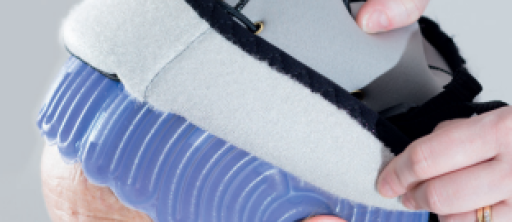
The cap is made from soft, flexible materials and is available in different sizes to ensure a snug and comfortable fit.
Features include:
• Uniform cooling across the scalp
• Continuous temperature sensors for safety
• Soft outer cover that helps insulate and reduce condensation
• Quick-release connections for easy fitting and removal
The cap is worn a short while before chemotherapy starts, remains in place during infusion, and continues for a period afterwards, depending on your treatment plan.
What to Expect (A simple, nurse-assisted process)
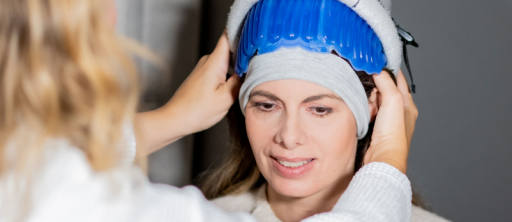
Scalp cooling starts 30 minutes before chemo and lasts up to 90 minutes after, depending on the drug. Initial cold or tightness fades quickly. Patients often relax, read, or listen to music. Clinical staff monitor comfort throughout the session…
Realistic outcomes based on evidence
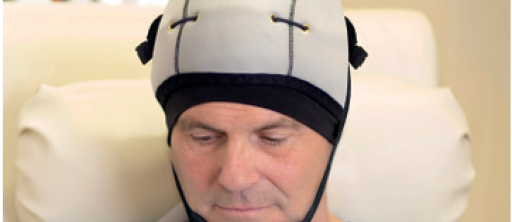
Scalp cooling results vary depending on the chemotherapy drugs and how your body responds. Research shows that: Around 40% of patients retain significant hair with anthracycline-based treatments. More than 70% retain hair with taxane-based…
Personalized estimate for hair retention
An advanced scalp colling calculator, built from data on over 7000 patients, estimates expected hair retention and suggests the ideal cooling time based on your chemotherapy type and dosage.
-
Benefits of Scalp Cooling (More than just hair preservation)
• Helps reduce or prevent hair loss during chemotherapy
• Supports self-image and emotional wellbeing
• Offers comfort, dignity, and confidence throughout treatment
• Safe, non-invasive, and performed under medical supervision
For many, preserving their hair helps them feel more like themselves — maintaining a sense of normalcy in an otherwise challenging time.
-
Being Realistic (Every patient’s experience is unique)
Scalp cooling can make a meaningful difference, but it does not guarantee complete hair preservation. Some hair shedding is still possible, and results can differ from one person to another. It’s helpful to think of scalp cooling as part of your supportive care — not just a cosmetic option, but a way to protect your emotional wellbeing during treatment.
-
How does scalp cooling work?
Scalp cooling works by limiting the damage to hair follicles caused by chemotherapy drugs administered during cancer treatment.
Chemotherapy attacks fast dividing cells in the body. Cancerous tumors are made up of fast dividing cells, but so are hair follicles. Chemotherapy cannot tell the difference between the healthy cells in hair follicles and the unhealthy ones in a tumor. The damage inflicted by these drugs causes hair to fall out around 14 to 21 days after the first treatment.
Vasoconstriction
The cold causes the blood vessels in the patient’s scalp to get smaller. This means less blood flow to the scalp and therefore less chemotherapy drug reaches the hair follicles
Reduced drug uptake into the cells
The chemotherapy drugs need to get into the cell to do the damage, but the cold makes it more difficult for the drugs to enter the cells
Reduced cell division
The cold causes the fast division of the hair follicle cells to slow right down, meaning the chemotherapy doesn’t target these cells, reducing damage
Reduced cell metabolic activity
This is a bit complicated, but put simply, when the cells are cold, all sorts of processes slow down which makes it harder for the chemotherapy to kill the cells in the hair follicle
The scalp cooling system and cap
The scalp cooling system is the size of a small refrigerator and is located in the infusion suite of the hospital or cancer center you will be treated at. The patient doesn’t operate the system, including attaching the cap to the system – this will be done by one of the clinical team.
-
Scalp Cooling Outcomes Calculator
calculator that will give you an indication of the amount of hair retention you could expect, based on the chemotherapy regimen you will be receiving. If you know your dosage you will get a more accurate indication.
The calculator uses information from the Dutch Scalp Cooling Registry which is a collection of information from over 7000 patients who have scalp cooled. It’s the biggest scalp cooling data set in the world. The information is a true representation of scalp cooling with real patients in real cancer centers, rather than in a clinical trial setting. Access to so much data means that the calculator can give a reliable indication of what you can expect. It is important to remember that the calculator will only provide an indication of what has been experienced by others - you may see more or less hair retention, but it’s a really good starting point.
You will also see that the calculator generates the appropriate post-infusion cooling time for your regimen. There can sometimes be some confusion around these times, but the times generated by the calculator are those that we would recommend to get the best possible outcomes with that particular regimen.
Available Locations
-
 Fortis Hospital, Shalimar Bagh, New Delhi
4.6


-
 Fortis Hospital, Mulund, Mumbai
4.6
FAQs
-
Is scalp cooling safe?
Yes. Scalp cooling is a safe, evidence-based supportive therapy used in leading cancer centres worldwide. It is carefully monitored by medical staff throughout the procedure.