

Gastric Bypass Surgery: A Comprehensive Guide to Weight Loss and Metabolic Health
A life-changing and powerful bariatric procedure that alters the digestive system to facilitate significant, long-term weight loss and the resolution of obesity-related health conditions.
Overview
Gastric bypass surgery, known medically as the Roux-en-Y Gastric Bypass, is a major and highly effective bariatric surgical procedure that has long been considered the gold standard for weight loss surgery. It is a transformative intervention for individuals struggling with morbid obesity and its associated health complications. The procedure works through a powerful combination of mechanisms: it significantly restricts the amount of food a person can eat at one time and also alters the path of digestion to reduce the absorption of calories and nutrients. This dual-action approach leads to substantial and sustained weight loss, which in turn can lead to a dramatic improvement or complete resolution of many obesity-related diseases, such as type 2 diabetes, high blood pressure, and obstructive sleep apnea.
The decision to undergo gastric bypass surgery is a profound, life-altering commitment that is made after a thorough evaluation by a multidisciplinary team of specialists. It is not a cosmetic procedure or a "quick fix," but rather a powerful medical tool that requires a lifelong dedication to significant dietary, nutritional, and lifestyle changes. The surgery is most often performed using minimally invasive laparoscopic techniques, which offer the benefits of smaller incisions, less pain, and a faster recovery compared to traditional open surgery. For the right candidate, a gastric bypass can be the definitive step towards breaking the cycle of severe obesity and reclaiming a healthier, more active, and longer life.
The Powerful Dual-Action Mechanism of Gastric Bypass
To understand why gastric bypass is so effective, it is crucial to understand the intricate anatomical and physiological changes the surgery creates. The Roux-en-Y Gastric Bypass works through two main principles: restriction and malabsorption, along with significant hormonal changes.
The Surgical Alteration of Anatomy
The procedure involves two main steps that permanently alter the anatomy of your upper digestive tract.
Creation of a Small Gastric Pouch (Restriction): The surgeon uses a surgical stapler to divide the stomach into two separate sections. The top part is fashioned into a very small pouch, typically about the size of a small egg, which is completely sealed off from the much larger, lower remnant of the stomach. This new, small pouch will become your new stomach, and it can only hold a very small amount of food, about 30 to 50 ml. This is the restrictive component of the surgery. Because the pouch is so small, you will feel full very quickly after eating only a small portion, which dramatically reduces your total caloric intake.
Rerouting the Small Intestine (Malabsorption): The surgeon then divides the small intestine a short distance beyond the stomach. The lower end of this divided intestine, the jejunum, is then brought up and connected directly to the new, small gastric pouch. This new connection is called the "Roux limb." The first part of the small intestine, the duodenum, which is still attached to the larger, bypassed part of the stomach, is then reconnected to the Roux limb further down. This creates the characteristic "Y" shape of the Roux-en-Y configuration.
The Resulting Physiological Changes
Malabsorption: This rerouting of the intestine means that the food you eat now bypasses the larger part of your stomach and the first section of your small intestine. This is the malabsorptive component. Since the digestive juices from the stomach and the enzymes from the pancreas and bile, which are essential for breaking down fats and other nutrients, only mix with the food further down the intestinal tract, there is less time for your body to absorb all the calories and nutrients from your food.
Profound Hormonal Changes: This is a critically important and perhaps the most powerful aspect of the surgery. Bypassing the stomach and the duodenum has a profound effect on the gut hormones that regulate hunger, satiety, and blood sugar. The rapid delivery of food to the lower part of the small intestine triggers a significant increase in the production of satiety hormones like GLP-1 and Peptide YY. These hormones send powerful signals to the brain that reduce appetite and create a prolonged feeling of fullness. This hormonal shift is a major reason why patients feel less hungry and are able to adhere to a low-calorie diet. It is also the primary reason why gastric bypass can lead to a rapid and often complete remission of type 2 diabetes, sometimes even before significant weight loss has occurred.
The Rigorous Path to Surgery: Patient Candidacy
A gastric bypass is a major, life-altering surgery and is reserved for individuals who meet specific and strict medical criteria. The decision is made by a multidisciplinary bariatric team after a comprehensive evaluation.
Who is an Ideal Candidate for Gastric Bypass?
According to international guidelines, you may be a candidate for bariatric surgery if you have:
A Body Mass Index BMI of 40 or higher, which is classified as morbid obesity.
A BMI of 35 to 39.9, along with at least one significant obesity-related co-morbidity, such as:
Type 2 diabetes.
High blood pressure (hypertension).
High cholesterol (dyslipidemia).
Obstructive sleep apnea.
Severe joint disease.
A BMI of 30 to 34.9 with very poorly controlled type 2 diabetes.
In addition to the physical criteria, the ideal candidate is someone who:
Has a documented history of failed attempts at weight loss through medically supervised diet and exercise programs.
Is highly motivated and fully understands the extensive, lifelong dietary and lifestyle changes that are required after surgery.
Is psychologically stable and has a good understanding of the risks and benefits of the procedure.
Is committed to long-term medical follow-up, including lifelong vitamin and mineral supplementation.
Your Surgical Journey: From Preparation to the Operating Theatre
The Extensive Pre-Surgical Evaluation
The period leading up to your surgery is a crucial phase of education and preparation that can last for several weeks or months.
Multidisciplinary Team Assessment: You will meet with every member of the bariatric team, including the surgeon, a bariatric physician, a dietitian, and a psychologist.
Medical Clearance: You will undergo a comprehensive series of medical tests to ensure you are fit for major surgery. This includes blood work, an ECG, a chest X-ray, an upper GI endoscopy, and often a sleep study and a cardiac evaluation.
Nutritional and Psychological Counseling: The dietitian will educate you on the pre- and post-operative diet. The psychologist will evaluate your readiness for the profound lifestyle changes and ensure you have a strong support system in place.
The Laparoscopic Roux-en-Y Gastric Bypass Procedure
Anesthesia: The surgery is performed under general anesthesia.
The Procedure: The surgeon will make several small keyhole incisions in your abdomen. Carbon dioxide gas is used to inflate the abdominal cavity. Using a laparoscope, a thin camera and specialized, long instruments, the surgeon will perform the two main steps of the operation: the creation of the small gastric pouch and the rerouting and reconnection of the small intestine.
Leak Test: At the end of the procedure, the surgeon will often perform a leak test, instilling a blue dye or air through a tube to ensure that the new connections are secure and watertight.
Completion: The instruments are removed, the gas is released, and the small incisions are closed. The surgery typically takes two to four hours.
Life After Gastric Bypass: The Recovery and Lifelong Commitment
The Post-Surgical Experience
Hospital Stay: You will typically stay in the hospital for four to six days after a laparoscopic gastric bypass.
Immediate Recovery: You will be encouraged to get up and walk within hours of your surgery to prevent blood clots. You will start with a strict clear liquid diet and will be monitored for any signs of complications.
Recovery at Home: Full recovery takes about four to six weeks. You will have significant restrictions on your activity during this time.
The Lifelong Dietary and Nutritional Journey
This is the most critical part of your long-term success.
The Phased Diet: You will follow a very strict, multi-phase diet that progresses slowly from clear liquids, to full liquids, to pureed foods, to soft foods, and finally back to solid foods over a period of several weeks. This is essential to allow your new stomach and connections to heal properly.
New Eating Habits: You will need to learn a whole new way of eating for the rest of your life. This includes eating very small meals, chewing your food thoroughly, eating slowly, and prioritizing protein.
Lifelong Vitamin and Mineral Supplementation: Because the surgery causes malabsorption, you will be at a high risk for developing serious nutritional deficiencies. It is absolutely essential that you take a prescribed regimen of vitamin and mineral supplements, including a multivitamin, calcium, vitamin D, vitamin B12, and iron, every single day for the rest of your life. Regular blood tests are required to monitor for any deficiencies.
Patient Stories
"I had been struggling with morbid obesity and uncontrolled type 2 diabetes for over a decade. I was on multiple medications, and my health was declining. The decision to have gastric bypass surgery was the hardest and best decision of my life. The surgery at Fortis was done laparoscopically, and the care was phenomenal. The transformation has been unbelievable. I have lost over 50 kilograms, but the most incredible part is that my diabetes went into complete remission within weeks of the surgery. I am off all my diabetes medications. It has truly given me a second chance at a healthy life." - Aarav Singh, 48, Kolkata
"My weight was a huge barrier in my life. I had severe sleep apnea and terrible joint pain that made it difficult to even play with my children. Gastric bypass was my tool to reclaim my health. The post-op diet was a huge adjustment and required a lot of discipline, but the support from the bariatric dietitian was invaluable. A year later, I am at a healthy weight, my sleep apnea is gone, and my joint pain has vanished. The surgery was not an easy way out; it was the start of a new, healthier, and more active life." - Priya Menon, 39, Chennai
Myths vs Facts
Myth | Fact |
Gastric bypass is a cosmetic procedure for people who are lazy | This is a deeply harmful and untrue stereotype. Gastric bypass is a major, medically necessary surgery for the treatment of the life-threatening disease of morbid obesity. It is a tool for patients who have been unsuccessful with traditional weight loss methods and requires immense lifelong discipline and commitment. |
The surgery is extremely dangerous and has a high mortality rate | While all major surgery has risks, a planned, laparoscopic gastric bypass, when performed at a high-volume center of excellence, is a very safe procedure. The mortality rate is very low, comparable to that of a gallbladder removal or a hip replacement. The long-term risks of remaining morbidly obese are far greater than the risks of the surgery. |
I can eat whatever I want after the surgery and the weight will stay off | This is false. While surgery is a powerful tool, it is not magic. Long-term success is entirely dependent on your adherence to the post-operative dietary and lifestyle guidelines. If you consistently eat high-calorie, high-sugar foods, you can stretch your pouch and regain weight. |
I will never be able to enjoy a meal again | You will absolutely be able to enjoy food again, but your relationship with it will change. You will eat much smaller portions and will focus on nutritious, high-protein foods. Many patients report that they enjoy and savor their food even more after surgery because they are eating mindfully. |
Embarking on Your Transformative Journey
The decision to undergo gastric bypass surgery is a commitment to a new and healthier way of life. It is a powerful intervention that can break the devastating cycle of morbid obesity and allow you to regain control of your health, your mobility, and your future. The journey is a challenging one that requires dedication and a strong support system, but the potential rewards in terms of improved health and quality of life are immeasurable.
If you are struggling with severe obesity and believe that gastric bypass surgery may be the right path for you, the first and most important step is a comprehensive consultation with a multidisciplinary bariatric surgery team. They can provide a thorough evaluation, educate you about all of your options, and help you determine if you are a candidate for this life-changing procedure.
Specialities

Available Locations
View all-
 Fortis Hospital, Mulund, Mumbai4.6
4.6


-
 Fortis Hospital, Greater Noida4.5
4.5

-
 S L Raheja Hospital, Mumbai4.8
4.8
-
 Fortis Nagarbhavi Bangalore4.7
4.7
-
 Fortis Memorial Research Institute, Gurgaon4.6
4.6
-
 Fortis Hospital, Shalimar Bagh, New Delhi4.6
4.6
-
 Fortis Hospital, Rajajinagar, Bengaluru4.6
4.6
-
 Fortis Hospital, Noida
-
 Hiranandani Fortis Hospital, Vashi, Mumbai4.7
4.7
-
 Fortis Escorts Heart Institute, New Delhi4.6
4.6
-
 Fortis Hospital, Mohali4.6
4.6
-
 Fortis Hospital, Ludhiana4.4
4.4
-
 Fortis Hospital, Kalyan, Mumbai4.7
4.7
-
 Fortis Hospital CG Road Bangalore4.6
4.6
-
 Fortis Hospital BG Road Bangalore4.7
4.7
-
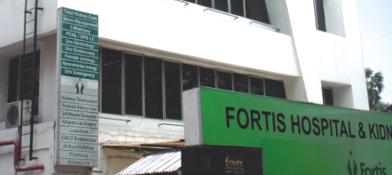 Fortis Hospital & Kidney Institute, Kolkata4.2
4.2
-
 Fortis Hospital Anandapur, Kolkata4.1
4.1
-
 Fortis Flt. Lt. Rajan Dhall Hospital, Vasant Kunj4.5
4.5
-
 Fortis Escorts Hospital, Jaipur4.6
4.6
-
 Fortis Escorts Hospital, Faridabad4.7
4.7
-
 Fortis Escorts Hospital, Amritsar4.7
4.7
FAQ's
How much weight can I expect to lose after a gastric bypass?
Gastric bypass is a very effective procedure for weight loss. Most patients can expect to lose about 60% to 80% of their excess body weight within the first 12 to 18 months after the surgery.
What is "dumping syndrome"?
Dumping syndrome is a potential side effect that can occur after a gastric bypass if you eat foods that are very high in sugar or fat. The rapid entry of these foods into the small intestine can cause unpleasant symptoms like nausea, cramping, diarrhea, sweating, and dizziness. This serves as a powerful negative reinforcement to avoid unhealthy foods.
Will I have a lot of loose skin after losing so much weight?
Yes, it is very common to have excess, loose skin after the massive weight loss that follows a gastric bypass. The amount depends on your age, genetics, and how much weight you lose. Many patients choose to have plastic surgery, such as a tummy tuck or a body lift, to remove this excess skin after their weight has stabilized.
Can the surgery be reversed?
While it is technically possible to reverse a gastric bypass, it is a very complex and high-risk operation and is performed very rarely. You should consider the surgery to be a permanent procedure.
How long is the hospital stay?
After a laparoscopic gastric bypass, the typical hospital stay is about four to six days.
What are the main risks of the surgery?
The risks include those of any major surgery, such as bleeding, infection, and blood clots. Specific risks of a gastric bypass include a leak from one of the staple lines or new connections, a stricture or narrowing at the anastomosis, and the long-term risks of nutritional deficiencies and internal hernias.
What is the difference between a gastric bypass and a sleeve gastrectomy?
A sleeve gastrectomy is another type of bariatric surgery that works purely by restriction. It involves removing about 80% of the stomach, leaving behind a narrow, banana-shaped "sleeve." It does not involve bypassing any of the intestines, so there is no malabsorptive component. The gastric bypass is generally considered to be a slightly more powerful procedure for weight loss and for the resolution of diabetes.
When can I return to work?
This depends on the nature of your job. For a sedentary desk job, you may be able to return in one to two weeks. For a more physically demanding job, you will likely need to take two to four weeks off.
More Procedures
View all-

Bilirubin Test: Understanding Your Liver and Blood Health
-

Capsule Endoscopy: A Guide to Advanced Small Bowel Imaging
-

Colonoscopy: The Gold Standard for Colorectal Cancer Prevention and

Endoscopic Ultrasound: An Advanced Guide to Internal Imaging and
-
Esophageal Manometry: A Definitive Guide to Diagnosing Swallowing
-
Flexible Sigmoidoscopy: A Detailed Examination of the Lower Colon
-
HIDA scan
-
Liver function tests
-
Pancreas transplant
-
Rectal prolapse surgery
-
Splenectomy
-
Upper Endoscopy
-
Virtual Colonoscopy

Keep track of your appointments, get updates & more!

