
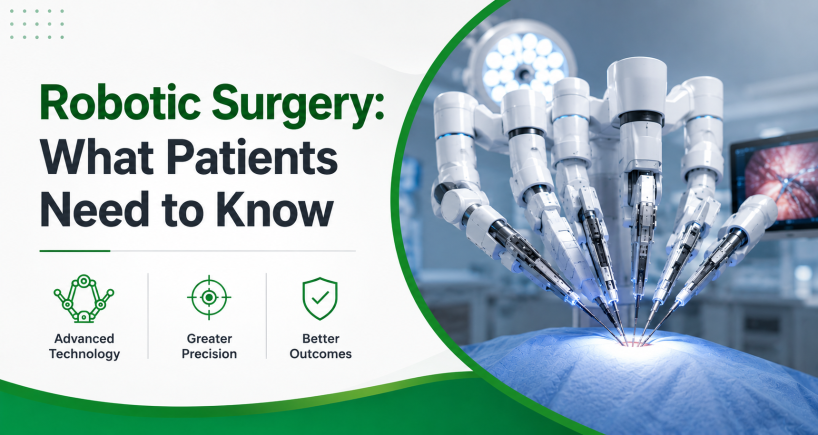


Robotic Surgery What Patients Need to Know
If you’ve been told you need surgery, you may have heard the term robotic surgery. It sounds futuristic—and understandably, many patients wonder what it actually means.
The first thing to know is that the robot never performs the operation on its own. Every movement is completely controlled by the surgeon, who sits at a specialized console in the operating room. The robotic system simply translates the surgeon’s hand movements into highly precise, controlled movements inside the body.
Think of it as an advanced surgical instrument rather than an independent machine. The surgeon makes every decision; the robot simply enhances precision.
Why use robotic surgery?
One of the biggest advantages is the exceptional view it provides. The surgeon operates with a high-definition, magnified three-dimensional image, allowing important structures such as nerves and blood vessels to be seen in remarkable detail.
The robotic instruments also have a greater range of motion than the human wrist, making it easier to work safely in confined spaces that can be challenging with conventional minimally invasive surgery.
What does this mean for patients?
Because robotic surgery is performed through several small incisions rather than one large cut, many patients experience:
* Less postoperative pain
* Reduced blood loss
* Smaller scars
* Earlier mobilisation
* Shorter hospital stay in appropriate cases
* Faster return to normal daily activities
However, recovery always depends on the type of operation, the patient’s overall health, and the underlying disease.
Which operations can be performed robotically?
Robotic surgery is now widely used across many specialties, including surgery for cancers of the gastrointestinal tract, colorectal diseases, hernias, gallbladder disorders, bariatric (weight-loss) procedures, urological conditions such as prostate and kidney surgery, and many gynecological operations.
Not every patient—or every operation—is suitable for a robotic approach. The choice depends on careful evaluation by the treating surgeon.
Common questions patients ask
“Can the robot operate on its own?”
No. The robotic system cannot make decisions or perform movements independently. If the surgeon releases the controls, the robotic instruments immediately stop moving.
“Is robotic surgery new or experimental?”
No. Robotic surgery has been used worldwide for more than two decades and has become an established approach for many procedures.
“Is robotic surgery always better?”
Not necessarily. While robotic technology offers important advantages in selected procedures, the best surgical approach depends on the patient’s condition and the nature of the disease.
The most important factor
While technology continues to advance, the most important element in any operation remains the experience, judgment, and skill of the surgeon. Robotic technology is a powerful tool, but it is the surgeon who determines when to use it and how to achieve the safest possible outcome.
If you are considering robotic surgery, discuss all available options with your surgeon. Understanding the benefits, limitations, and expected recovery will help you make an informed decision with confidence.
Categories
Clear allRelated Blogs
View all









FAQs

Keep track of your appointments, get updates & more!

