
Tricity’s First 5G Ambulance | 24x7 Emergency Ambulance Services in Mohali


Successful Treatment of Subclavian Steal Syndrome at Fortis Hospital, Anandapur.
Treated by:
Dr. Shuvanan Ray
Interventional Cardiology
| Fortis Hospital Anandapur, Kolkata
Nov 10, 2025
A 49-year-old gentleman came to Fortis Hospital, Anandapur with recurrent fainting episodes triggered by daily activities like shaving, braking his bike, or using his hands. Despite consulting multiple specialists, he found no relief.
At Fortis, under the care of Dr. Shuvanan Ray, Director – Interventional Cardiology, a detailed evaluation revealed a striking difference in blood pressure between his arms. A CT angiography confirmed complete occlusion of the left subclavian artery, leading to Subclavian Steal Syndrome—a condition that diverts blood away from the brain and causes dizziness and blackouts.
Dr. Ray performed a successful angioplasty of the left subclavian artery. Post-procedure, blood pressure normalized in both arms, and the patient’s fainting spells disappeared. He was discharged in good health, free from the debilitating symptoms that had disrupted his life.
Meet the doctor

Dr. Shuvanan Ray
Director Cardiology | Fortis Anandapur
-
 35 Years
-

Treated at Hospital

Fortis Hospital Anandapur, Kolkata
4.1

4.1


Read more about
Interventional Cardiology
115 Doctor available at
24 locations
24 locations

Wheelchair Bound for a Year, 88-Year-Old regains mobility post Complex Hip Revision Surgery at Fortis Vasant Kunj
- Patient suffered from Multiple Co-morbidities - Chronic
Treated by:
Dr. Shuvendu Prosad Roy
Orthopaedics
| Fortis Flt. Lt. Rajan Dhall Hospital, Vasant Kunj
Oct 13, 2025
In a remarkable feat of surgical expertise and multi-disciplinary medical coordination, Doctors at Fortis Hospital Vasant Kunj successfully performed a highly complex total hip replacement (THR) surgery on an 88-year-old elderly man. The man had been wheelchair-bound for over a year due to a failed hip implant procedure, that had migrated deep into the pelvis, causing severe pain alongwith bone damage leading to complete loss of mobility.
The complex procedure was led by Dr. Shuvendu Prosad Roy, Additional Director Ortho & Spine Surgery, Fortis Hospital, Vasant Kunj and the surgery lasted for approximately 4.5 hours. After 13 days of hospitalisation, the patient was discharged in a stable condition and has now regained the ability to walk with the support of a stick.
Upon admission at Fortis Vasant Kunj, the patient was experiencing severe pain in his left hip. He had been wheelchair-bound for the past year and, before that, could only walk short distances with the help of a walker. His condition dated back to 2018, when he fractured his left hip after a fall and underwent a partial hip replacement. Although he regained limited mobility initially, within a few months he developed persistent pain and increasing difficulty in walking. Over time, his dependence on the walker grew, and his mobility steadily declined.
In 2020, doctors advised a revision surgery, but the patient, apprehensive due to his age, postponed the procedure. With the onset of the COVID-19 pandemic, he was unable to seek further medical attention, and his condition progressively worsened. By the end of 2023, he had completely lost the ability to walk and was confined to a wheelchair.
Adding to the complexity, the patient suffered from multiple co-morbidities including a pacemaker, chronic renal failure, controlled Type 2 diabetes, post-prostatectomy urethral issues requiring regular intervention and a history of spinal fixation surgery. Given the complexity and challenges of the case, the surgical team at Fortis Hospital Vasant Kunj worked closely with specialists in cardiology, nephrology, and vascular care to stabilise and manage his health conditions before and during surgery. They carefully managed his health conditions, including diabetes and chronic kidney disease, before and during the operation. The hip socket - where the thigh bone connects to the pelvis - was severely damaged with significant bone loss. To reconstruct it, the surgeons used bone grafts, from a bone bank (commercially available human bone after sterilization), these grafts were used to fill the gaps, help the new bone grow and create a strong foundation for the new hip joint. A special metal frame, called an acetabular cage, was then implanted and secured into the pelvic bone with screws to support the new artificial socket.
To remove the old implant that had deeply shifted into the pelvic area and was dangerously close to major blood vessels, the surgical team used a specialised technique called Extended Trochanteric Osteotomy (ETO). This involved carefully opening the upper part of the thigh bone to gain better access and safely extract the stuck implant without damaging surrounding structures. After removing the implant, they inserted a longer, stronger metal rod into the thigh bone and reconstructed the bone using metal wires for added stability. The procedure required careful planning, advanced surgical methods, and custom implants. Thanks to the successful outcome, the patient has regained mobility, is now able to walk independently with the support of a stick and has returned to an active lifestyle.
Giving details of the case, Dr. Shuvendu Prosad Roy, Additional Director Ortho & Spine Surgery, Fortis Hospital, Vasant Kunj said, “This was one of the most technically demanding surgeries. The acetabulum (hip socket) was completely destroyed, the previous implant had migrated dangerously close to major pelvic vessels and we anticipated significant blood loss. On top of that, the patient’s advanced age and complex medical history, that included heart, kidney, and urinary issues, required detailed planning and coordination with multiple specialties. Despite these challenges, we carefully executed a well-structured surgical plan using advanced techniques and specialized implants, which allowed us to restore his mobility and greatly improve his quality of life.”
Dr. Gurvinder Kaur, Facility Director, Fortis Hospital Vasant Kunj said, “This case underscores the importance of timely surgical intervention in elderly patients, many of whom silently endure pain and limited mobility due to fear or hesitation. At Fortis Vasant Kunj, we are committed to offering advanced orthopedic solutions through expert-led, multidisciplinary care. With the support of modern surgical techniques and specialized implants, even high-risk, complex cases can result in significantly improved outcomes and restored quality of life."
Meet the doctor

Dr. Shuvendu Prosad Roy
Additional Director Ortho & Spine Surgery | Fortis Vasant Kunj
-
15 Years
-
Treated at Hospital

Fortis Flt. Lt. Rajan Dhall Hospital, Vasant Kunj
4.5
4.5
Read more about
Orthopaedics
115 Doctor available at
24 locations
24 locations

Leading critical care with advanced interventions and life saving treatments.
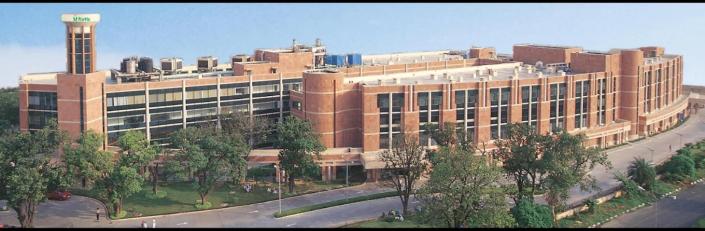
When every second counts, Fortis brings the hospital to you. Our 5G ambulance — the first of its kind in the Tricity — is a fully equipped advanced life support (ALS) unit staffed by trained paramedics and connected live to our emergency team at Fortis Hospital, Mohali, where high-speed 5G streams the patient's vitals and live video to our specialists in real time so critical care begins before you even reach the hospital, protecting the crucial "Golden Hour." Backed by more than 37 years of Fortis expertise, our team handles every kind of emergency: cardiac cases like heart attacks and cardiac arrest with on-board monitoring and defibrillation linked directly to our Interventional Cardiology team and Cath Lab; neuro emergencies such as stroke and head injury managed on a rapid protocol with neurology and neurosurgery specialists on standby; orthopaedic and trauma cases including road accidents and poly-trauma stabilised en route and received by a dedicated trauma team; and other critical care from respiratory distress to paediatric, obstetric and ICU transfers, all supported with ventilator and oxygen care on board. A standing 24x7 "Code Blue" team is ready the moment you arrive, with Emergency, Triage, OT and Cath Lab kept within minimal distance for the fastest possible response across Mohali, Zirakpur, Chandigarh, Panchkula and nearby Patiala. To book an emergency ambulance near you, call 98720 22222.
Why Choose Us
-
 Choose Fortis 5G Ambulance – Fast, connected, life-saving emergency care across Tricity.
 -
24 Hours Emergency Services
-
 State of the Art Diagnostic
 -
 More than 37 years of clinical experience
Our Team of Experts
Our patient’s stories
FAQs
-
How do I call an ambulance in Mohali or Zirakpur?Simply dial our ambulance number 92158 58581, available 24x7.
-
Is this ambulance only for Zirakpur?No, our 5G ambulance serves the entire Tricity – Chandigarh, Mohali, Zirakpur, and Panchkula.
-
Does the ambulance have life support?Yes. The Fortis ambulance is fully equipped with life-saving technology and trained emergency staff.
-
How is this ambulance different from others?The 5G ambulance enables live hospital connect and real-time patient vitals, reducing treatment delays.