
Top-Ranked GI & General Surgeon at Fortis
Committed to Patient's Dedicated Care & Surgical Excellence.

At Fortis Hospital, Gurugram, the Department of Obstetrics and Gynecology is dedicated to delivering comprehensive, compassionate, and advanced healthcare services for women at every stage of life. From adolescence to menopause and beyond, we offer a full spectrum of care tailored to each woman’s unique needs.
Our team of highly experienced obstetricians, gynecologists, laparoscopic surgeons, and maternal-fetal medicine specialists is committed to providing world-class care through a combination of clinical excellence, cutting-edge technology, and a patient-centric approach.
Key areas of expertise include:
Whether you're planning a pregnancy, seeking routine gynecological care, or need advanced treatment, the Fortis Gurugram Obs & Gynae team is here to support your health journey with empathy and expertise.
Total Knee Replacement (TKR), or Total Knee Arthroplasty, is a surgical procedure in which diseased parts of the knee joint are resurfaced with artificial parts (prostheses).
Total Knee Replacement is a method to relieve pain and restore function to an arthritic knee. The most common reason for knee replacement is that other treatments (weight loss, medicines and injections) have failed to relieve arthritis- associated knee pain.
The primary goal of knee replacement is to relieve pain. Secondarily, it improves the quality of life and knee function.
Total Knee Replacement involves minimal removal of diseased joint surfaces like Tibia, Femur and a Knee Cap (Patella) and replacing it with prostheses.
There are numerous options available for these high end procedures but, essentially it involves articulation of medical grade/biocompatible metal with medical grade polyethylene.
The patient can expect to be relieved of his crippling arthritic pain within a few weeks. After a surgery, the patient can mobilise straight away with the help of support and physiotherapy.
Frozen Shoulder, also known as Adhesive Capsulitis, is a common condition in which the articular shoulder capsule (not to be confused with the rotator cuff) thickens and tightens, restricting its mobility. It typically affects only one shoulder, however it can affect both shoulders.
Frozen Shoulder happens to 1 in 50 people on its own, without any known cause. However, people with Diabetes Mellitus, Thyroid problems, Heart pain, Heart Bypass or Breast Surgery are more likely to get it.
The condition can be diagnosed with a proper history and physical examination by a specialist, and an X-ray examination.
In the freezing phase, rest and cold packs are enough. When the shoulder has been frozen for about 6-9 months, then proper Physiotherapy (done by the patients themselves) or surgical interventions like Key Hole Surgery can restore full range of movements. Usually, Frozen Shoulder heals by itself in three years (60%) to seven years (90%). Only 10 to 15% of patients require Arthroscopy (Key Hole Surgery). Physiotherapy plays a key role whether or not the surgery is required.
Arthritis is a joint disorder featuring inflammation. A joint is an area of the body where two or more different bones meet. A joint functions to move the body parts connected by its bones. Arthritis literally means inflammation of one or more joints and may involve the breakdown of cartilage.
Without the normal amount of cartilage, the bones rub together causing pain, swelling (inflammation) and stiffness. Some of the causes for the breakdown of the cartilage, and subsequent inflammation of the joints are:
Some of the symptoms of arthritis are:
Degenerative: An age related arthritis.
Infective: Due to any infection.
Trauma: Due to injury to bones forming a joint.
Inflammatory: Due to systemic involvement because of autoimmune condition or excess production of crystals.

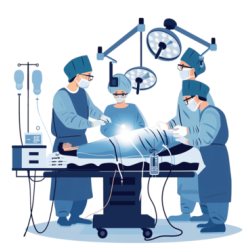

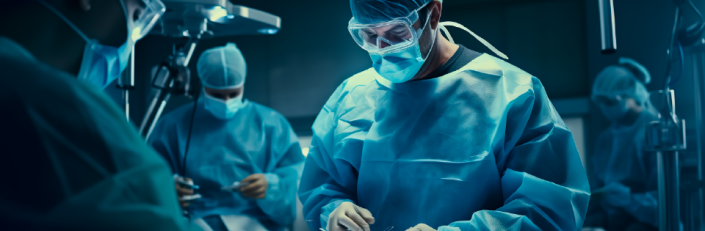
The Department of GI Surgery & General Surgery is a specialized medical department that focuses on surgical procedures related to the abdominal area and the digestive tract. Surgeons at Fortis Hospital, Vasant Kunj are highly skilled and trained to perform a wide range of surgical procedures, both traditional and minimally invasive techniques like laparoscopy.
Abdominal Surgeries: The doctors at Fortis Hospital, Vasant Kunj. The department specializes in surgeries involving various organs within the abdominal cavity. This includes procedures related to the esophagus, gallbladder, stomach, intestines, anus, and more. These surgeries may be required to treat conditions such as gallstones, hernias, tumors, and digestive disorders.
Minimally Invasive Techniques: Surgeons at Fortis Hospital, Vasant Kunj use minimally invasive techniques like laparoscopy. This approach involves making small incisions, which results in shorter hospital stays, reduced pain, and quicker recovery for of patients.
Comprehensive Care: GI, GI Oncology, General surgeons and Gastroenterologists at Fortis Hospital are well-equipped and trained to manage the complete spectrum of medical and surgical issues associated with the digestive system. This ensures that patients receive holistic care that includes both medical management and surgical intervention when necessary.



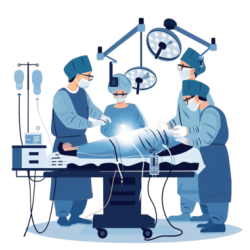


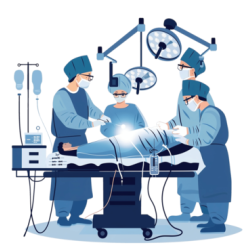



The Department of GI Surgery & General Surgery is a specialized medical department that focuses on surgical procedures related to the abdominal area and the digestive tract. Surgeons at Fortis Hospital, Vasant Kunj are highly skilled and trained to perform a wide range of surgical procedures, both traditional and minimally invasive techniques like laparoscopy.
Abdominal Surgeries: The doctors at Fortis Hospital, Vasant Kunj. The department specializes in surgeries involving various organs within the abdominal cavity. This includes procedures related to the esophagus, gallbladder, stomach, intestines, anus, and more. These surgeries may be required to treat conditions such as gallstones, hernias, tumors, and digestive disorders.
Minimally Invasive Techniques: Surgeons at Fortis Hospital, Vasant Kunj use minimally invasive techniques like laparoscopy. This approach involves making small incisions, which results in shorter hospital stays, reduced pain, and quicker recovery for of patients.
Comprehensive Care: GI, GI Oncology, General surgeons and Gastroenterologists at Fortis Hospital are well-equipped and trained to manage the complete spectrum of medical and surgical issues associated with the digestive system. This ensures that patients receive holistic care that includes both medical management and surgical intervention when necessary.
You will lose weight quickly after bariatric surgery, but surgery is only one component of a multipronged treatment for obesity. Bariatric surgery is an “aid” or “catalyst” for achieving weight loss. But it requires a life-long commitment towards lifestyle changes. The end goal of bariatric surgery is to help patients develop healthier habits and lifestyle changes over the long haul.
Bariatric surgery is not a cosmetic procedure. While losing weight can dramatically change and enhance your appearance, the real benefits of obesity surgery are health and longevity. Obesity is linked to more than 20 chronic health conditions, including cancer risk and weight loss helps you to minimize the impact on almost all of them.
Most people think that weight loss surgery is only for people who are very severely obese and not for them. In fact, the people who benefit the most from surgery are not only obese, but they also have other associated medical conditions that can impact their health and affect their quality of life. So, if you have a BMI of 32.5 or more and are taking medications for type 2 diabetes, raised cholesterol, raised blood pressure, have sleep apnoea, or are having chronic low back pain/knee joint pain, infertility, fatty liver etc., you are probably a candidate for bariatric surgery.
The risk of death from bariatric surgery is lower than for people with severe obesity who don’t have the surgery. Today, the risk of death from bariatric surgery is considered equivalent to or lower than other surgeries, such as gallbladder surgeries or hip replacements. In fact, bariatric surgery can also significantly lower the risk of death from other causes such as heart disease, stroke, and some cancers. Overall, people who don’t have bariatric surgery for severe obesity are often the ones at risk from having a shorter lifespan.
Patients of liver cirrhosis with end stage liver failure require a liver transplant. The other condition requiring a liver transplant include acute or fulminant liver failure and liver cancer (Hepatocellular Carcinoma).
Liver transplant involves replacement of a patient's diseased liver by a new liver which is derived either from a brain-dead but heart-beating donor (i.e., a cadaver – Cadaveric or Deceased-Donor Liver Transplant or DDLT) or from a living donor (Living Donor Liver Transplant or LDLT). Liver from a cadaver is a complete liver, while that from the living donor is a half or hemiliver. Liver is a unique organ in the human body as it has a special capacity of regeneration.
It has been seen that even 70% of a liver can be safely removed without any long-term consequences because of this regenerative capacity. The remaining liver rapidly grows and restores full functional capacity needed for normal functioning. Due to this unique property, a part of the healthy liver can be safely removed from a voluntary donor and used to replace a diseased liver in a patient, without causing harm to either the donor or the patient. The remaining half of the liver in both donor and recipient grows back to achieve full functional recovery within 3–4 weeks.
Fortis is among the very few hospitals offering Small Incision Donor Hepatectomy (SIDH) for donors. SIDH minimizes time for recovery and significantly reduces complications related to surgical wounds and scarring by using a smaller and more cosmetically acceptable scar compared to conventional incisions used at other centers. In the pursuit of improving donor safety and outcomes, the department also envisions introducing laparoscopy and robotic-assisted donor hepatectomy.