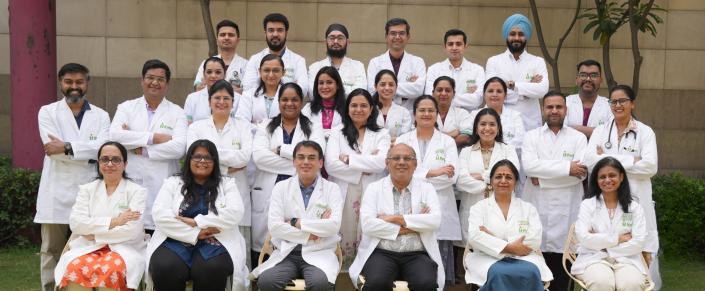
Taking care of your kidneys since 1999
27 years of Complete Renal Care

Fortis Healthcare Research Foundation (FHRF) (formerly Malar Stars Medicare (MSM) is a Section 8, not-for-profit organization, incorporated, under the Companies Act, 1956 and is a wholly owned subsidiary of Fortis Malar Hospitals Limited (FMHL), which in turn is a subsidiary of Fortis Healthcare Limited, the Ultimate Holding Company. The organization is also registered with DARPAN under registration number TN/2025/0917921.
Its overarching mission is: “Promoting Education and Research for the Benefit of Humanity.”
Promoting Education and Research for the benefit of humanity.




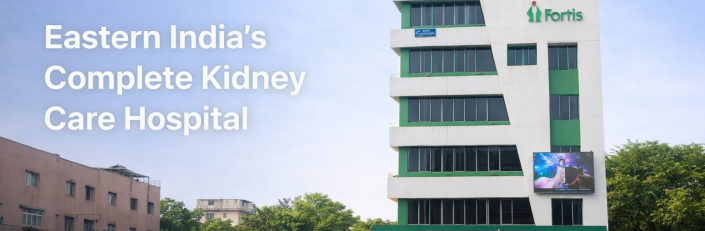
Fortis Hospital & Kidney Institute, Kolkata, established at the heart of the city is one of the oldest institution of its kind providing exclusive Renal Care in Kolkata and Eastern Region.
With 27 years of excellence in Renal Care, the hospital over the years has become an well equipped hospital using current technologies and equipment to deliver unparalleled treatment for Urology and Nephrology diseases. Based on three key principles Clinical Excellence, Ethical Conduct and Patient Centricity this hospital has several eminent physicians, surgeons and health care providers of national and international repute. Apart from clinical excellence, the hospital also provides experienced care to patients with empathy from internationally trained nurses which ensures holistic care for millions of patients who have come to us over the years.
The Hospital is the first to introduce Laparoscopic Donor Nephrectomy, URS-Lithoclast, Lithotripsy, PCNL and Penile Implant for the very first time in Eastern India.
Over the years, the hospital has grown and provides unparalleled treatment in:
The hospital uses the most revolutionary laparoscopic and invasive technologies like 3D-4K which is pin point and precise resulting in bloodless, pain free surgery with no tissue damage.
The hospital has also carried out successful Kidney Transplants with high success rate because of its efficient Infection control team and renowned Kidney Transplant Team.
Our hospital also boasts a high success rate in kidney transplants, thanks to our skilled Kidney Transplant Team and robust Infection Control measures.
We offer:
Recognized nationally, Fortis Hospital & Kidney Institute has been ranked No. 1 in Nephrology and No. 2 in Urology by the Times Health All India Critical Care Hospital Ranking Survey 2026.
We are committed to further enhancing our services with a new project focused on advanced patient care and modern facilities.
Our Facilities Include:
At Fortis Hospital & Kidney Institute, we continue to lead the way in providing compassionate, expert renal care for patients across India.



Urological surgery is decided by millimetres. The nerves that control continence run in a bundle along the surface of the prostate. The blood supply to a kidney can be clamped for only so long before healthy tissue is lost. A ureter is thinner than a drinking straw and unforgiving of a clumsy suture.
That is the anatomy the Fortis Institute of Robotic Urology & Uro-Oncology at Fortis Hospital Mohali works in every day — using the da Vinci Xi platform, with 3D vision at up to 10x magnification and wristed instruments that articulate through a full range of motion inside spaces a human hand cannot enter.
In July 2026, Intuitive designated Fortis Hospital Mohali a Total Program Observation (TPO) site — the second in India and the first outside a metro city. Surgical teams from other hospitals now travel to Mohali to observe how a complete robotic program operates: case selection, theatre workflow, team coordination and post-operative pathways. It is an external, manufacturer-level assessment of the whole program, not a claim about any one surgeon.
For men and women across Mohali, Chandigarh, Panchkula and Punjab, the practical value is this: a robotic urology service delivered inside a full tertiary hospital, with nephrology, medical and radiation oncology, interventional radiology, critical care, dialysis and transplant services in the same building.
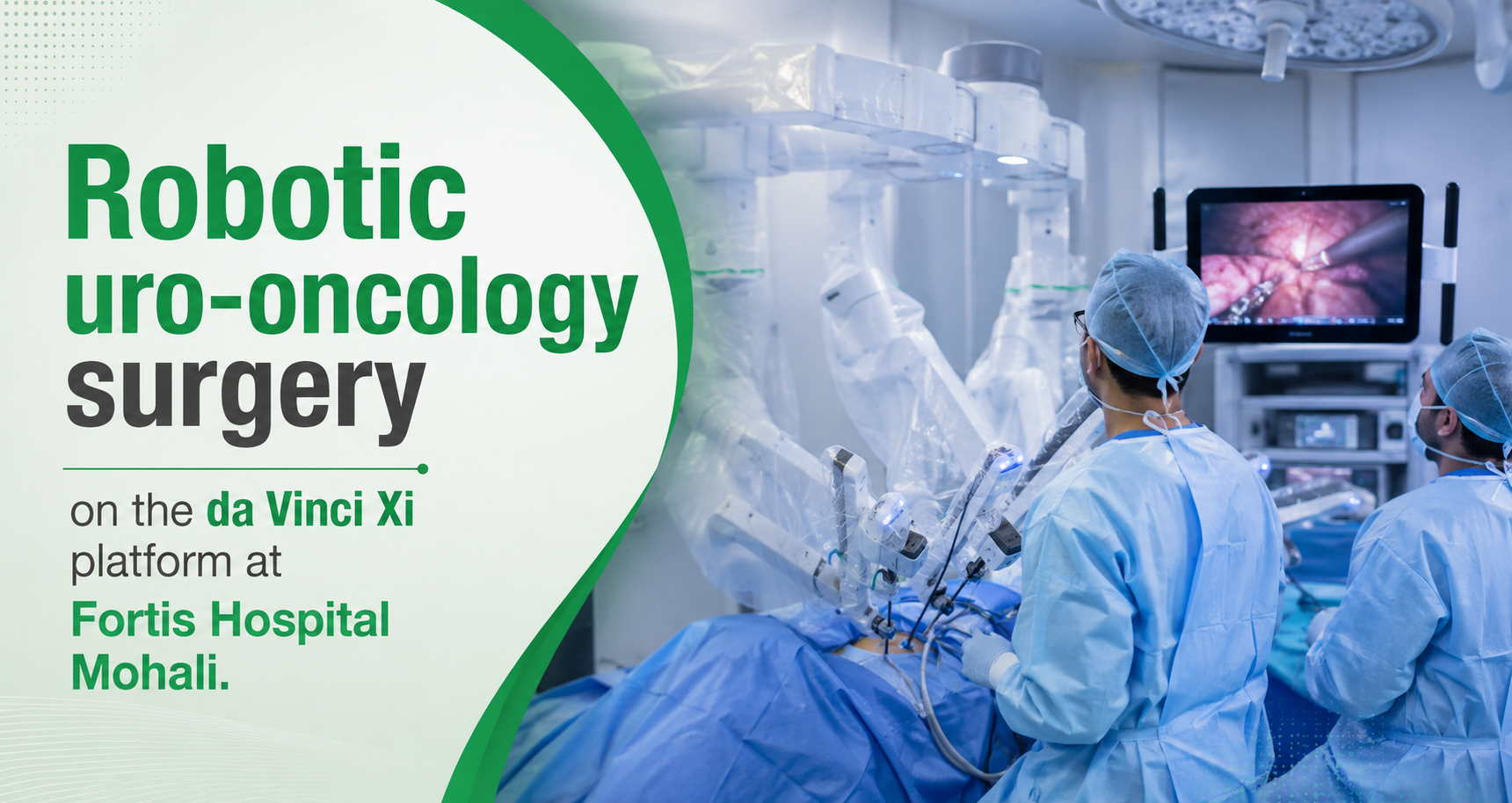
The urinary tract sits deep in the pelvis and retroperitoneum, hemmed in by bone, bowel and major vessels. Open surgery reaches it through a large incision. Standard laparoscopy reaches it through small ports but with rigid instruments and a flat 2D image.
The robotic platform is designed for that geometry specifically:
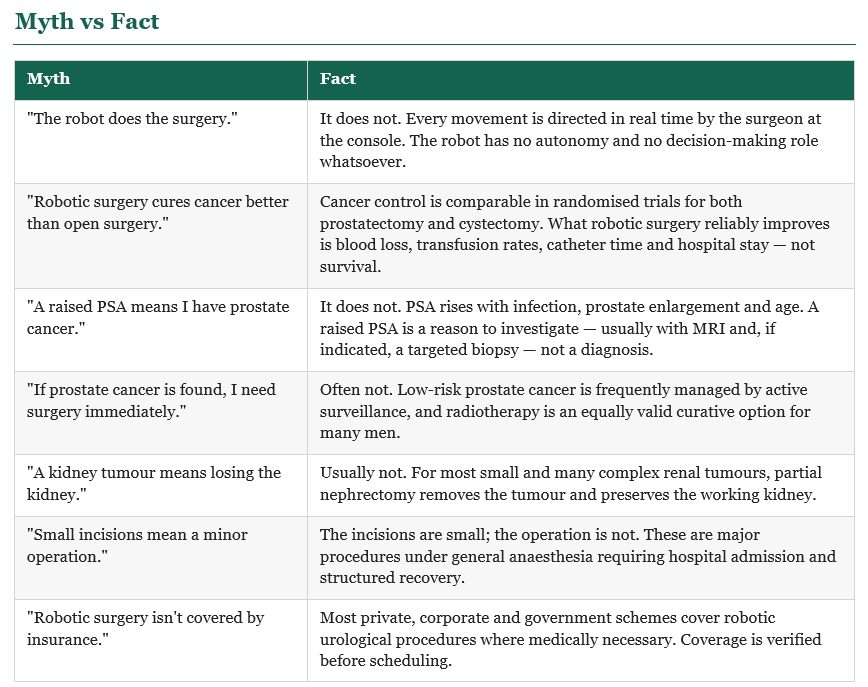
What the evidence actually shows. Across urology, the perioperative advantages of the robotic approach are consistently demonstrated: less blood loss, lower transfusion rates, shorter catheter time and shorter hospital stay. Where the honest picture is more nuanced is long-term function — in randomised trials of prostatectomy, urinary and sexual function at 12 and 24 months were comparable between robotic and open surgery. The robot’s real contribution is that it makes complex reconstruction feasible through keyhole incisions, and it makes difficult cases — a central renal tumour, a redo ureter, a tumour thrombus in the vena cava — approachable without a large open wound.
We would rather tell you that accurately than overstate it.
For urological cancers, robotic surgery pairs complete tumour clearance with the nerve- and organ-sparing precision that protects long-term quality of life. Every case is planned in a multidisciplinary uro-oncology board — surgical, medical and radiation oncology, radiology and pathology — because the right treatment for a urological cancer is not always surgery at all.
Prostate Cancer — Robotic Radical Prostatectomy
Nerve-sparing removal of the prostate, aiming to preserve urinary continence and erectile function while achieving complete cancer clearance. Robot-assisted prostatectomy is now the most widely used surgical approach worldwide. The magnified 3D view is what allows the neurovascular bundles to be dissected off the prostatic capsule under direct vision. Randomised evidence shows less blood loss, lower transfusion rates and shorter hospital stay than open surgery, with comparable continence, sexual function and cancer-control outcomes at two years.
Not every prostate cancer needs surgery.
Low-risk disease is often best managed by active surveillance, and radiotherapy is an equally valid curative option for many men. Where surgery is the right answer, robotic surgery is how we do it. Where it isn’t, we will say so.
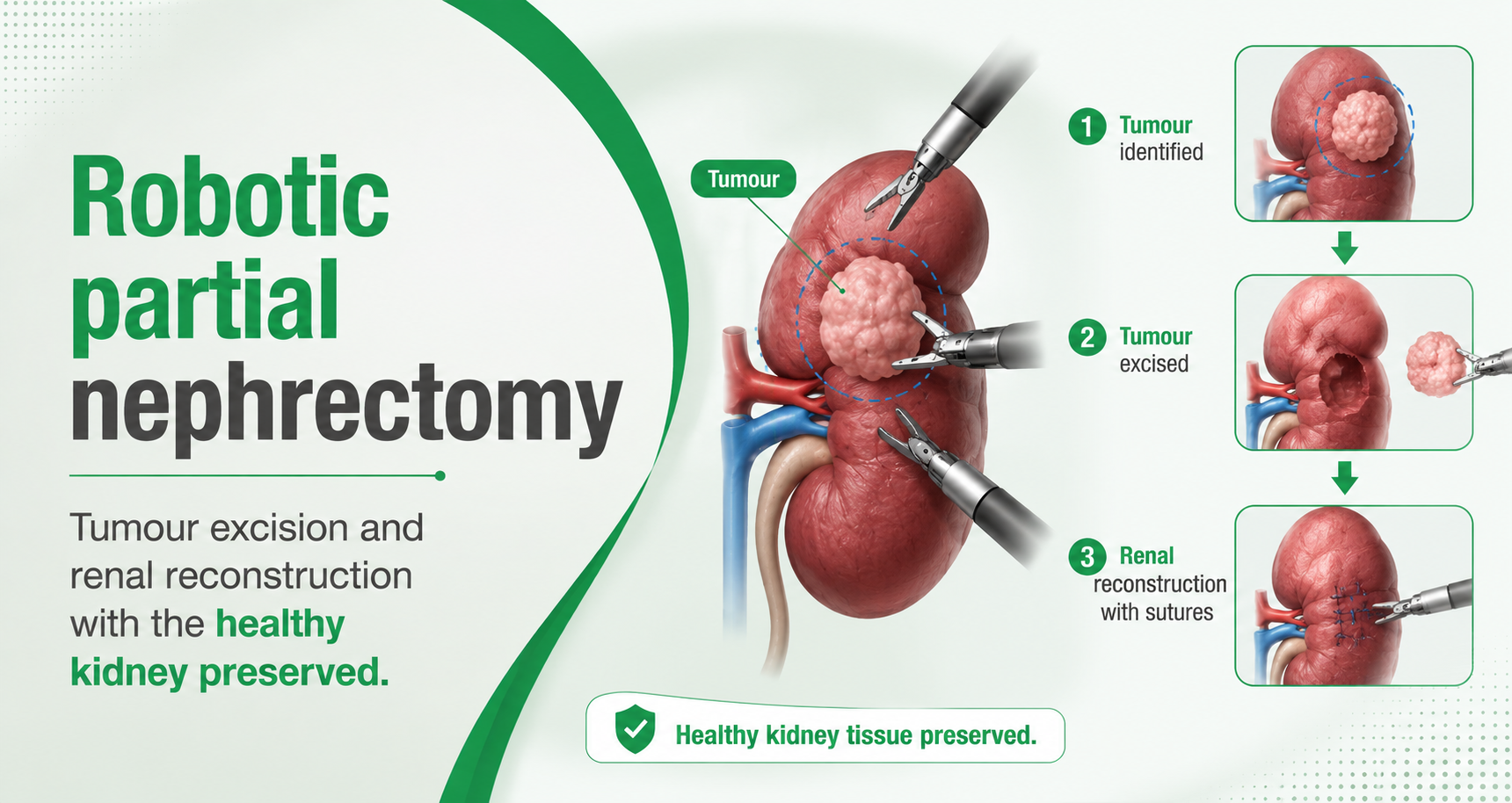
Kidney Cancer — Robotic Partial Nephrectomy / Tumour Enucleation / Retroperitoneal Partial Nephrectomy
Only the tumour-bearing portion of the kidney is removed and the remaining kidney reconstructed, preserving renal function. This matters most in patients with a solitary kidney, bilateral tumours, diabetes or existing chronic kidney disease. Partial nephrectomy is the guideline-preferred option for small renal masses wherever it is technically achievable, and precise reconstruction under a limited clamp time is exactly what the robotic platform supports. The retroperitoneal approach avoids entering the abdominal cavity altogether in selected posterior tumours.
Complex Renal Masses — Robotic Tumour Resection
Central, hilar or deep-seated tumours that are difficult to reach and difficult to reconstruct. These are the cases where the difference between a partial and a total nephrectomy is often the surgeon’s ability to suture accurately in a confined space.
Bladder Cancer — Robotic Radical Cystectomy with Intracorporeal Urinary Diversion / Neo-Bladder
The bladder is removed and a new bladder or diversion is constructed entirely inside the body, without opening the abdomen to do so. Randomised evidence — the RAZOR trial for oncological non-inferiority and the iROC trial for recovery — supports the robotic approach, with the iROC trial reporting more days alive and out of hospital in the 90 days after surgery. Transfusion rates are consistently lower. Open cystectomy remains an entirely appropriate option, and for some patients it is the better one; that decision is made case by case.
Adrenal Tumours — Robotic Adrenalectomy
Minimally invasive removal of adrenal masses, including hormone-secreting tumours such as phaeochromocytoma, where controlled dissection and early vascular control matter for intraoperative haemodynamic stability. Performed with anaesthesia and endocrinology input.
IVC Tumour Thrombus — Robotic Thrombectomy
Among the most demanding operations in urology: extracting tumour thrombus that has grown from a kidney tumour into the inferior vena cava. Performed in selected cases with vascular and critical care support on standby.
Beyond cancer, robotic surgery restores normal urinary drainage with durable repairs through small incisions.
UPJ Obstruction — Robotic Pyeloplasty
Reconstruction of the blocked junction between the kidney and the ureter to restore free drainage and protect kidney function. Pyeloplasty is a suturing operation from start to finish, which is why it translates so well to the robotic platform.
Ureteric Strictures — Robotic Ureteric Reimplantation / Reconstruction
Precise repair of a narrowed or injured ureter — including strictures following previous surgery, stones or radiotherapy — avoiding open reconstruction and preserving the kidney above.
Vesicovaginal and Complex Fistula Repair
Robot-assisted repair of urinary fistulae, where the tissue planes are scarred and the closure needs to be watertight and tension-free.
Kidney Transplant — Robot-Assisted Transplantation
In selected recipients, the donor kidney is implanted through a small incision rather than the conventional large open approach. The main advantages reported are lower wound-complication rates and less post-operative pain — particularly relevant in obese or diabetic recipients, where open transplant wounds heal poorly. Recipient selection is made jointly by the transplant surgical and nephrology teams, and conventional open transplantation remains the standard approach for most patients.
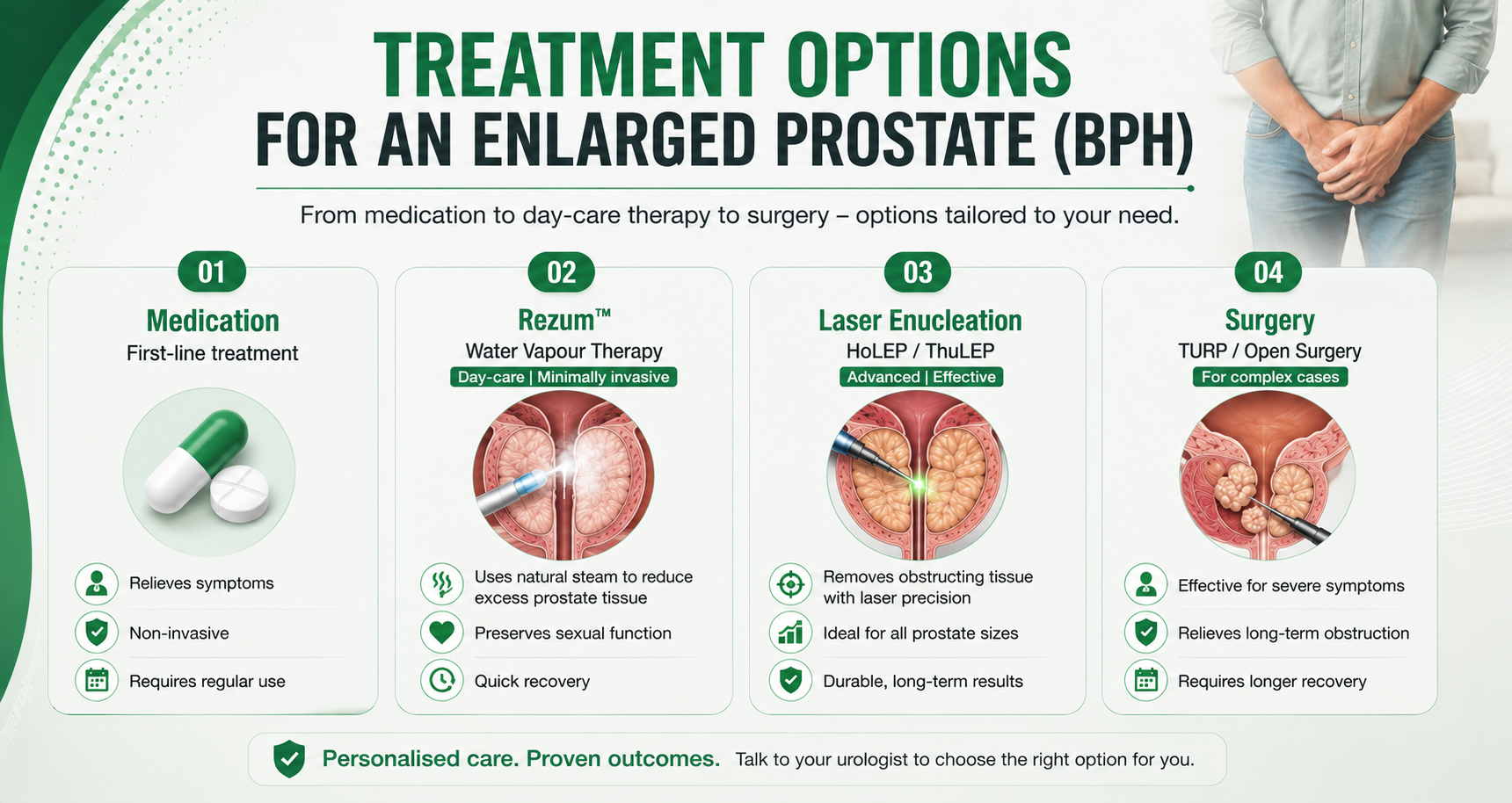
Not every prostate condition needs major surgery. Benign prostatic hyperplasia — an enlarged prostate causing poor flow, urgency and night-time waking — has a range of treatments, and the most invasive one is rarely the right first answer.
Rezūm Water Vapour Therapy — a day-care procedure using targeted steam to shrink excess prostate tissue and restore normal flow. It is particularly useful for men who are at higher surgical or anaesthetic risk, and for men who want to preserve ejaculatory function, which conventional prostate surgery frequently affects.
Laser enucleation of the prostate — for larger glands, endoscopic laser enucleation offers a durable, catheter-free result without an abdominal incision.
Offering both robotic surgery and these less invasive options under one roof is what allows the department to match the procedure to the patient rather than to the equipment available.
Individual outcomes vary with diagnosis, stage, anatomy and general health.
Robotic surgery is frequently the right choice for prostate, kidney and bladder cancer surgery, for complex reconstruction, and wherever preserving continence, sexual function or kidney function is a priority.
It is not automatically the right choice. Open surgery may be preferable for very large or locally advanced tumours, for patients who cannot tolerate the steep head-down positioning and prolonged pneumoperitoneum a robotic procedure requires, or where extensive prior surgery has left the abdomen hostile. Some conditions do not need surgery at all. Suitability depends on your diagnosis, imaging, kidney function, cardiac and respiratory fitness, and anaesthetic assessment — which is what the consultation is for.
Robotic outcomes depend on the surgeon at the console. The platform executes decisions with precision; it does not make them.
Dr. Dharmender Aggarwal — Uro-Oncology & Robotic Surgery, Fortis Hospital Mohali
Fellowship-trained robotic uro-oncologist; Royal College of Surgeons of England; ERUS- and ORSI-certified in robotic surgery. Practice focused on robotic surgery for kidney, bladder and prostate cancer, including complex partial nephrectomy and intracorporeal urinary diversion.
Dr. Rohit Dadhwal — Senior Consultant, Urology, Andrology & Robotic Surgery, Fortis Hospital Mohali
MCh Urology, AIIMS New Delhi; uro-oncology training, Mayo Clinic, USA. Among the earliest adopters of Rezūm water vapour therapy in India, alongside robotic and reconstructive urology practice.
The department operates within the wider Fortis Institute of Robotic Surgery at Mohali, sharing theatre teams, robotic nursing staff and anaesthesia protocols with gynaecology, gynae-oncology, GI and thoracic robotic services — the institutional volume that keeps a robotic program safe.
If you have been diagnosed with prostate, kidney or bladder cancer, told you need surgery for a blocked kidney or an enlarged prostate, or want a second opinion on a plan you have already been given — a consultation will tell you what your realistic options are, including the ones that do not involve surgery.
Request a call back — 72728 72728
Fortis Hospital, Sector 62, Phase VIII, Mohali, Punjab
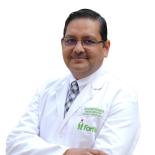



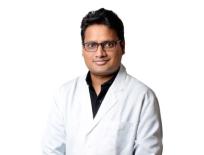
The Nephrology Department at Fortis Memorial Research Institute (FMRI), Gurugram, is dedicated to providing comprehensive care for patients with kidney disorders through advanced diagnostics, evidence-based treatment, and a multidisciplinary approach. Our team of experienced nephrologists specializes in the prevention, diagnosis, and management of both acute and chronic kidney diseases, ensuring personalized treatment plans tailored to each patient's clinical needs.
The department offers a full spectrum of nephrology services, including the management of chronic kidney disease (CKD), acute kidney injury (AKI), glomerular diseases, diabetic kidney disease, hypertension-related kidney disorders, electrolyte and acid-base imbalances, inherited kidney diseases, and complex renal conditions. We also provide expert care for patients requiring hemodialysis, peritoneal dialysis, and continuous renal replacement therapy (CRRT) for critically ill patients.
Working in close collaboration with the Kidney Transplant and Urology teams, our nephrologists provide comprehensive pre-transplant evaluation, donor assessment, post-transplant monitoring, and long-term immunosuppressive management to ensure the best possible outcomes for kidney transplant recipients.
The department is equipped with modern dialysis facilities and follows internationally accepted clinical protocols to deliver safe, high-quality patient care. A multidisciplinary team comprising nephrologists, transplant physicians, intensivists, dietitians, nurses, and rehabilitation specialists ensures coordinated care throughout the patient's treatment journey.
At FMRI, patient safety, compassionate care, and clinical excellence remain our highest priorities. The Nephrology Department is committed to improving kidney health, slowing disease progression, and enhancing the quality of life for patients from India and around the world through personalized care, advanced technology, and continuous clinical innovation
Explore Advanced Bone Marrow Transplant (BMT) for Thalassemia at Fortis Hospital, Gurugram
For many children and adults living with thalassemia, life revolves around regular blood transfusions, iron chelation therapy, and frequent hospital visits. While these treatments help manage the condition, Bone Marrow Transplant (BMT) may offer a long-term treatment option for eligible patients.
At Fortis Hospital, Gurugram, our dedicated Bone Marrow Transplant Program combines experienced specialists, advanced transplant protocols, and comprehensive international patient services to provide personalised care for patients from India and across the globe.
Book Your Free Expert Consultation
Request a Medical Opinion | Cost Estimate | Donor Evaluation
One of India's Most Comprehensive Bone Marrow Transplant Programs
Choosing a Bone Marrow Transplant centre is one of the most important decisions a family will make. At Fortis Hospital, Gurugram, we combine decades of clinical expertise with a multidisciplinary approach to provide comprehensive care for children and adults with thalassemia.
2,500+ Bone Marrow Transplants Performed
Our Bone Marrow Transplant Program has successfully performed more than 2,500 Bone Marrow Transplants, making Fortis Hospital, Gurugram one of India's experienced centres for complex blood disorders.
Every transplant is supported by a highly specialised team committed to delivering personalised, evidence-based care.
Dedicated Bone Marrow Transplant Experts
Your treatment is managed by a multidisciplinary team that includes:
This collaborative approach ensures every patient receives comprehensive care before, during, and after transplantation.
Could Bone Marrow Transplant Be the Right Treatment?
Living with thalassemia means more than regular transfusions.
It often involves repeated hospital visits, ongoing medication, iron overload management, and emotional stress for both patients and families.
For carefully selected patients, Bone Marrow Transplant offers the possibility of treating the underlying disease rather than managing its symptoms alone.
Our specialists perform a comprehensive evaluation before recommending whether transplantation is the appropriate treatment option.
Don't Have a Fully Matched Donor?
You May Still Have Options.
Many families believe that transplantation is only possible if a perfectly matched sibling donor is available.
Advances in Bone Marrow Transplant have expanded donor possibilities.
Depending on your medical condition, our specialists may evaluate:
Every patient's donor options are carefully reviewed to determine the most appropriate transplant strategy.
Speak to Our Bone Marrow Transplant Specialist Today
Meet Our Expert
Dr. Vikas Dua
Principal Director
Pediatric Hematology, Hemato-Oncology & Bone Marrow Transplant
Dr. Vikas Dua is one of India's leading Pediatric Bone Marrow Transplant specialists with extensive experience in treating children with:
Working alongside an experienced multidisciplinary transplant team, Dr. Dua provides comprehensive evaluation, treatment planning, and long-term follow-up for patients from India and around the world.
(Embed Doctor Video Here)
Why International Families Choose Fortis Hospital, Gurugram
Travelling to another country for treatment is a major decision.
Our International Patient Services team supports families throughout their journey by providing:
From your first enquiry until you return home, one dedicated coordinator remains your single point of contact.
Your Treatment Journey
Step 1
Share your medical reports online.
Step 2
Receive an expert consultation with our Bone Marrow Transplant specialist.
Step 3
Get a personalised treatment plan and transparent cost estimate.
Step 4
Our International Patient Team assists with visas, travel, accommodation, and treatment scheduling.
Step 5
Receive advanced Bone Marrow Transplant care at Fortis Hospital, Gurugram.
Step 6
Continue your recovery with structured follow-up and ongoing specialist support.
Transparent Treatment Planning
We understand that families need clarity before making treatment decisions.
After reviewing your medical reports, our specialists will provide:
Our objective is to help you make informed decisions with complete confidence.