
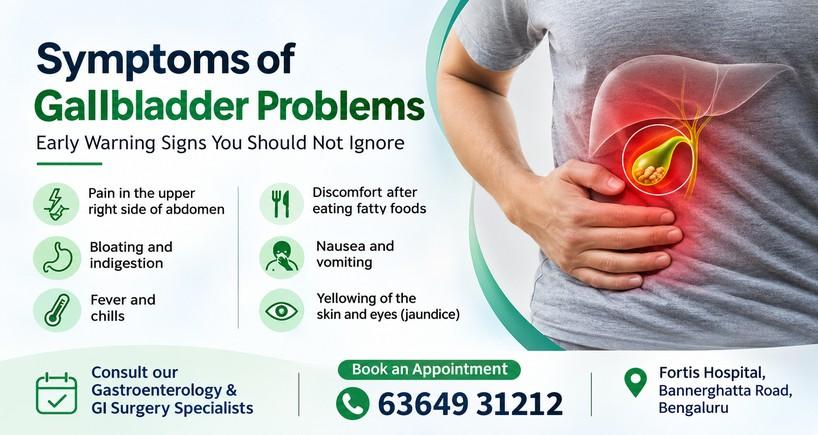


7 Warning Signs of Gallbladder Problems You Should not Ignore
Symptoms of Gallbladder Problems: Early Warning Signs You Should Not Ignore
Introduction
The gallbladder is a small, pear-shaped organ located beneath the liver on the upper right side of the abdomen. Its primary function is to store and concentrate bile, a digestive fluid produced by the liver that helps break down fats.
Although the gallbladder plays an important role in digestion, problems affecting this organ can sometimes go unnoticed during the early stages. Gallstones, inflammation of the gallbladder (cholecystitis), and bile duct blockages are some of the common conditions that can affect its functioning.
Recognising the early symptoms of gallbladder problems is important for timely diagnosis and treatment. Persistent abdominal pain, nausea, vomiting and digestive discomfort should not be ignored, particularly when they occur after meals.
What Are the Common Symptoms of Gallbladder Problems?
Gallbladder conditions can cause different symptoms depending on their severity and the underlying cause. Some people with gallstones may not experience any symptoms, while others may develop sudden and severe discomfort.
Here are some common warning signs to watch out for:
1. Pain in the Upper Right Side of the Abdomen
One of the most common symptoms of gallbladder problems is pain in the upper right portion of the abdomen, just below the ribs.
This pain may:
- Occur suddenly, particularly after eating.
- Feel sharp, intense or cramping.
- Last from several minutes to a few hours.
- Spread towards the back or right shoulder.
- Become severe enough to interfere with daily activities.
This type of pain is commonly associated with gallstones blocking the flow of bile.
2. Abdominal Pain After Eating Fatty Foods
Some people experience gallbladder-related discomfort after consuming oily, fried or high-fat foods.
This happens because the gallbladder contracts to release bile when fat enters the digestive system. If gallstones obstruct the bile flow, this contraction can trigger pain.
If you frequently experience upper abdominal discomfort after meals, it is advisable to seek medical evaluation.
3. Nausea and Vomiting
Nausea and vomiting may occur during an episode of gallbladder pain or inflammation. These symptoms may accompany abdominal discomfort and can sometimes affect appetite and normal eating habits.
Persistent vomiting, particularly when associated with severe abdominal pain, requires prompt medical attention.
4. Bloating and Indigestion
Gallbladder problems may sometimes be associated with digestive symptoms such as:
- Abdominal bloating.
- Excessive burping.
- Gas and discomfort.
- A feeling of fullness after meals.
- Indigestion, particularly after fatty foods.
However, these symptoms are not specific to gallbladder disease and may also occur due to other digestive conditions.
5. Pain That Spreads to the Back or Right Shoulder
Gallbladder pain does not always remain limited to the abdomen. Some individuals may experience discomfort that radiates towards the right shoulder blade or upper back.
This can happen due to referred pain associated with gallbladder inflammation or irritation.
If this discomfort occurs repeatedly, especially with abdominal pain, a medical assessment is recommended.
6. Fever and Chills
Fever and chills may indicate inflammation or infection of the gallbladder, a condition known as acute cholecystitis.
Other symptoms may include:
- Persistent pain in the upper right abdomen.
- Tenderness when touching the abdomen.
- Nausea and vomiting.
- General weakness.
These symptoms should not be ignored, as acute gallbladder inflammation may require urgent medical treatment.
7. Yellowing of the Skin and Eyes (Jaundice)
Jaundice occurs when bilirubin builds up in the bloodstream, causing the skin and whites of the eyes to appear yellow.
In some cases, gallstones may block the common bile duct, preventing bile from flowing normally into the intestine.
Other associated symptoms may include:
- Dark-coloured urine.
- Pale or clay-coloured stools.
- Itching of the skin.
- Abdominal discomfort.
Jaundice requires prompt medical evaluation, particularly when accompanied by abdominal pain or fever.
What Causes Gallbladder Problems?
Several factors can contribute to gallbladder conditions. Some of the common causes include:
Gallstones: Hardened deposits of digestive fluid that develop inside the gallbladder. They can block the bile ducts and cause pain or inflammation.
Gallbladder inflammation (Cholecystitis): Usually occurs when a gallstone blocks the cystic duct, resulting in inflammation.
Bile duct obstruction: Gallstones can move into the bile ducts and obstruct the normal flow of bile.
Gallbladder polyps: Growths that develop on the inner lining of the gallbladder. Most are benign, but certain polyps may require monitoring or further evaluation.
When Should You Consult a Doctor?
Do not ignore recurring abdominal discomfort or symptoms that could indicate a gallbladder problem.
Seek immediate medical attention if you experience:
- Severe or persistent abdominal pain.
- Abdominal pain accompanied by fever or chills.
- Yellowing of the skin or eyes.
- Persistent vomiting.
- Severe abdominal pain radiating towards the back.
Early diagnosis can help identify the underlying condition and prevent complications.
How Are Gallbladder Problems Diagnosed?
A doctor may recommend a combination of clinical assessment and diagnostic investigations to identify gallbladder conditions.
Common investigations include:
1. Ultrasound of the Abdomen: An abdominal ultrasound is commonly used to detect gallstones, gallbladder wall thickening and signs of inflammation.
2. Blood Tests: Blood investigations may help identify signs of infection, inflammation, liver dysfunction or bile duct obstruction.
3. Liver Function Tests (LFT): These tests help evaluate liver health and identify possible abnormalities associated with bile duct obstruction.
4. Additional Imaging Tests: Depending on the clinical findings, doctors may recommend CT scans, MRCP or other specialised investigations.
What Are the Treatment Options for Gallbladder Problems?
Treatment depends on the type of gallbladder condition, the severity of symptoms and the patient's overall health.
Some treatment options include:
- Observation: People with asymptomatic gallstones may not require immediate treatment. Regular medical follow-up may be recommended.
- Medication: Selected patients may be prescribed medicines for specific gallbladder-related conditions. Medication is not suitable for every case of gallstones.
- Laparoscopic Cholecystectomy: Surgical removal of the gallbladder using minimally invasive techniques. It is a commonly recommended treatment for symptomatic gallstones and certain gallbladder conditions.
- Advanced Endoscopic Procedures: In selected cases involving bile duct stones, procedures such as ERCP may be recommended.
Your doctor will determine the most appropriate treatment based on your diagnosis.
Can You Live a Normal Life Without a Gallbladder?
Yes. Most people can lead a normal and healthy life after gallbladder removal.
Once the gallbladder is removed, the liver continues to produce bile, which flows directly into the small intestine. Some individuals may experience temporary digestive changes, particularly after consuming fatty foods, but many gradually return to their usual eating habits.
Your doctor may recommend dietary adjustments during recovery.
Frequently Asked Questions (FAQs)
1. What is the first sign of gallbladder problems?
Pain in the upper right side of the abdomen is one of the most common symptoms. It may occur after meals and sometimes spread towards the back or right shoulder.
2. Can gallbladder problems cause acidity and gas?
Gallbladder conditions may be associated with bloating, indigestion and gas. However, these symptoms are not specific to gallbladder disease and can have several other causes.
3. Are gallstones dangerous?
Not all gallstones cause problems. However, gallstones that block bile ducts can lead to complications such as gallbladder inflammation, bile duct infection or pancreatitis.
4. Can gallstones go away without surgery?
Some gallstones do not require treatment if they are not causing symptoms. However, symptomatic gallstones are commonly treated with gallbladder removal surgery. Treatment decisions depend on individual clinical findings.
5. Is gallbladder removal surgery safe?
Laparoscopic gallbladder removal is a commonly performed procedure. As with any surgery, it carries certain risks, which should be discussed with the treating surgeon.
6. Which doctor should I consult for gallbladder problems?
You can consult a gastroenterologist or a general and gastrointestinal surgeon for the evaluation and management of gallbladder conditions.
Consult Gallbladder Specialists at Fortis Hospital, Bannerghatta Road, Bengaluru
Gallbladder symptoms should not be ignored, particularly when abdominal pain becomes frequent, severe or is accompanied by fever, vomiting or jaundice.
At Fortis Hospital, Bannerghatta Road, Bengaluru, patients can seek evaluation and treatment for gallbladder-related conditions with specialist medical care and appropriate diagnostic support.
If you are experiencing symptoms such as upper abdominal pain, recurrent indigestion, nausea or suspected gallstones, consult a specialist to understand your condition and available treatment options.
Book an Appointment
Fortis Hospital, Bannerghatta Road, Bengaluru
Appointment Number: 63649 31212
Early diagnosis and timely medical care can help prevent complications and support better digestive health.
Categories
Clear allMeet the doctor

- General Surgery | General Surgery | General and Laparoscopic Surgery | General and Minimal Access Surgery | Bariatric Surgery | Robotic Surgery
- Gastroenterology and Hepatobiliary Sciences | Gastroenterology and Hepatobiliary Sciences | Gastrointestinal Surgery | GI, Minimal Access and Bariatric Surgery | Metabolic & Bariatric Surgery | Robotic Surgery
-
 32 Years
-
 1150
Related Blogs
View all
When Is A Liver Transplant Recommended?
Alcoholic Liver Disease - Why Worry?

Binge Drinking Trend Is The New Silent Killer

Irritable Bowel Syndrome

Digestive Disorders And Prevention

FAQs

Keep track of your appointments, get updates & more!

