
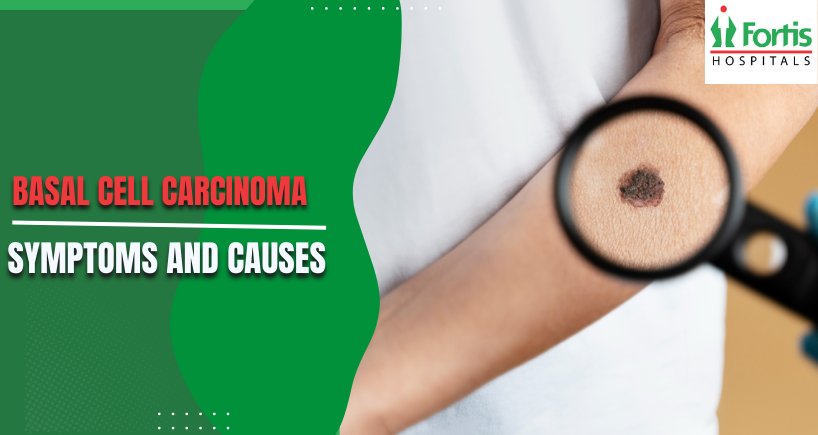


Basal Cell Carcinoma: Symptoms and Causes
Our skin is a living record of our lives, telling stories of sunny days, childhood scrapes, and the simple passage of time. Most of the spots and marks that appear are harmless, a normal part of this story. But sometimes, a new spot emerges that is different. It does not heal, it slowly grows, and it just does not look like anything else on your skin. This is the moment when many people first encounter the term basal cell carcinoma.
Hearing the words "skin cancer" is understandably frightening. It is a phrase loaded with anxiety and uncertainty. However, it is essential to understand that not all skin cancers are the same. Basal cell carcinoma (BCC) is the most common type of skin cancer in the world, and it is also the least dangerous. Understanding what it is, why it happens, and what to look for is the first and most powerful step in demystifying the diagnosis and taking control of your health.
What Is Basal Cell Carcinoma?
Your skin is made up of several layers. The outermost layer is called the epidermis. At the very bottom of the epidermis is a layer of round cells called basal cells. Think of these as the foundation builders for your skin. Their job is to constantly divide and produce new skin cells, which then migrate upwards to replace the older cells that are shed from the surface.
Basal cell carcinoma is a cancer that arises from these foundational cells. It occurs when one of these cells develops a mutation in its DNA that causes it to multiply uncontrollably. Instead of creating normal, healthy skin cells, it creates an abnormal growth of cancerous cells.
The most reassuring fact about this basal cell skin cancer is its behavior. It is a very slow-growing cancer. While it can damage the skin and surrounding tissues if left to grow for a very long time, it is extremely rare for it to spread (metastasize) to other parts of the body. This slow growth and low rate of metastasis are why basal skin cancer has an exceptionally high cure rate.
The Primary Cause Is Sun Exposure
There is no mystery behind the primary cause of basal cell carcinoma. The overwhelming majority of cases are a direct result of long-term exposure to ultraviolet (UV) radiation from the sun or from indoor tanning beds.
The process is a cumulative one. Think of your skin's DNA as a delicate instruction manual. Every time you get a sunburn or even a tan, UV radiation penetrates your skin cells and causes tiny bits of damage to that manual. Your body has remarkable repair systems that can fix most of this damage. Over a lifetime, however, some of this damage can slip through. A key mutation in a basal cell’s DNA can occur, telling that cell to ignore its normal instructions and begin growing without limits.
While anyone can develop a basal cell cancer, certain factors significantly increase your risk:
Cumulative Sun Exposure: The more time you have spent in the sun over your lifetime, the higher your risk.
History of Sunburns: Even a few blistering sunburns, especially during childhood, can dramatically increase your risk later in life.
Fair Skin: People with skin that burns easily, light-colored eyes, and red or blond hair are more susceptible.
Age: Because the damage is cumulative, the risk increases with age.
A Weakened Immune System: People with compromised immune systems are at a higher risk.
Recognizing the Early Warning Signs
One of the challenges of basal cell carcinoma is that it has no single appearance. It can be a master of disguise, mimicking other harmless skin conditions. This is why knowing the different ways it can present itself is so important.
An Open Sore That Bleeds and Does Not Heal
This is a classic presentation. You might have what looks like a small cut or sore that just will not go away. It may bleed, ooze, or form a crust. It might seem to heal up, only to break down and bleed again a few weeks later. A sore that persists in this cycle for more than a few weeks is a major red flag.
A Pearly or Waxy Bump
This is perhaps the most common appearance of basal cell cancer. It often looks like a small, raised bump that is pearly, translucent, or skin-colored. It can also be pink or red. If you look closely, you may see tiny, spidery blood vessels on its surface. As it grows, it may develop a small depression or ulcer in the center.
A Pinkish or Reddish Patch
On the trunk of the body, like the chest or back, BCC can appear as a flat or slightly raised reddish patch. It may be itchy or have a scaly, crusted surface. This type can easily be mistaken for a patch of eczema or psoriasis, but unlike those conditions, it will persist and slowly grow over time.
A Scar-Like Area
A less common but more invasive form of basal cell carcinoma can appear as a flat, firm, waxy area that looks like a scar. The borders of this type are often indistinct, making it difficult to see where the cancer ends and normal skin begins.
Where Basal Cell Cancer Typically Appears
Given that sun exposure is the primary cause, it is no surprise that about 80% of all cases of basal cell skin cancer occur on the parts of the body that receive the most sun. These are the areas that are consistently exposed to UV radiation over a lifetime:
The face, particularly the nose, forehead, and cheeks
The ears
The neck
The scalp
The shoulders and upper back
While it is much less common, a basal skin cancer can develop on any part of the body, even areas that are not typically exposed to the sun.
The Importance of Early Diagnosis and Treatment
The single most important message about this disease is that early detection is the key to a simple and successful cure. When a basal cell carcinoma is caught early, the treatment is often a minor surgical procedure that can be performed in a dermatologist's office.
The diagnostic process begins with a visual examination by a dermatologist, who may use a special magnifying tool called a dermatoscope. If a spot is suspicious, the next step is a skin biopsy. This is a quick and simple procedure where a small sample of the lesion is removed and sent to a lab to be examined by a pathologist.
If the diagnosis is confirmed, the basal cell carcinoma treatment plan is straightforward: remove all of the cancerous cells. This can be done in several ways, such as excisional surgery (cutting the tumor out), Mohs surgery (a precise technique for sensitive areas like the face), or curettage and electrodesiccation (scraping and burning the tumor). The cure rate for these procedures is extremely high, often over 95%.
A Proactive Partnership in Your Skin Health
Basal cell carcinoma is the most common cancer in humans, but it is also one of the most curable. Its cause is clear, and its signs are recognizable. Recognizing the early warning signs is the most powerful tool for protecting your health.
Perform regular self-checks of your skin, and do not hesitate to schedule an appointment with a dermatologist for any new, changing, or unusual spot. Early detection transforms a potentially concerning situation into a simple, manageable problem with an excellent outcome.
Frequently Asked Questions
Q1. Is basal cell carcinoma dangerous?
Ans. Basal cell carcinoma is rarely life-threatening. It grows very slowly and almost never spreads to other parts of the body. However, if it is left untreated, it can be locally destructive. It can grow deep into the skin and damage the surrounding tissue, cartilage, and even bone, which can lead to significant disfigurement.
Q2. What does a biopsy for basal skin cancer involve?
Ans. A skin biopsy is a simple and quick procedure performed in a doctor's office. The area is numbed with a local anesthetic. The doctor will then remove a small piece of the suspicious tissue, often by "shaving" it off the surface or using a small tool to take a "punch" sample. The sample is then sent to a lab for analysis.
Q3. If I have had one basal cell skin cancer, am I likely to get another?
Ans. Yes. Having one basal cell skin cancer significantly increases your risk of developing another one in the future. This is because the underlying cause, sun damage, is widespread across your skin. This highlights the critical importance of lifelong sun protection and regular full-body skin examinations by a dermatologist.
Q4. What is the best way to prevent basal cell cancer?
Ans. Sun protection is the absolute key to prevention. This involves a comprehensive strategy: seeking shade during the sun's peak hours (10 a.m. to 4 p.m.), wearing sun-protective clothing, a wide-brimmed hat, and UV-blocking sunglasses, and, most importantly, using a broad-spectrum sunscreen with an SPF of 30 or higher on all exposed skin every single day.
Categories
Clear allRelated Blogs
View all

Viral Ear Infection : Causes, Symptoms and Treatment Option


Hyperhidrosis: Types, Symptoms, Causes, and Treatment | Fortis Healthcare

COVID-19 related hair loss and hearing problems: How to deal with the after effects of cor...




Keep track of your appointments, get updates & more!

