


Best Colon Cancer Treatment in Mumbai
Best Colon Cancer Treatment in Mumbai
Can You Have Colon Cancer Without Knowing? Symptoms, Risk Factors, Screening, Treatment and Prevention
Colon cancer is among the most common malignancies, affecting both men and women. Worldwide, colon cancer, along with rectal cancer, represents the third most frequently diagnosed cancer and the second leading cause of cancer death. In India, these cancers rank as the fourth most common cancer in both sexes. The rising incidence of colon cancer, especially among young Indians, is mainly attributed to unhealthy lifestyle habits, although genetics may also play a role. A diagnosis of colon cancer can turn your world upside down, but most people with the condition can be cured, especially when it is found early. At Fortis Hospital, Mulund, our world-class team of colon cancer experts will craft a personalized treatment plan to help you get the best outcome.
Colon cancer often develops slowly over several years without causing noticeable symptoms. This makes regular screenings essential to detect the disease early, when it’s highly treatable and outcomes are quite favorable. Learn more about colon cancer, including its symptoms, causes and risk factors, diagnosis, treatment and how to prevent it.
What is Colon Cancer?
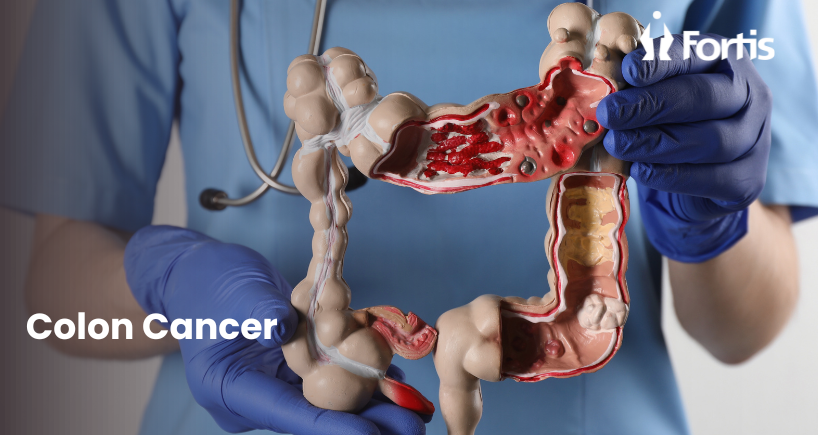
Colon cancer is a type of cancer that forms inside the colon or large intestine. The colon is about 5 feet long and is the main part of the large intestine. The rectum is the last part of the large intestine. Cancers formed in the colon and the rectum are usually grouped together as colorectal cancer, because they share many clinical features.
Colon cancer starts as a small abnormal growth or a polyp in the inner lining of the colon. Over time, some polyps can grow into cancer. Finding and removing polyps before they become malignant through regular screenings can help prevent colon cancer.
What are the Signs and Symptoms of Colon Cancer?
Many people won’t notice any symptoms in the early stages of colon cancer, because polyps grow slowly, taking about 10-15 years to become cancerous. Symptoms, when they appear, can be mild and mistaken for less serious conditions.
The following signs and symptoms shouldn’t be ignored as they may indicate colon cancer:
- Blood in stool or rectal bleeding
- Changes in your bowel habits – such as frequent constipation, diarrhea, or narrow stools lasting more than 6/7 days
- Feeling as if you still need to poop after you have a bowel movement
- Unexplained fatigue and weakness
- Losing weight without trying
- Abdominal pain, cramping, or bloating with no known cause
- A diagnosis of anemia
- Any Lump in abdomen or bottom
When to see a doctor?
Make an appointment with a doctor if you have any concerning symptoms or have a family history of colon cancer. Early detection and treatment can lead to a better outcome.
What Causes Colon Cancer?
Colon cancer happens when cells lining the colon Grow abnormally and begin to multiply rapidly, eventually developing into cancer. These abnormal cells may result from polyps in the colon. While most polyps are benign (noncancerous), some can turn into cancer over time. Health experts aren’t sure why some people develop colon polyps that can become cancerous over the years, although they have identified certain things that may increase a person’s risk.
Risk factors for colon cancer
Factors that may raise your chances of developing precancerous colon polyps and cancer include:
- Advancing age (over 50) – but there’s been an alarming rise in young people being diagnosed with colon cancer
- Smoking and using tobacco products
- Excessive alcohol use
- Obesity
- Diabetes
- Poor diet – high in fat and calories but low in fiber. Having a lot of red meat and processed meat has been linked to an increased risk of colon cancer.
- Not exercising
- A family history of polyps and colon cancer
- A personal history of colon polyps
- Inflammatory bowel disease, like ulcerative colitis and Crohn’s colitis
- Inherited conditions, including Lynch syndrome and familial adenomatous polyposis
When Should I Start Screening for Colon Cancer?
General guidelines suggest that you should get screened for colon cancer beginning at age 45 (once every 10 years) and continue through age 75. However, if you are under 45 and have an increased risk for colon cancer, your doctor may advise you to start screening earlier than the recommended age and get screened more often. A screening test is used to check for cancer or any abnormalities before you have any symptoms. If the screening test shows any abnormalities, your doctor may recommend additional tests.
Colon cancer, if it’s found early, can usually be cured. Having regular screenings as recommended by your doctor, depending on your age, personal and family medical history, and other factors, can help prevent colon cancer. Generally, colonoscopy is the preferred screening method. During a colonoscopy, your doctor can detect or remove polyps. Talk to your provider about which screening tests are right for you:
- FIT test every 2 years
- Colonoscopy every 10 years
How is Colon Cancer Diagnosed?
Your doctor will order some tests and procedures if colon cancer is suspected, based on your screening test result, symptoms, medical history review, and physical examination. These may include:
- Blood tests, including carcinoembryonic antigen (CEA)
- Colonoscopy
- Imaging tests – such as X-ray, endoscopic ultrasound, CT scan, MRI scan, and PET scan
- Biopsy
- FIT test
Once a diagnosis is confirmed, your care team will try to find out how advanced the cancer is, which is called staging. They may also run some more tests to determine if the cancer has spread outside the colon.
How is Colon Cancer Treated?
Several effective treatment options are available for colon cancer. At Fortis Hospital, Mulund, our multidisciplinary team of experts will craft a personalized treatment plan based on the stage and location of your cancer, as well as your age, overall health and preferences.
Treatment for early-stage colon cancers
Surgery is the primary treatment for colon cancer that has not spread to distant areas of the body. While surgery may be the only treatment required for patients whose disease is caught in its earliest stage, some people may be given chemotherapy, or sometimes, radiation therapy, to destroy any remaining cancer cells.
Common surgical procedures for colon cancer include:
- Polypectomy
- Partial colectomy (colon resection)
- Surgical resection with colostomy
- Advanced cases - Exenteration
The type of surgical procedure you will have will depend on your specific condition. At Fortis Hospital, Mulund, our colon cancer surgeons use advanced robotic surgery and other minimally invasive techniques that reduce pain and shorten recovery time, maximizing quality of life for patients.
Treatment for advanced colon cancer
If the cancer has spread or metastasized to other parts of the body, you may receive a combination of treatments from the following:
- Surgery
- Chemotherapy - HIPEC
- Radiation therapy
- Targeted therapy
- Immunotherapy
At Fortis Hospital, Mulund, our specialists from all areas of colon cancer will tailor a plan, determining the best combination and sequence of treatment to give you the best possible outcome.
What are the Steps You Can Take to Prevent Colon Cancer?
Here are some steps you can take to prevent or reduce your risk for colon cancer:
- Eating a balanced diet that contains a variety of fresh fruits, vegetables, and whole grains, while limiting red and processed meats, as well as high-calorie and high-fat foods
- Exercising regularly
- Staying at a healthy weight
- Avoiding tobacco
- Drinking alcohol in moderation, if you drink
- Managing stress and any other health problems, like diabetes
- Knowing your family medical history
- Following colon cancer screening guidelines
Takeaway
Colon cancer is one of the deadliest cancers, as the condition can progress silently, making early detection challenging. But when diagnosed early, it is often treatable and curable, allowing many patients to resume a normal life and live a long time. Adopting a healthy lifestyle, being aware of potential warning signs and risk factors, and getting screened regularly are crucial for preventing colon cancer.
Paying attention to any persistent symptoms and receiving appropriate treatment early, if required, can dramatically improve outcomes.
Categories
Clear allMeet the doctor

- Oncology | Surgical Oncology | Robotic Surgery
-
 25 Years
-
 2000
2000
 Available at 2 different locations

Related Blogs
View all









FAQs
What is colon cancer?
Colon cancer is a type of cancer that begins in the large intestine and usually develops from abnormal growths called polyps.
What are the early symptoms of colon cancer?
Early symptoms may include blood in stool, persistent abdominal pain, changes in bowel habits, fatigue, and unexplained weight loss.
What treatment options are available for colon cancer in Mumbai?
Treatment options include surgery, chemotherapy, radiation therapy, targeted therapy, immunotherapy, and minimally invasive procedures.
What is a colonoscopy and why is it important?
A colonoscopy helps doctors detect polyps, abnormal growths, and early-stage colon cancer inside the colon.
Can lifestyle changes help prevent colon cancer?
Yes, maintaining a healthy diet, exercising regularly, avoiding smoking, and limiting alcohol consumption may reduce colon cancer risk.

Keep track of your appointments, get updates & more!

