
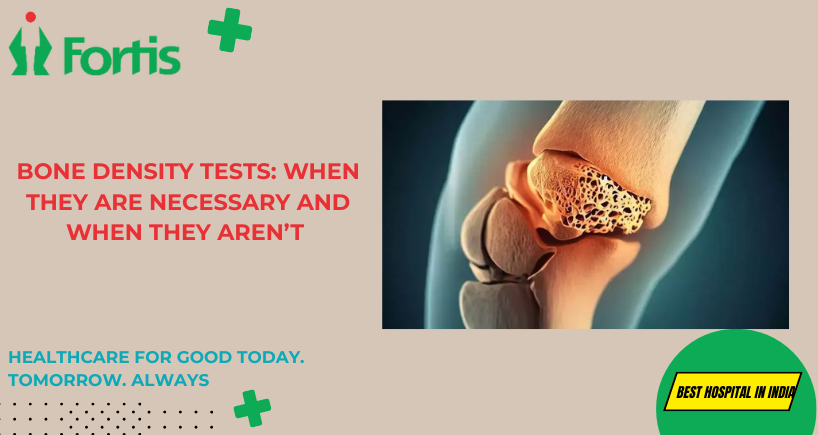


Bone Density Tests: When They Are Necessary and When They Aren’t
As we get older, our health priorities naturally shift. We become more attuned to the subtle changes in our bodies and more aware of the importance of preventative care. One topic that often arises, particularly for women approaching or past menopause, is bone health. The word osteoporosis, a condition of weak and brittle bones, looms large, and with it comes the question of testing. You may hear your doctor mention a bone density test, sometimes referred to by its abbreviation, a BMD test.
But what is BMD test exactly? Is it something everyone needs? Understanding this common diagnostic tool, its purpose, and who truly benefits from it is key to making informed decisions about your health. It is about getting the right screening at the right time, avoiding unnecessary tests while ensuring those at risk receive the care they need.
What Is a Bone Mineral Density Test?
Let’s start with the basics. The BMD full form is Bone Mineral Density. So, a bone mineral density test is exactly what it sounds like: a measurement of the amount of minerals, primarily calcium, packed into a specific segment of your bone. It is the single best way to determine your bone strength and assess your risk for osteoporosis and fractures.
The most common and accurate method used is called a dual-energy X-ray absorptiometry scan, or DEXA scan. Despite the complex name, a DEXA scan is a simple, quick, and painless procedure. You lie comfortably on a padded table while a scanner passes over specific parts of your body, usually your hip and your lower spine. These are areas where osteoporosis-related fractures commonly occur. The machine uses two very low-dose X-ray beams to measure how much of the X-ray passes through the bone. Denser bone allows less X-ray to pass through. The machine then calculates a score based on this measurement.
The results are typically reported as a T-score. This score compares your bone density to that of a healthy young adult of the same sex.
T-score of -1.0 or above: Normal bone density.
T-score between -1.0 and -2.5: Low bone mass, sometimes called osteopenia.
T-score of -2.5 or below: Osteoporosis.
Why Is Measuring Bone Density Important?
A bone density test serves several critical purposes in managing your health, particularly as you age.
Detecting Osteoporosis Before a Fracture: This is the primary goal. Osteoporosis is a silent disease; you cannot feel your bones getting weaker. A BMD test is the only way to diagnose the condition before you suffer a painful and potentially debilitating fracture.
Predicting Your Risk of Future Fractures: Your T-score is a powerful predictor of your likelihood of breaking a bone in the future. This information allows you and your doctor to take preventative steps.
Confirming a Diagnosis After a Fracture: If you have already experienced a fragility fracture (a break from minor trauma), a BMD test can help confirm the underlying diagnosis of osteoporosis.
Monitoring Treatment Effectiveness: If you are receiving treatment for osteoporosis, repeat BMD tests can help determine if the medication is working to maintain or improve your bone density over time.
Who Needs a Bone Density Test? The Standard Guidelines
This is the central question for many patients. A bone density test is not a routine screening for everyone. Specific guidelines, based on extensive research, help doctors identify individuals who are most likely to benefit. According to major medical organizations, screening is generally recommended for:
All Women Aged 65 and Older: Age is a primary risk factor, and bone loss accelerates significantly after menopause. Screening all women in this age group is considered standard preventative care.
Postmenopausal Women Under 65 with Risk Factors: Younger postmenopausal women should consider testing if they have specific risk factors that increase their chances of fracture. These include:
A parental history of hip fracture.
A personal history of a fracture after age 50.
Low body weight (generally less than 127 pounds or 58 kg).
Current smoking.
Long-term use of corticosteroid medications (like prednisone).
Certain medical conditions (like rheumatoid arthritis).
Men Aged 70 and Older: While osteoporosis is less common in men, the risk increases significantly after age 70.
Men Under 70 with Risk Factors: Similar to women, younger men should consider testing if they have risk factors like low testosterone, a history of fractures, smoking, or long-term steroid use.
Anyone Over 50 Who Has Had a Fracture: Breaking a bone after minor trauma during adulthood is a major red flag for underlying osteoporosis and warrants a BMD test.
Who Might Not Need a BMD Test (Yet)?
Just as important as knowing who needs screening is understanding who generally does not. Routine screening is typically not recommended for:
Younger, Pre-menopausal Women: Unless they have specific, significant risk factors (like long-term high-dose steroid use or a history of multiple fragility fractures), routine screening is not necessary. Bone density is usually high in this group.
Men Under 70 Without Risk Factors: For healthy men under 70 with no specific risk factors, the likelihood of having osteoporosis is low, and routine screening is not generally advised.
Individuals Without Significant Risk Factors: If you are outside the standard age guidelines and have no major risk factors, a BMD test is unlikely to provide significant benefit.
Unnecessary testing can sometimes lead to anxiety and potentially even unnecessary treatment for mild bone loss (osteopenia) that may not significantly increase fracture risk in the short term.
A Proactive Partnership in Your Bone Health
Your bone health is a critical component of your overall well-being and independence as you age. A bone density test is a powerful tool, but it is one that should be used strategically, based on established risk factors.
The most important step is to have an open conversation with your doctor. Discuss your personal risk factors, your family history, and your lifestyle. Together, you can decide if and when a BMD test is the right choice for you, ensuring you take proactive steps to protect your bones for a strong and active future.
Frequently Asked Questions
Q1. How often should I get a bone density test?
Ans. If your initial test is normal, you may not need another one for 10-15 years. If you have osteopenia or osteoporosis, or if you are starting treatment, your doctor will likely recommend repeat testing every one to two years to monitor changes or treatment effectiveness.
Q2. Is the DEXA scan safe? Does it involve a lot of radiation?
Ans. Yes, the DEXA scan is very safe. It uses an extremely low dose of radiation – significantly less than a standard chest X-ray and comparable to the natural background radiation you are exposed to in a single day.
Q3. Besides a DEXA scan, are there other ways to test bone density?
Ans. While DEXA is the gold standard for diagnosis and monitoring, simpler screening tests using ultrasound on the heel or wrist are sometimes available in pharmacies or at health fairs. These can indicate if your risk might be high but are not accurate enough for a definitive diagnosis or for tracking treatment.
Q4. What can I do to keep my bones healthy, regardless of testing?
Ans. The foundations of bone health are consistent throughout life. Ensure you get enough calcium and vitamin D (through diet and potentially supplements), engage in regular weight-bearing and muscle-strengthening exercises, avoid smoking, and limit excessive alcohol consumption. These lifestyle factors are crucial whether or not you need a bone density test.
Categories
Clear allRelated Blogs
View all




Keep track of your appointments, get updates & more!

