
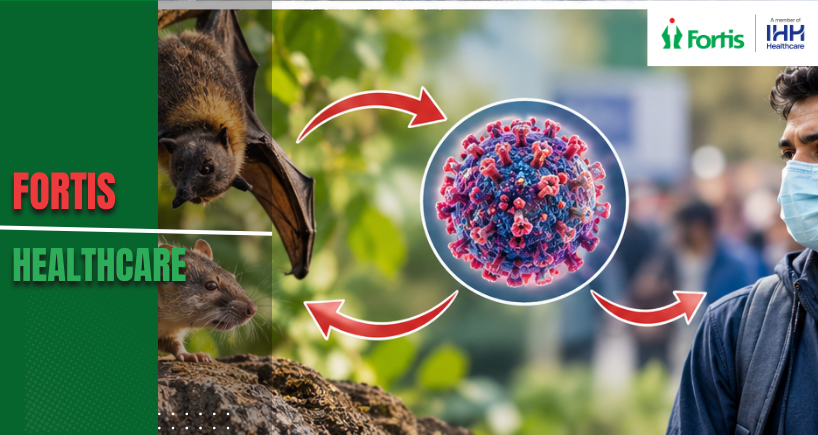


Can Shamonda Virus Spread from Animals to Humans? What We Know So Far
Until October 2026, Shamonda virus was known only as a virus of livestock, mostly cattle. Then French authorities reported a human infection, in a patient who died in Lyon. The obvious question followed: can this virus pass from animals to people, and if so, how worried should we be?
The short answer is that a single human infection has been reported, that it is believed to have come from an insect bite and not from direct contact with animals, and that there is no evidence so far of spread from cattle to humans or between people. This article explains what is known, what is not, and what sensible precautions look like.
The Short Answer
- Has it ever infected a human? One case has been reported, the first anywhere in the world.
- How was the patient probably infected? Authorities suspect a bite from an infected midge in eastern France, where the virus had been circulating in animals. This is a hypothesis, and the midge species involved is not yet known.
- Is there direct spread from cattle to people? No such spread has been reported.
- Does it spread from person to person? No evidence of this has been found, and the WHO has said the case is isolated and unlikely to lead to wider spread at this time.
- Is the general public at risk? French authorities and the WHO say no identifiable risk to the general population at this stage.
What Happened?
French authorities announced on 22 October 2026 that a patient who died at a Lyon hospital in early October had been infected with Shamonda virus.
- The patient was a severely immunocompromised man, reported to be in his 60s, being treated for a serious, unrelated illness at the Hospices Civils de Lyon.
- Investigators said the brain complications seen before death were very likely linked to the virus.
- ECDC says investigations into whether the virus caused or contributed to the death, and how it was acquired, are continuing.
- French authorities described it as an exceptional case.
Background: A Livestock Virus Arrives in Europe
Shamonda virus is an orthobunyavirus of the Simbu group, first identified in Nigeria in the 1960s, and reported sporadically in parts of Africa and in Japan. In animals, it spreads through the bites of biting midges (Culicoides).
In 2026, sick cattle in Europe began showing signs from June, and the virus was identified in late July. It has since been found in farm animals in Austria, Belgium, France, Germany, Ireland, Italy, Liechtenstein, Luxembourg, the Netherlands, Portugal, Spain, Switzerland, and Jersey. There is no commercially available vaccine, according to the World Organisation for Animal Health.
How Could a Virus Pass from Animals to People?
Viruses can reach people through several routes. Here is how each applies to Shamonda virus, based on current knowledge.
1. Through Insect Bites (The Leading Hypothesis)
Shamonda virus is an insect-borne virus. A midge that feeds on an infected animal can carry the virus, and pass it to another animal at its next feeding. In theory, if the same midge then bites a person, the virus could be transmitted.
- This is the leading explanation for the French case.
- It would make the infection an insect-borne disease, in which the person acts as a dead-end host, meaning that people do not usually pass it on further.
- But it has not been proven. The midge species is unknown, and investigations are ongoing.
Many Culicoides species prefer to feed on animals, which may be one reason why human infection is thought to be rare, though this has not been established for Shamonda virus.
2. Through Direct Contact With Infected Animals
Some animal viruses can spread to people through contact with blood, tissue, aborted fetuses, or birth fluids.
- No cattle-to-human transmission has been reported for Shamonda virus.
- It remains theoretically possible, which is why farm and veterinary workers are sensibly advised to use protective gloves and wash their hands, as for any animal disease.
- There is no evidence that this is how the French patient was infected.
3. Through Food
- There is no evidence that people can catch Shamonda virus from eating meat or drinking milk.
- Cooking meat thoroughly and drinking pasteurised or boiled milk are sound practices in any case.
4. From Person to Person
- No evidence of person-to-person spread has been found.
- Viruses in this group are mainly spread by insects. Based on current knowledge of closely related viruses, the WHO considers this an isolated human case that is unlikely to lead to wider spread at this time.
- Standard hospital infection control is applied to any patient with a serious infection, but there has been no suggestion of spread to health workers or family members in the reports available to us.
Why This Case May Be Special
The French authorities called this case exceptional, mainly because the patient was severely immunocompromised. A weak immune system can allow viruses that are normally controlled to cause serious illness.
- Healthy immune systems may well deal with infection by viruses like this without any noticeable illness, but we do not know this for Shamonda virus.
- It is also possible that others have been infected with mild or no symptoms, because nobody tests for the virus in people.
- Scientists will want to know whether people with normal immunity can be infected, and, if so, how often, and with what symptoms.
Please note that these are open scientific questions, and not conclusions.
What We Do Not Know Yet
- Whether the virus caused or contributed to the patient's death, which is still being investigated.
- How exactly the patient was infected.
- Which midge species can carry the virus in Europe, and whether they bite humans.
- Whether people with healthy immune systems can become infected, and what illness it causes.
- Whether further human cases exist, including mild ones.
- How the virus will behave in animals in coming months, and in the next midge season.
What Related Viruses Suggest
Other viruses in the Simbu group show a mixed picture:
- Schmallenberg virus emerged in European cattle and sheep in 2011 and spread widely in animals, with very little evidence of human illness.
- Oropouche virus regularly infects people, causing fever, headache, and aches, and occasionally neurological illness.
- Shuni virus has been reported in humans with neurological illness in South Africa.
So viruses in this family can sometimes infect people, but the frequency varies widely. These comparisons are guides, not predictions for Shamonda virus.
How Seriously Should We Take This?
Reasonable people can hold two thoughts at once:
- The case matters scientifically. It shows that a virus thought to be limited to animals can infect a person. Experts will monitor it closely, and surveillance in animals and people is likely to increase.
- The immediate risk to the public appears low. Health authorities, including the WHO and French officials, have said that no wider risk has been identified.
Close attention is part of good public health. It is not in itself a sign of an outbreak.
Practical Precautions
For Everyone
- Prevent insect bites with repellent, long sleeves and trousers, and screens or nets, particularly at dusk and dawn.
- Remove standing water and damp rotting vegetation around homes.
- Follow updates from official health agencies, not social media rumours.
For Farm Workers, Dairy Staff, and Veterinary Personnel
- Wear gloves and protective clothing when handling sick animals, aborted fetuses, or birth fluids, and wash hands and arms well afterwards.
- Report unusual illness, abortions, or deaths in animals to a veterinarian.
- Protect animals from insects where possible.
- Follow veterinary and public health guidance, which may be updated as investigations proceed.
For People With Weakened Immunity
People receiving chemotherapy, those who have had organ or stem cell transplants, and others on strong immune-suppressing treatment are the group that the only reported case belonged to. There is no need for panic, but it is sensible to:
- Take extra care to prevent insect bites, particularly in areas with animal outbreaks.
- Avoid unprotected contact with sick livestock.
- Tell your treating doctor about any unexplained fever, severe headache, confusion, or other neurological symptoms, mentioning insect bites and animal exposure.
- Not change or stop your medicines without medical advice.
For Travellers
- If you are travelling to areas of Europe affected by animal outbreaks, follow local health advice and take bite precautions.
- If you develop an unexplained fever after travel or animal exposure, tell your doctor where you have been.
What About India?
We are not aware of any report of human Shamonda virus infection in India, or of an alert from Indian health authorities, at the time of writing. Biting midges and related animal viruses occur in many tropical regions, and animal and public health agencies monitor livestock diseases. Readers should follow updates from the Ministry of Health and Family Welfare, the National Centre for Disease Control, and the WHO.
When to See a Doctor
See a doctor if you have a fever that lasts more than a few days, a severe headache, confusion, a stiff neck, seizures, or persistent vomiting, especially if you work with livestock, have been bitten by many insects, or have recently been in an affected region. People with weakened immunity should seek advice earlier. Seek urgent care for severe symptoms. Most fevers turn out to be common illnesses, and a doctor can advise which tests are needed.
Conclusion
The question of whether Shamonda virus can spread from animals to humans now has a first, single data point: one severely immunocompromised patient in France, probably infected by an insect bite. There is no evidence of direct spread from cattle to people, or from person to person, and the WHO considers it an isolated case. Much is still unknown, including how common human infection might be. Until more is learned, the best response is calm awareness, good bite prevention, protective care around sick animals, and prompt medical advice for persistent or severe symptoms.
Categories
Clear allMeet the doctor

- Internal Medicine | Internal Medicine | General Physician
-
 17 Years
-
 1500
Related Blogs
View all





FAQs
Can Shamonda virus spread from animals to humans?
One human infection has been reported, probably from a midge bite. No direct spread from cattle to people has been reported.
Can it spread from person to person?
No evidence has been found. The WHO considers the French case isolated and unlikely to lead to wider spread at this time.
Can I catch Shamonda virus from cattle, meat, or milk?
There is no evidence of this. Basic hygiene around sick animals, cooked meat, and pasteurised or boiled milk are sensible anyway.
Who might be at higher risk?
This is not yet known. The only reported patient was severely immunocompromised, and farm workers and people bitten by midges in affected areas may have more exposure.

Keep track of your appointments, get updates & more!

