
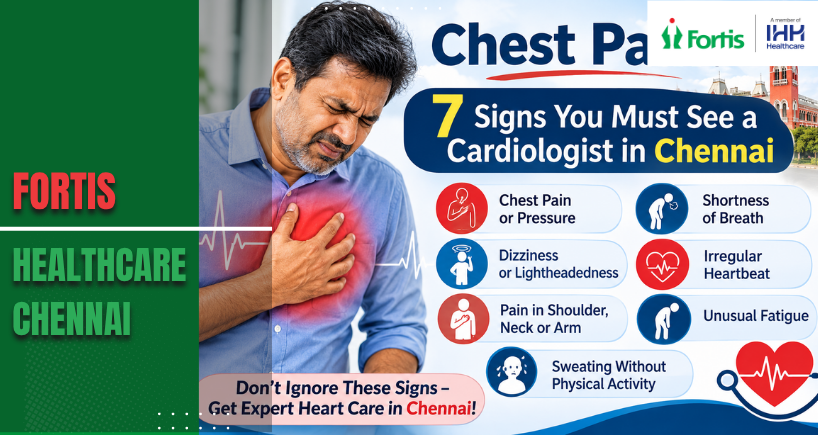


Chest Pain? 7 Signs You Must See a Cardiologist in Chennai
Chest pain frightens almost everyone, and for good reason. Yet many people brush it off as gas, a pulled muscle or stress. Others rush to the hospital for every twinge. Knowing which pain needs attention can save you from both worry and danger.
The good news is that heart problems are far easier to treat when caught early. Here is what chest pain can mean, seven signs you should never ignore, and when it is time to consult a cardiologist in Chennai.
What Is Chest Pain?
Chest pain is any discomfort in the front of the body between the neck and the upper abdomen. It can feel sharp, dull, heavy, burning or like a tight band. Not all chest pain comes from the heart. The lungs, food pipe, muscles, ribs and even anxiety can cause it.
Doctors usually separate it into two broad groups:
- Cardiac chest pain: caused by reduced blood flow to the heart muscle, such as angina or a heart attack
- Non-cardiac chest pain: caused by acid reflux, muscle strain, lung problems or anxiety
You cannot always tell the difference at home, which is why a proper check matters.
Types of Chest Pain
| Type | Features |
|---|---|
| Angina | Pressure or tightness during effort or stress, easing with rest |
| Heart attack | Severe, lasting pain that does not ease with rest, often with sweating |
| Acid reflux pain | Burning behind the breastbone, worse after meals or when lying down |
| Muscle or rib pain | Sharp pain that worsens with movement, pressing or deep breathing |
| Lung-related pain | Sharp pain with breathing or coughing, sometimes with fever |
7 Signs You Must See a Cardiologist
1. Pressure, heaviness or tightness in the chest
A feeling like a weight on the chest or a tight band around it is a classic heart warning, especially if it lasts more than a few minutes.
2. Pain that spreads to the arm, jaw, neck or back
Heart pain often travels to the left arm, but it can also spread to both arms, the jaw, shoulder or upper back.
3. Chest pain with breathlessness
Shortness of breath along with chest discomfort, or while walking or climbing stairs, needs urgent evaluation.
4. Pain with sweating, nausea or dizziness
Cold sweat, vomiting, light-headedness or a sudden feeling of doom along with chest pain can signal a heart attack.
5. Pain that comes on with effort and eases with rest
Discomfort during walking, exercise or emotional stress that settles after rest is typical of angina.
6. Palpitations or fainting
A racing, pounding or irregular heartbeat, or blacking out, may point to a rhythm problem.
7. Chest pain with risk factors
Any chest discomfort in someone with diabetes, high blood pressure, high cholesterol, smoking or a family history of heart disease should not be ignored.
Call an ambulance (108 or 112) at once if chest pain is severe, lasts more than 10 to 15 minutes, or comes with sweating, breathlessness or fainting. Do not drive yourself.
What Causes Chest Pain?
Heart-related causes
- Coronary artery disease, where arteries to the heart narrow
- Heart attack, caused by a blocked artery
- Pericarditis, which is inflammation around the heart
- Heart valve problems and weak heart muscle
- Aortic dissection, a rare but life-threatening tear in the main artery
Other common causes
- Acid reflux and indigestion
- Muscle or rib strain
- Lung infection, asthma or a blood clot in the lungs
- Anxiety and panic attacks
- Shingles, which causes burning pain along one side of the chest
Who Is at Higher Risk of Heart Disease?
- Men over 45 and women over 55
- People with high blood pressure, diabetes or high cholesterol
- Smokers and tobacco chewers
- Those who are overweight or physically inactive
- People with a family history of early heart disease
- Those under long-term stress or with poor sleep
When to See a Cardiologist in Chennai
- Chest discomfort that comes with effort or stress
- Any chest pain that is new, unexplained or keeps returning
- Breathlessness, palpitations or fainting
- Swelling in the feet or sudden weight gain
- An abnormal ECG or high blood pressure that is hard to control
- A family history of heart disease with symptoms or past 40 years of age
A cardiologist is a doctor who specialises in the heart and blood vessels. Seeing one early often prevents a serious event.
How a Cardiologist Evaluates Chest Pain
1. History
The doctor will ask when the pain began, what it feels like, how long it lasts and what triggers or relieves it. Expect questions on smoking, diabetes, blood pressure, family history and medicines.
2. Physical examination
This includes checking blood pressure, pulse, heart sounds, breathing and swelling in the legs.
3. Tests (when indicated)
- ECG to record the heart's electrical activity
- Echocardiogram to see how the heart pumps and how the valves work
- Treadmill test (TMT) to check the heart under effort
- Blood tests for cardiac markers such as troponin, sugar and cholesterol
- CT coronary angiography to look at the heart arteries without a catheter
- Coronary angiography in selected cases, to see blockages directly
Many people need only a few of these tests. The doctor chooses based on your symptoms.
Treatment Approaches
Treatment depends on the cause. Many heart conditions can be controlled with medicines and lifestyle changes.
1. Medicines
- Blood thinners: to prevent clots
- Statins: to lower cholesterol
- Beta-blockers and other heart medicines: to reduce workload on the heart and control heart rate
- Blood pressure and diabetes medicines: to protect the arteries
2. Procedures
- Angioplasty and stenting: to open a blocked artery
- Pacemaker or device implantation: for certain rhythm problems
3. Surgery
Bypass surgery or valve repair and replacement may be advised for severe blockages or valve disease.
4. Treating non-cardiac causes
If the heart is normal, the doctor will guide you towards treatment for reflux, muscle strain, lung problems or anxiety.
Lifestyle Steps That Protect Your Heart
Quit tobacco, eat more vegetables, fruits and whole grains, and cut down on salt, fried food and sugar. Walk briskly for at least 30 minutes most days, keep your weight in check and sleep 7 to 8 hours. Get your blood pressure, sugar and cholesterol checked regularly.
What to Avoid
- Ignoring chest pain by assuming it is gas
- Waiting at home to see if the pain passes
- Taking painkillers or antacids repeatedly without a diagnosis
- Stopping heart medicines on your own
- Smoking or heavy exertion after chest discomfort
Complications If Heart Problems Are Ignored
- Heart attack and damage to the heart muscle
- Heart failure, with breathlessness and swelling
- Dangerous heart rhythm problems
- Stroke from clots
- Reduced ability to work and stay active
Myths About Chest Pain
Myth: Heart pain is always sharp and sudden.
Fact: It can be a dull pressure, a burning feeling or only mild discomfort.
Myth: Young people do not get heart attacks.
Fact: Younger adults can also be affected, especially with smoking, diabetes or family history.
Myth: A normal ECG means the heart is fine.
Fact: Some problems show up only during effort or in other tests.
Myth: Chest pain on the right side is never serious.
Fact: Pain location alone cannot rule out a heart or lung problem.
How Long Does Treatment Take?
Non-cardiac causes such as reflux or muscle strain often settle within days to a few weeks. After angioplasty, most people return to light activity within a few days. Recovery after bypass surgery generally takes a few weeks to months. Long-term heart conditions need regular follow-up. Your cardiologist will review progress and adjust your plan.
How to Choose the Right Cardiologist in Chennai
When searching for the best cardiologist in Chennai, look beyond ratings alone. Check for:
- Recognised qualifications such as DM/DNB in Cardiology
- Experience in your specific problem, such as angina, rhythm disorders or heart failure
- In-house ECG, echo, TMT and angiography facilities
- A 24x7 emergency department with a cath lab
- Clear communication and willingness to explain your reports
The right cardiology doctor in Chennai is the one who listens, investigates carefully and explains your treatment in simple words.
Conclusion
Chest pain is your body asking for attention. Many causes are harmless, but some are not, and only a proper check can tell the difference. Most heart conditions respond well when found early.
Don't wait for chest pain to "go away on its own." If you notice any of the seven signs above, or have risk factors for heart disease, book a consultation with an experienced cardiologist in Chennai. A simple examination and a few tests can give you clear answers and the right care.
Book your heart check-up today and take care of your heart before it asks twice.
Categories
Clear allMeet the doctor

- Cardiac Sciences | Interventional Cardiology
-
 20 Years
-
 1100
Related Blogs
View all






FAQs
When should I see a cardiologist for chest pain?
See one if chest pain is new, comes with effort, spreads to the arm or jaw, or occurs with breathlessness, sweating or palpitations. Call an ambulance if it is severe or lasts over 10 minutes.
What causes chest pain?
Causes include heart problems such as angina and heart attack, as well as acid reflux, muscle strain, lung conditions and anxiety. Only tests can confirm the cause. Your doctor can advise further.
What tests does a cardiologist do for chest pain?
Usually an ECG and echocardiogram, with a treadmill test or blood tests if needed. CT or conventional angiography may follow. Most people do not require all tests, and the doctor decides based on symptoms.
Is chest pain always a heart attack?
No. Many cases are due to reflux, muscle pain or anxiety. But heart attack cannot be ruled out without a check, so get urgent help if pain is severe or comes with sweating or breathlessness.
How much does a cardiology consultation cost, and how long does it take?
Fees vary by hospital and doctor, and tests like ECG, echo or TMT are usually charged separately. A first visit often takes 20 to 30 minutes. Confirm the fee and tests with the clinic when booking.

Keep track of your appointments, get updates & more!

