
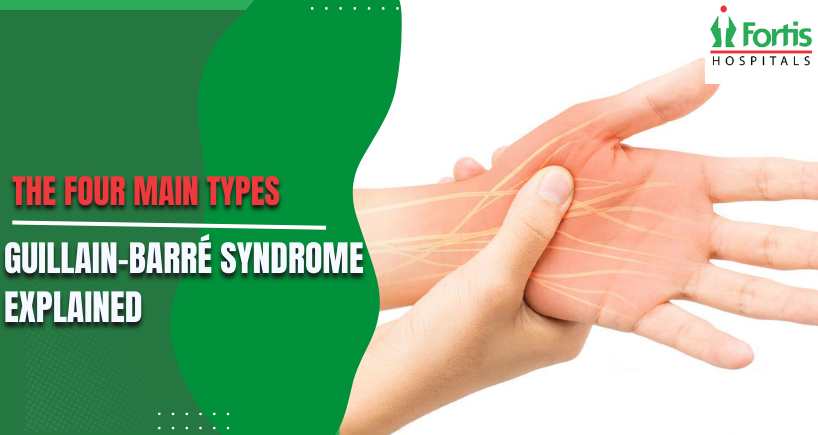


Different Types of Paralysis in Guillain-Barré Syndrome
The sudden, bewildering onset of weakness is a terrifying experience. One day you are walking, and the next, your legs feel like they are made of lead. A strange tingling in your fingers progresses to an inability to grip a coffee cup. This rapid loss of muscle control is the defining feature of Guillain-Barré syndrome (GBS), a rare autoimmune disorder where the body’s own defense system launches a mistaken attack on its nerves.
For those grappling with this diagnosis, the word “paralysis” can conjure a single, frightening image of complete immobility. But the reality of the GBS disease is more complex. The paralysis in Guillain-Barré is not a monolithic event. It can manifest in several distinct patterns, depending on which part of the nervous system is under attack. Understanding these differences is a crucial part of the diagnostic journey, helping to frame the path ahead.
Your Body's Wiring Under Attack
To understand the different types of paralysis, it helps to first picture your peripheral nerves—the network that connects your brain and spinal cord to the rest of your body. Think of each nerve as a complex electrical cable. The central copper wire is the axon, which carries the electrical message. This axon is wrapped in a fatty layer called the myelin sheath, which acts as insulation, allowing the signal to travel with lightning speed.
In Guillain-Barré syndrome, the immune system gets its signals crossed, usually after a viral or bacterial infection. It mistakenly identifies parts of these nerve "cables" as a threat. The specific part of the cable it attacks determines the type of GBS and the pattern of paralysis that follows.
The Classic Ascending Paralysis
This is the most common and well-known presentation of the gbs syndrome, a pattern seen in its most frequent form, Acute Inflammatory Demyelinating Polyneuropathy (AIDP). In this type, the immune system primarily attacks the myelin sheath, the nerve's insulation.
The paralysis is typically symmetrical, affecting both sides of the body equally. Its most defining feature is that it is “ascending.” It starts from the ground and moves up.
The First Sign: The journey almost always begins with a strange tingling, pins-and-needles sensation, or weakness in the toes and feet.
Progression: Over a period of days to a few weeks, this weakness steadily creeps upward. It moves from the feet to the calves, then to the thighs. People find it difficult to stand up from a chair, to climb stairs, or even to walk.
Involvement of the Upper Body: The weakness continues its ascent, affecting the trunk, the arms, and the hands. The paralysis can become so profound that a person is unable to move their limbs at all.
Facial and Swallowing Muscles: In many cases, the weakness reaches the face, causing difficulty with facial expressions, speaking, and swallowing.
This classic, ascending pattern is one of the key diagnostic clues that points a neurologist toward this specific guillain barre disease.
Pure Motor Paralysis Without Sensory Loss
Another of the 4 types of Guillain-Barré syndrome presents very differently. In a variant called Acute Motor Axonal Neuropathy (AMAN), the immune system bypasses the myelin insulation and directly attacks the axon, the nerve "wire" itself.
Critically, this attack is aimed only at the motor nerves—the wires that carry commands from the brain to the muscles. The sensory nerves, which carry information like touch and pain back to the brain, are left untouched.
The result is purely motor paralysis. The weakness can be just as rapid and severe as in the classic form, but the person does not experience the tingling or numbness. Their sensation is completely normal. This type can sometimes be confusing at first, but nerve conduction studies can clearly show the axonal damage.
Descending Paralysis Starting From the Head
A rare variant called Miller Fisher Syndrome completely flips the script. Instead of starting in the feet and moving up, the paralysis is “descending,” starting in the head and moving down. It is defined by a unique and classic triad of symptoms:
Paralysis of the Eye Muscles: This is often the first and most dramatic sign. People suddenly develop double vision and drooping eyelids because the nerves controlling eye movement are affected.
Loss of Coordination (Ataxia): Individuals develop a severe and clumsy unsteadiness. Their walk becomes wide-based and staggering, and they have trouble with coordinated movements of their arms and hands.
Loss of Reflexes (Areflexia): A doctor's examination will show a complete absence of the deep tendon reflexes, like the knee-jerk reflex.
While some mild limb weakness can occur as the condition evolves, the primary paralysis is focused on the eyes and the body’s system of coordination.
The Most Critical Form of Paralysis Is Respiratory
Regardless of the initial pattern, the most life-threatening complication of any type of Guillain-Barré is respiratory paralysis. The progressive weakness does not always stop at the neck. It can affect the diaphragm and the intercostal muscles between the ribs, which are the primary muscles we use to breathe.
As these muscles weaken, breathing becomes shallow and labored. A person may feel short of breath, unable to speak in full sentences, or feel like they cannot get enough air. This is a medical emergency. When respiratory failure occurs, the person must be placed on a mechanical ventilator to breathe for them. This supportive care is a life-saving bridge, giving the body time to stabilize while the gbs treatment begins to work.
A Note on Treatment and the Stages of Paralysis
It is important to understand that while the patterns of paralysis differ, the acute guillain barre syndrome treatment is the same for all types. The goal is to stop the immune attack as quickly as possible. The treatment for Guillain-Barré involves either intravenous immunoglobulin (IVIG) or plasma exchange.
The paralysis also follows predictable stages of Guillain-Barré syndrome. There is an initial progressive stage where weakness worsens, a plateau stage where the weakness stabilizes, and finally, a long recovery stage where the nerves begin to heal and strength slowly returns.
A Proactive Partnership in Recovery
The different faces of paralysis in Guillain-Barré syndrome can be terrifying. But they are also well-understood by medical experts. A rapid and accurate diagnosis allows your healthcare team to provide immediate, life-saving supportive care and start the treatments that can halt the disease process.
The path to recovery is a marathon that requires patience and a dedicated team of therapists. By understanding the specific nature of your illness, you can become a knowledgeable and active partner in your own healing journey.
Frequently Asked Questions
Q1. How fast does the paralysis in Guillain-Barré happen?
Ans. The progression is typically quite rapid, evolving over a period of days to, at most, four weeks. In many cases, the peak weakness is reached within two weeks of the first symptom. A rapidly ascending weakness is a key feature of the gbs disease.
Q2. Is the paralysis from GBS permanent?
Ans. For most people, the paralysis is not permanent. Guillain-Barré is typically a monophasic illness, meaning it happens once, and then the body begins to heal. The recovery process can be very long and challenging, but the majority of individuals regain the ability to walk and resume their normal lives. Some may have lingering, minor weakness.
Q3. Does the paralysis affect your thinking or consciousness?
Ans. No. Guillain-Barré syndrome affects the peripheral nerves, the wiring that goes out to the body. It does not affect the brain or spinal cord directly. A person with even the most severe paralysis is fully conscious, alert, and able to think clearly.
Q4. What is the most important first step if I suspect GBS?
Ans. The most important step is to seek immediate medical attention. Go to an emergency room. A rapidly progressive weakness, especially if it starts in your feet and is moving up your legs, is a medical emergency that needs to be evaluated by a doctor right away.
Categories
Clear allRelated Blogs
View all








Keep track of your appointments, get updates & more!

