


ECMO: The Lifeline When Hearts and Lungs Need Rest
Advanced Life Support at Fortis Hospital, Mohali
When a patient's heart or lungs fail despite maximum medical support, when every conventional treatment has been exhausted, when the thin line between life and death becomes frighteningly real—ECMO (often referred to by families as a heart-lung machine or artificial lung) emerges as a beacon of hope. Extracorporeal Membrane Oxygenation, or ECMO, represents the pinnacle of modern critical care technology, offering families hope when traditional therapies fall short.
At Fortis Hospital, Mohali, our specialized ECMO treatment program has become a regional lifeline, saving patients from across Punjab, Chandigarh, Haryana, Himachal Pradesh, and beyond. From poisoning victims fighting for survival to children with failing hearts, from COVID patients with devastated lungs to those awaiting life-saving transplants—ECMO bridges the gap between crisis and recovery.
Understanding ECMO: Your Body's Temporary Heart and Lungs
ECMO is not a treatment for a disease—it's an advanced life support system that gives your vital organs time to heal. Think of it as a temporary replacement for your heart and lungs, working outside your body while your own organs rest and recover.
The ECMO machine gently removes blood from your body through specially placed tubes called cannulas, passes it through an artificial lung (oxygenator) that adds oxygen and removes carbon dioxide, and then returns the refreshed blood to your circulation. Throughout this process, a pump may also support your heart function if needed.
There are two main types of ECMO support:
- Veno-Venous (VV) ECMO: Supports only the lungs when severe pneumonia, ARDS (Acute Respiratory Distress Syndrome), or other lung conditions make breathing impossible despite maximum ventilator settings. Blood is drawn from a vein, oxygenated, and returned to a vein.
- Veno-Arterial (VA) ECMO: Supports both the heart and lungs when the heart cannot pump effectively—during cardiogenic shock, severe heart attack, or post-cardiac arrest. Blood is drawn from a vein, oxygenated and pumped, then returned to an artery to support circulation.
When ECMO Becomes Essential: Critical Conditions We Treat
ECMO is a last-resort life support measure reserved for life-threatening situations where conventional ICU care is insufficient. At Fortis Mohali, our experienced team has successfully deployed ECMO across diverse critical scenarios:
1. Severe Poisoning and Toxicology Emergencies In North India, agricultural poisonings—particularly aluminum phosphide (Celphos) and organophosphate poisoning—claim countless lives annually. These toxins can cause sudden cardiac arrest or profound shock that doesn't respond to medications. ECMO provides crucial circulatory support while the body metabolizes and eliminates these deadly substances. By maintaining blood flow and oxygen delivery, ECMO buys precious time for antidotes and supportive treatments to work, transforming what would be certain death into a chance for survival.
2. Cardiac Emergencies and Heart Failure When the heart fails catastrophically—whether from massive heart attacks, severe myocarditis (heart muscle inflammation), or cardiogenic shock—VA ECMO steps in as a mechanical bridge. This includes:
- Post-cardiac arrest support (E-CPR) when the heart cannot maintain a stable rhythm.
- Severe heart failure while awaiting heart transplantation or advanced therapies.
- Post complex cardiac surgery when the heart requires support.
- Fulminant myocarditis in young, previously healthy patients.
3. Severe Lung Failure and Respiratory Distress When lungs are so severely damaged that even the most advanced ventilators cannot provide adequate oxygen, VV ECMO becomes an option. Common scenarios include:
- Severe ARDS from severe lung infections, pneumonia, sepsis, or COVID-19.
- Pulmonary hemorrhage.
- Inhalational injuries from smoke or toxic gases.
- Status asthmaticus (severe, life-threatening asthma attacks) in select cases.
ECMO allows gentler ventilator settings, reducing further lung injury while giving damaged lung tissue time to heal—a concept called 'lung rest strategy.'
4. Pediatric and Neonatal Critical Care Children and newborns have unique physiology requiring specialized ECMO expertise. Our pediatric ECMO program treats:
- Severe pneumonia or bronchiolitis in infants.
- Meconium aspiration syndrome in newborns.
- Congenital heart defects requiring circulatory support.
- Pediatric cardiac arrest with ongoing resuscitation.
Pediatric ECMO requires smaller cannulas, precise anticoagulation management, and heightened attention to bleeding and clotting risks—expertise our team possesses through extensive training and experience.
5. End-Stage Lung Disease: Bridge to Transplant For patients with end-stage lung disease awaiting transplantation, ECMO can be life-sustaining. This 'bridge to transplant' approach keeps patients alive and, in some cases, even mobile and awake through a revolutionary concept called 'Awake ECMO.'
Unlike traditional ECMO where patients are deeply sedated, Awake ECMO allows carefully selected patients to sit up, participate in physiotherapy, and maintain muscle strength while waiting for donor lungs. This approach significantly improves post-transplant outcomes and quality of life.
The Fortis Mohali ECMO Team: Expertise You Can Trust
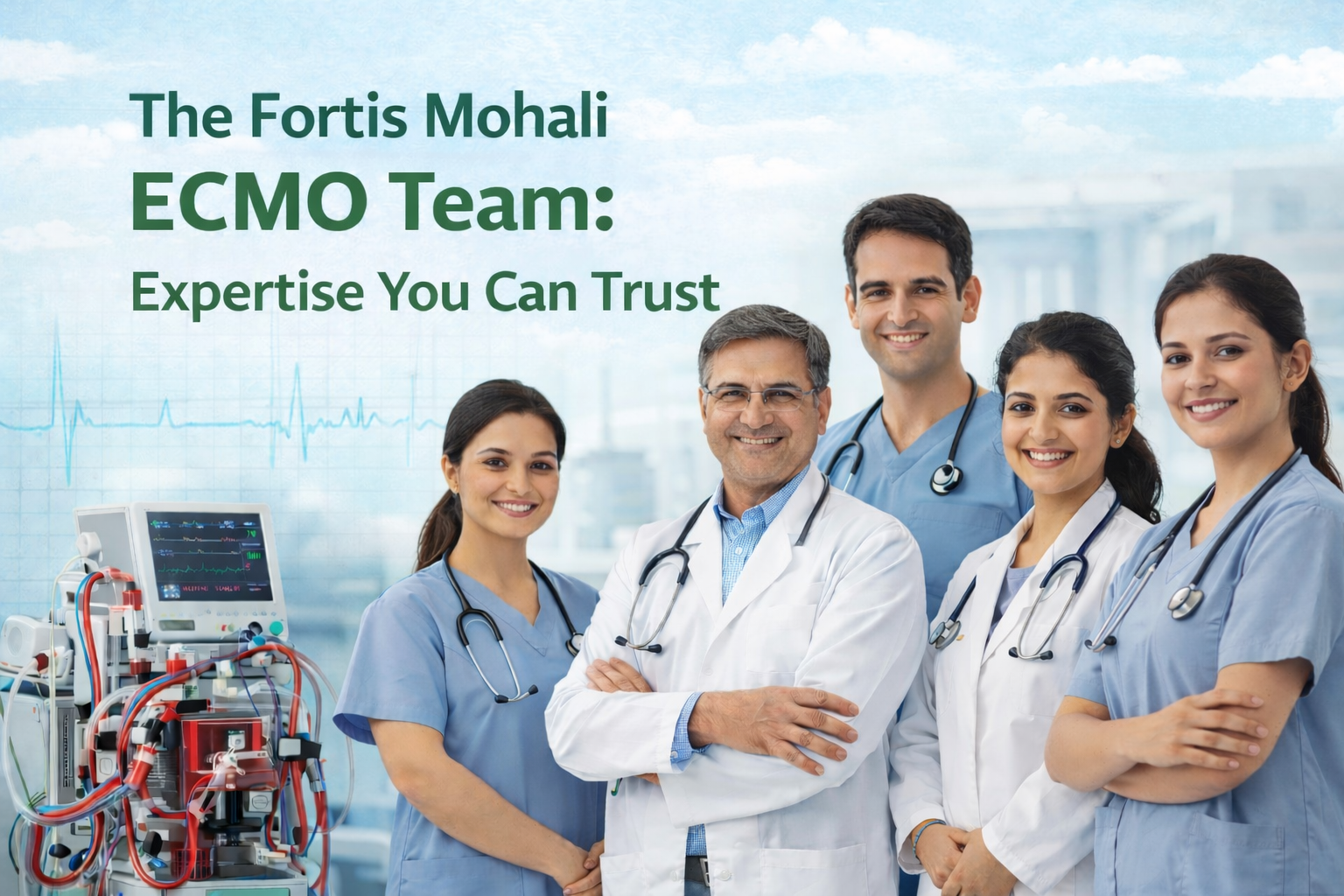
ECMO is not just a machine—it's a symphony of expertise orchestrated by a highly trained multidisciplinary team working seamlessly 24 hours a day, 7 days a week. As a leading ECMO center in the Tricity, our team includes:
- Critical Care Specialists (Intensivists): Leading patient care decisions, monitoring organ recovery, and managing complications.
- Cardiac Surgeons and Interventional Cardiologists: Performing precise cannulation procedures.
- Certified Perfusionists: Managing and monitoring the ECMO circuit continuously.
- ECMO-Trained ICU Nurses: Providing one-on-one bedside care with specialized ECMO knowledge.
- Respiratory Therapists: Optimizing ventilator strategies alongside ECMO.
- Physiotherapists: Preventing muscle wasting and supporting Awake ECMO rehabilitation.
- Blood Bank and Laboratory Services: Ensuring immediate availability of blood products and critical monitoring.
Our protocols align with ELSO (Extracorporeal Life Support Organization) recommendations, ensuring world-class standards of care right here in North India.
What Families Should Expect: The ECMO Journey
When ECMO is recommended, families naturally have questions and concerns about this advanced life support procedure. Here's what the journey typically looks like:
Initial Evaluation and Decision Our team carefully assesses whether ECMO is appropriate based on the severity of organ failure, response to conventional treatments, neurological status, and overall medical condition. We discuss risks, benefits, and realistic expectations with families through transparent, compassionate counseling.
Cannulation: Connecting to ECMO Large tubes (cannulas) are carefully inserted into blood vessels—typically in the neck or groin—to connect the patient to the ECMO circuit. This procedure is performed in the ICU, catheterization lab, or operating room depending on the clinical scenario, using imaging guidance for precision and safety.
Intensive Monitoring and Daily Care Patients remain in our specialized ICU with continuous monitoring of vital organs, blood tests to adjust anticoagulation (blood thinners needed to prevent clotting in the circuit), daily assessments of heart and lung recovery, nutritional support, infection prevention measures, and regular family updates on progress and challenges.
Most patients are kept comfortably sedated initially, though select patients on VV ECMO may gradually be awakened and even participate in physiotherapy—the revolutionary Awake ECMO approach.
Duration on ECMO Time on ECMO varies widely based on the underlying condition. Poisoning cases may require only days, cardiac cases typically 5-14 days, severe lung failure often 1-3 weeks, and bridge-to-transplant support can extend several weeks. Throughout this period, we continuously assess organ recovery and work toward safely removing ECMO support.
Understanding Risks: Transparency in Critical Care
While ECMO can be lifesaving, it's a complex intervention with inherent risks. Transparency is essential, and we ensure families understand potential complications:
- Bleeding: Required blood thinners increase bleeding risk at cannulation sites or internally.
- Clotting: Despite anticoagulation, clots can form in the circuit or blood vessels.
- Infection: Large tubes and prolonged ICU stays increase infection risk.
- Limb Ischemia: Reduced blood flow to limbs (more common with VA ECMO).
- Neurological Complications: Including stroke, though careful monitoring minimizes this risk.
- Multi-organ Impact: Kidney injury, liver dysfunction, or other organ stress.
Our team employs rigorous safety protocols, continuous monitoring, and immediate intervention when complications arise. Every member is trained to recognize early warning signs and respond swiftly.
What Success Looks Like: Recovery and Outcomes
Success on ECMO isn't just survival—it's meaningful recovery that allows patients to return to their families and lives. Outcomes vary by condition:
- Poisoning cases often have excellent recovery if ECMO is initiated early.
- Cardiac patients may recover heart function or successfully bridge to transplantation.
- Lung failure patients typically require weeks of recovery with gradual weaning from support.
- Pediatric patients often demonstrate remarkable resilience with appropriate support.
Early referral to an ECMO-capable center significantly improves the ECMO survival rate. When conventional therapies are failing, time is critical—reaching out to our ECMO team immediately can make the difference between life and death.
When to Seek ECMO: Referral Guidelines
For referring physicians and emergency departments across Punjab, Haryana, and Chandigarh, consider ECMO consultation when:
- Severe refractory hypoxemia despite maximum ventilator support.
- Cardiogenic shock unresponsive to inotropes and mechanical support.
- Ongoing cardiac arrest requiring prolonged resuscitation (E-CPR).
- Severe poisoning with cardiovascular collapse.
- Any critical patient where conventional ICU support is clearly insufficient.
Our 24/7 ECMO Helpline: +91 72728 72728 We accept inter-hospital transfers and provide expert guidance on patient stabilization during transport. Every call is answered by our critical care team, ensuring rapid assessment and coordinated care.
Frequently Asked Questions About ECMO
Q1: Is ECMO the same as a ventilator (breathing machine)? No. A ventilator helps lungs breathe by pushing air in and out. ECMO actually replaces lung function by oxygenating blood outside the body and can also replace heart function. Patients on ECMO often remain on ventilators, but at much gentler settings that reduce further lung injury.
Q2: How long can someone stay on ECMO? Duration varies dramatically by condition. Some poisoning patients need only 2-3 days, while bridge-to-transplant patients may require several weeks. The longest successful ECMO courses have extended months in carefully selected cases, though typical runs are 1-3 weeks.
Q3: What are the chances of survival on ECMO? Survival depends on the underlying condition, patient age, how quickly ECMO was initiated, and the presence of other organ failures. Poisoning cases with early ECMO support often have survival rates above 70%. Cardiac and respiratory ECMO survival typically ranges from 40-60%, though each patient is unique. Our team provides individualized prognostic discussions based on specific circumstances.
Q4: Will my loved one be awake on ECMO? Initially, most patients are deeply sedated for comfort and safety. However, select patients on VV ECMO (lung support only) may gradually be awakened and can even participate in physiotherapy, sitting in chairs, or gentle exercise—the Awake ECMO approach. This is carefully determined based on stability and individual circumstances.
Q5: Is ECMO a treatment or just life support? ECMO is life support, not a cure for the underlying disease. It buys time—allowing damaged organs to rest and heal while doctors treat the root cause (infection, poison elimination, heart recovery). Think of ECMO as a bridge: it keeps you alive until your body can heal or until definitive treatments (surgery, transplant) can be performed.
Q6: What happens after ECMO is removed? When organs show sufficient recovery, ECMO is gradually weaned and then removed—a process called decannulation. Patients continue ICU care with close monitoring, gradually reducing ventilator support, rebuilding strength through rehabilitation, and transitioning to regular hospital wards. Full recovery can take weeks to months depending on how long they were critically ill.
Q7: How much does ECMO cost? ECMO is a resource-intensive therapy involving expensive consumables, specialized equipment, dedicated staffing, blood products, and prolonged ICU care. Costs vary based on duration, complications, and additional treatments needed. Many insurance plans cover medically necessary ECMO, and our financial counseling team works with families to explore coverage options and provide transparent cost estimates during consultation.
Q8: Can ECMO be used for COVID-19 patients? Yes. ECMO has been successfully used for severe COVID-19 ARDS when lungs are so damaged that conventional ventilation fails. During the pandemic, our team managed numerous COVID ECMO cases, with outcomes comparable to international centers. ECMO remains an option for any severe viral pneumonia causing refractory respiratory failure.
Q9: Does Fortis Mohali transport patients on ECMO? We accept inter-hospital transfers and provide expert guidance for safe patient transport to our facility. While patients are typically stabilized at referring hospitals before transfer, our team coordinates closely to ensure optimal timing and safety during the transfer process.
Q10: What makes Fortis Mohali's ECMO program unique? We are one of the few comprehensive ECMO centers in Chandigarh and Mohali offering 24/7 availability, a multidisciplinary team trained in international ECMO protocols, pediatric ECMO expertise, bridge-to-transplant capabilities, and integration with cardiac surgery, pulmonology, and transplant services. Our outcomes align with leading international centers while remaining accessible to the North Indian community.
A Bridge Between Crisis and Hope
ECMO represents modern medicine's most advanced answer to life-threatening heart and lung failure. It's not just about machines and technology—it's about families who refuse to give up, medical teams who fight alongside them, and the precious gift of time that allows healing to occur.
At Fortis Hospital, Mohali, our ECMO program embodies this philosophy. Every patient is someone's child, parent, sibling, or friend. Every case receives our unwavering commitment to excellence, compassion, and hope.
When conventional medicine reaches its limits, ECMO opens new possibilities. When hearts and lungs need rest to heal, we provide that lifeline. When families need hope in their darkest hours, we stand beside them with expertise, technology, and compassion.
Contact Us – Fortis Hospital Mohali
For appointments, consultations, and diagnostic services, please contact:
📞 72728 72728
Our care team will assist you with:
Doctor appointments
Diagnostic and screening services
Health check-ups
Call now to book your appointment at Fortis Hospital, Mohali.
Categories
Clear allRelated Blogs
View all
Witnessed An Accident? What To Do Before Medical Help Arrives

Fortis Emergency Services: When Saving Lives Is At Stake

The Emergency experience: Navigating the space between order and chaos

Understanding Heat Exhaustion vs. Heat Stroke: When to Seek Emergency Care

Beat the Heat: Preventing Heat Strokes and Recognizing Warning Signs


Keep track of your appointments, get updates & more!

