
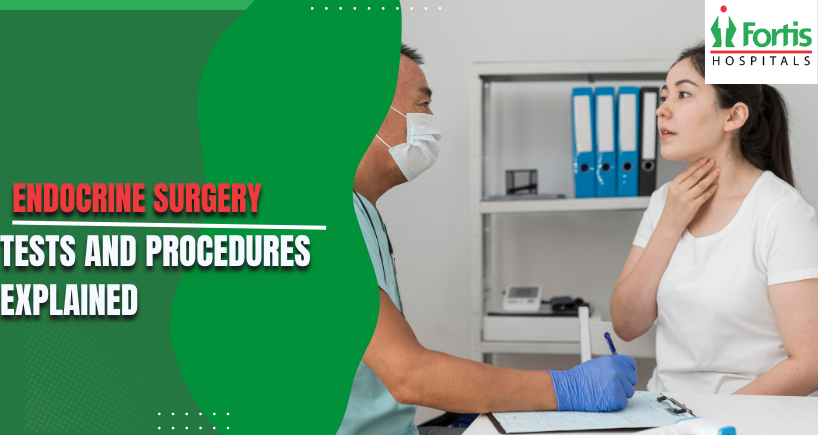


Endocrine Surgery: Tests and Procedures Explained
A diagnosis of a potential issue with an endocrine gland is often the start of a journey filled with questions. Your doctor may mention the need for various tests and procedures, and the path forward can seem complex and uncertain. This period of diagnosis, filled with blood tests, scans, and consultations, can be a time of significant anxiety.
This guide is designed to serve as a clear roadmap for that journey. By understanding the purpose of each endocrine test and procedure, you can feel more in control and better prepared for the conversations with your healthcare team. This diagnostic process is a meticulous and essential foundation for planning any potential endocrine surgery, ensuring the safest and most effective treatment possible.
The Foundation Is a Thorough Evaluation
Before any surgical plan is considered, a comprehensive diagnostic workup is performed. The goal of this evaluation is to answer two fundamental questions about the affected gland:
How is it functioning? Is the gland producing the correct amount of its specific hormone, or is it overactive (hyperfunction) or underactive (hypofunction)?
What is its structure? Is the gland of a normal size and shape, or is there a physical abnormality, such as a nodule, a tumor, a cyst, or general enlargement?
By answering both of these questions, your medical team can build a complete picture of the problem and determine the most appropriate course of action.
Starting With the Endocrine Test Is Blood Work
The first and most crucial step in evaluating any endocrine gland is a series of blood tests. Your blood carries the hormones produced by your glands, so measuring their levels is the most direct way to assess gland function. This is the cornerstone of any endocrine test protocol.
Measuring Hormone Levels
Each gland has specific hormones that your doctor will measure. For example:
Thyroid: A Thyroid Stimulating Hormone (TSH) test is the primary screening tool. If it's abnormal, your doctor may also check levels of the actual thyroid hormones, T4 and T3.
Parathyroid: Doctors will measure Parathyroid Hormone (PTH) and blood calcium levels simultaneously. An elevated level of both is the classic sign of an overactive parathyroid gland.
Adrenal: Depending on the suspected issue, tests might measure cortisol, aldosterone, or metanephrines (a byproduct of adrenaline) in the blood or urine.
Checking Tumor Markers
In some cases, blood tests can also check for specific proteins that can act as "tumor markers." For instance, a high level of calcitonin can be a sign of a rare type of thyroid cancer called medullary thyroid cancer. Another marker, thyroglobulin, is often monitored after thyroid cancer surgery to check for recurrence.
Imaging Tests to Visualize the Gland
Once your doctor understands how the gland is functioning, the next step is to look at its physical structure. Imaging tests create pictures of the glands and their surrounding tissues.
Ultrasound Is the First Look
An ultrasound is a safe, painless, and non-invasive procedure that uses high-frequency sound waves to create images of your body's internal structures. It is the gold standard for imaging glands in the neck, particularly the thyroid and parathyroid glands. An ultrasound can reveal the size of the gland and show the precise size, location, and characteristics of any nodules, such as whether they are solid or fluid-filled (cystic).
CT and MRI Scans for Deeper Views
For endocrine glands located deeper inside the body, such as the adrenal glands or the pancreas, a Computed Tomography (CT) scan or Magnetic Resonance Imaging (MRI) is often used. These scans provide detailed, cross-sectional images that allow doctors to see the size and shape of the gland and identify any tumors with great precision. They can also be used for very large thyroid goiters that extend down into the chest.
Specialized Nuclear Medicine Scans
Unlike the imaging above which shows anatomy, nuclear medicine scans show both anatomy and function. These tests involve injecting a small, safe amount of a radioactive tracer that is specifically absorbed by the gland in question. A special camera then detects the energy from the tracer to create an image. Examples include:
Sestamibi Scan: Used to locate a small, overactive parathyroid adenoma before surgery.
Iodine Uptake Scan: Uses radioactive iodine to assess the function of thyroid nodules, identifying them as "hot" (usually benign) or "cold" (requiring further investigation).
Biopsy Procedures for a Definitive Answer
Imaging can confirm that a nodule or tumor exists, but it often cannot definitively say whether it is benign or cancerous. For that, a tissue sample is needed for analysis by a pathologist.
The Fine Needle Aspiration Biopsy
For thyroid nodules, the standard procedure is a Fine Needle Aspiration (FNA). This is a simple and safe procedure that can be done in the doctor's office. Under ultrasound guidance, the doctor inserts a very thin, hollow needle—thinner than one used for a blood draw—directly into the nodule to collect a small sample of cells. The procedure is very quick and requires no special preparation.
The collected cells are then examined under a microscope. The results typically fall into one of a few categories: benign (non-cancerous), malignant (cancerous), suspicious, or non-diagnostic (not enough cells were collected).
Putting It All Together for a Surgical Plan
The journey from initial concern to a final treatment plan is a process of assembling puzzle pieces. Your endocrinologist and surgeon will synthesize all the information from your physical exam, blood work, imaging scans, and any biopsy results. This complete picture allows them to make a precise diagnosis and recommend the best course of action.
This thorough, step-by-step approach is what makes modern endocrine surgery so successful. It enables the surgeon to go into the operating room with a clear plan, knowing the exact location, size, and nature of the problem they need to address.
Your Roadmap to a Clear Diagnosis
The path leading to a potential endocrine surgery is a methodical one, with each endocrine test building upon the last to create a complete diagnostic picture. This process is designed to ensure maximum safety and effectiveness for your treatment.
While the diagnostic journey can feel long, it provides the essential clarity for you and your medical team to make a confident, informed decision. A comprehensive evaluation is the most important first step toward a successful surgical outcome and a return to health.
Frequently Asked Questions
Q1. Are the imaging scans for endocrine glands safe?
Ans. Yes. An ultrasound uses sound waves and has no radiation. While CT scans do use X-rays, the amount of radiation is low and the benefit of getting a precise diagnosis almost always outweighs the very small risk. MRI scans use magnets and radio waves, not radiation.
Q2. Does a thyroid biopsy hurt?
Ans. Most people report feeling a sense of pressure during a Fine Needle Aspiration (FNA), but sharp pain is uncommon. A local anesthetic is often used to numb the skin beforehand. The procedure is very quick, and any discomfort afterwards is usually mild and brief.
Q3. Why do I need so many different tests before my surgery?
Ans. Each endocrine test provides a unique and vital piece of information. Blood work assesses function, imaging shows the structure, and a biopsy determines the nature of a growth. Having all of this information is critical for planning the safest and most effective endocrine surgery possible.
Q4. What happens if my thyroid biopsy is "inconclusive" or "suspicious"?
Ans. This is a common outcome. In these cases, the cells don't look completely normal, but they are not definitively cancerous. Your doctor may recommend a repeat biopsy, a special molecular test on the biopsy sample to assess the genetic risk of cancer, or a diagnostic surgery to remove the nodule for a final diagnosis.
Categories
Clear allRelated Blogs
View all







Keep track of your appointments, get updates & more!

