


Finally, A Vaccine for Hepatitis E: What Every Patient in North India Needs to Know
QUICK ANSWER — Featured Snippet Target
What is the Hepatitis E vaccine and who should get it in India?
India’s first DCGI-approved Hepatitis E vaccine is a recombinant protein vaccine for adults aged 18–65. It is administered in three doses (Day 0, 1 month, 6 months) and shows approximately 93% efficacy at 4.5 years and 87% at 10 years. The vaccine is strongly recommended for pregnant women (before conception), patients with chronic liver disease, immunocompromised individuals, residents of flood-prone areas in North India, healthcare workers, and travellers to endemic regions. It is available at major hospitals including Fortis Hospital Mohali.
For years, I have sat across from patients in my clinic at Fortis Hospital Mohali — a young woman in her third trimester, her skin yellow with jaundice, her family terrified. Or a middle-aged man with cirrhosis brought down by a single episode of contaminated water. In both cases, the culprit was the same: Hepatitis E virus.
We had vaccines for Hepatitis A. We had vaccines for Hepatitis B. But for Hepatitis E — one of the most common causes of acute liver failure in India — we had nothing except the hope that patients would drink clean water. That has finally changed. In early 2026, India received its first DCGI-approved Hepatitis E vaccine for adults aged 18 to 65.
What Is Hepatitis E and Why Should You Care?
Hepatitis E, along with Hepatitis A, causes the majority of cases of acute viral hepatitis (liver inflammation caused by a virus) in India. It is a viral liver infection that spreads through the faecal-oral route — most commonly through contaminated drinking water (when sewage mixes with water supplies). In India, Genotype 1 (the strain of the virus most common in South Asia) is predominant and drives both sporadic cases and large outbreaks, especially during and after monsoon season.
The numbers are sobering. Every year, Hepatitis E infects approximately 20 million people worldwide, resulting in around 70,000 deaths and roughly 3,000 stillbirths. In India, it accounts for up to 40% of all acute viral hepatitis cases and is a leading cause of acute liver failure — a condition that can deteriorate within days and may require emergency transplantation.
Symptoms appear after about 40 days (this waiting period is called the incubation period): fever, jaundice (yellowing of the skin and eyes), nausea, vomiting, dark urine, and pale stools. In healthy adults, the illness usually resolves on its own. But in vulnerable populations, it can be fatal.
Hepatitis E • Key Symptoms to Watch For
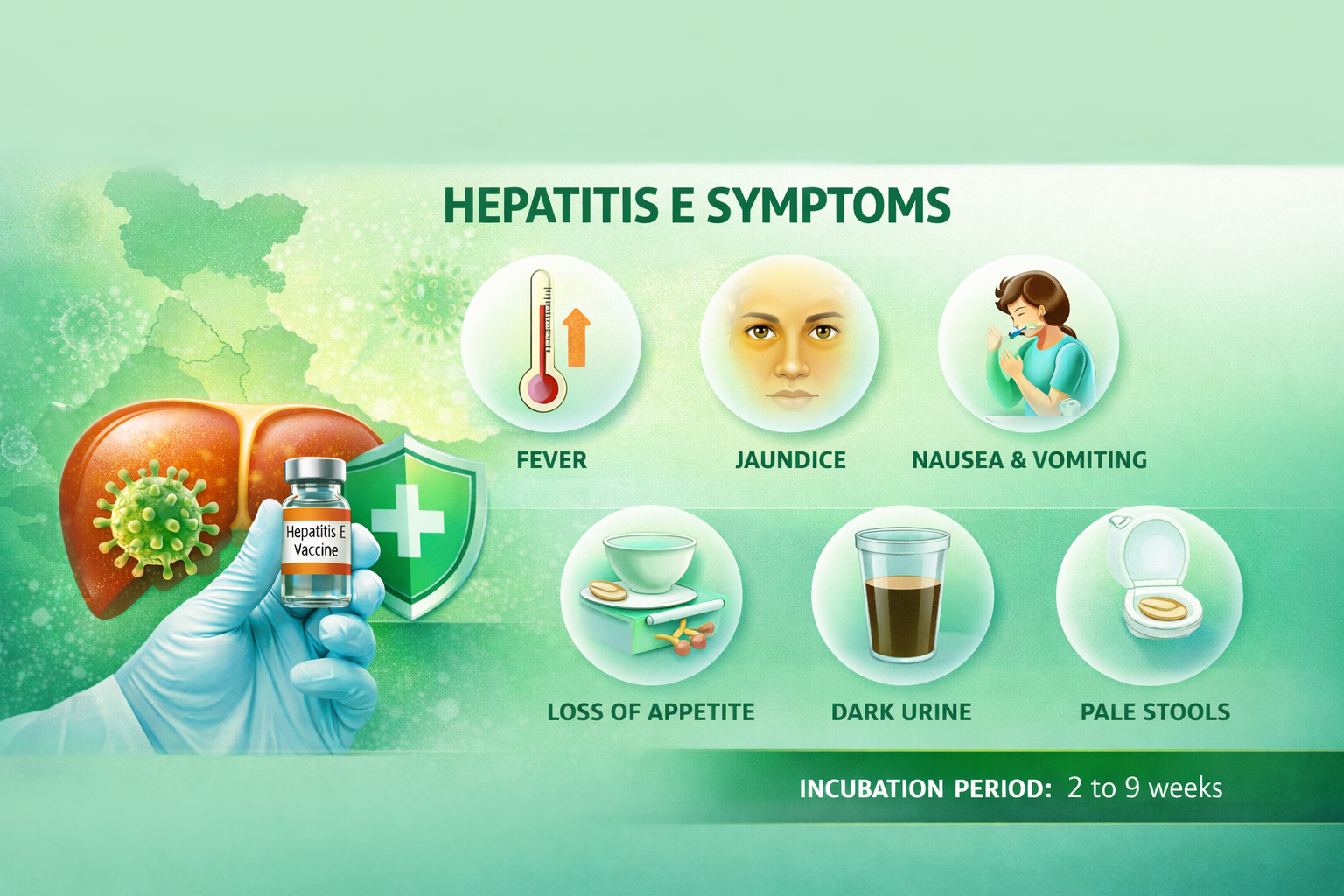
Incubation period: ~40 days • Self-limiting in healthy adults • Potentially fatal in high-risk groups
Hepatitis E Risk Zones • North India
Why North India? Monsoon flooding contaminates water supplies. Aging sewage systems. Seasonal peaks: Jul–Oct (monsoon) and Nov–Jan (post-monsoon). Fortis Hospital Mohali serves patients from Punjab, Haryana, Himachal Pradesh, and the Chandigarh Tricity region.
Who Is Most at Risk?
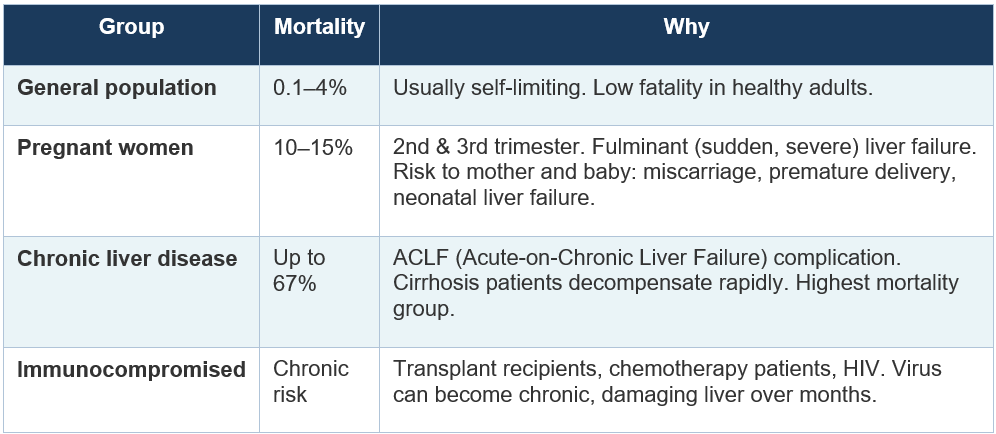
Pregnant Women
This is the group I worry about most. Hepatitis E during pregnancy — especially in the second and third trimesters — can cause fulminant liver failure (sudden, complete liver shutdown), with mortality reaching 10–15%. The risks extend to the baby: miscarriage, premature delivery, low birth weight, and neonatal liver failure. No expecting mother should face a preventable infection unprotected.
Patients with Chronic Liver Disease
For someone managing cirrhosis — whether from alcohol, fatty liver, Hepatitis B, or C — a Hepatitis E infection is like setting fire to a house already under stress. It can trigger Acute-on-Chronic Liver Failure (ACLF) — a life-threatening condition where a stable liver suddenly worsens — where mortality can reach up to 67%. In my practice at Fortis Mohali, I have seen stable cirrhotic patients decompensate (suddenly deteriorate) rapidly after contracting Hepatitis E.
Immunocompromised Individuals
Transplant recipients, chemotherapy patients, and people living with HIV have weakened immune systems that have difficulty clearing the virus. In these individuals, Hepatitis E can become chronic (long-lasting), quietly damaging the liver for months.
Communities with Unsafe Water
Flood-prone areas and localities with ageing sewage see outbreaks regularly. In Punjab, Haryana, and the Chandigarh Tricity region including Panchkula, post-monsoon spikes are a seasonal reality reflected in our patient volumes at Fortis Mohali every year.
How Is Hepatitis E Diagnosed?
A blood test for IgM anti-HEV antibody (a specific protein your immune system produces when fighting an active Hepatitis E infection) is positive in most acute infections. For immunocompromised patients, an HEV RNA PCR test (a highly sensitive test that detects the virus’s genetic material directly) can confirm diagnosis. At Fortis Hospital Mohali, we routinely test for Hepatitis E in any patient presenting with acute jaundice, especially during and after monsoon.
The Vaccine: What You Need to Know
India’s first DCGI-approved Hepatitis E vaccine is a recombinant protein vaccine — it uses a purified piece of the virus’s outer coat (not a live or weakened virus) to train your immune system to recognise and fight Hepatitis E. It cannot cause Hepatitis E. Approved for adults 18 to 65.
Schedule: Three doses — Day 0, one month later, six months after the first. Based on clinical trial data, efficacy is approximately 93% at 4.5 years and around 87% at 10 years. Antibodies persist over a decade. Side effects are mild: injection site soreness, fatigue, low-grade fever.
Think of the vaccine as a safety net. Even if hygiene measures fail — contaminated water during flooding, street food at a wedding — the vaccine ensures your immune system is prepared.
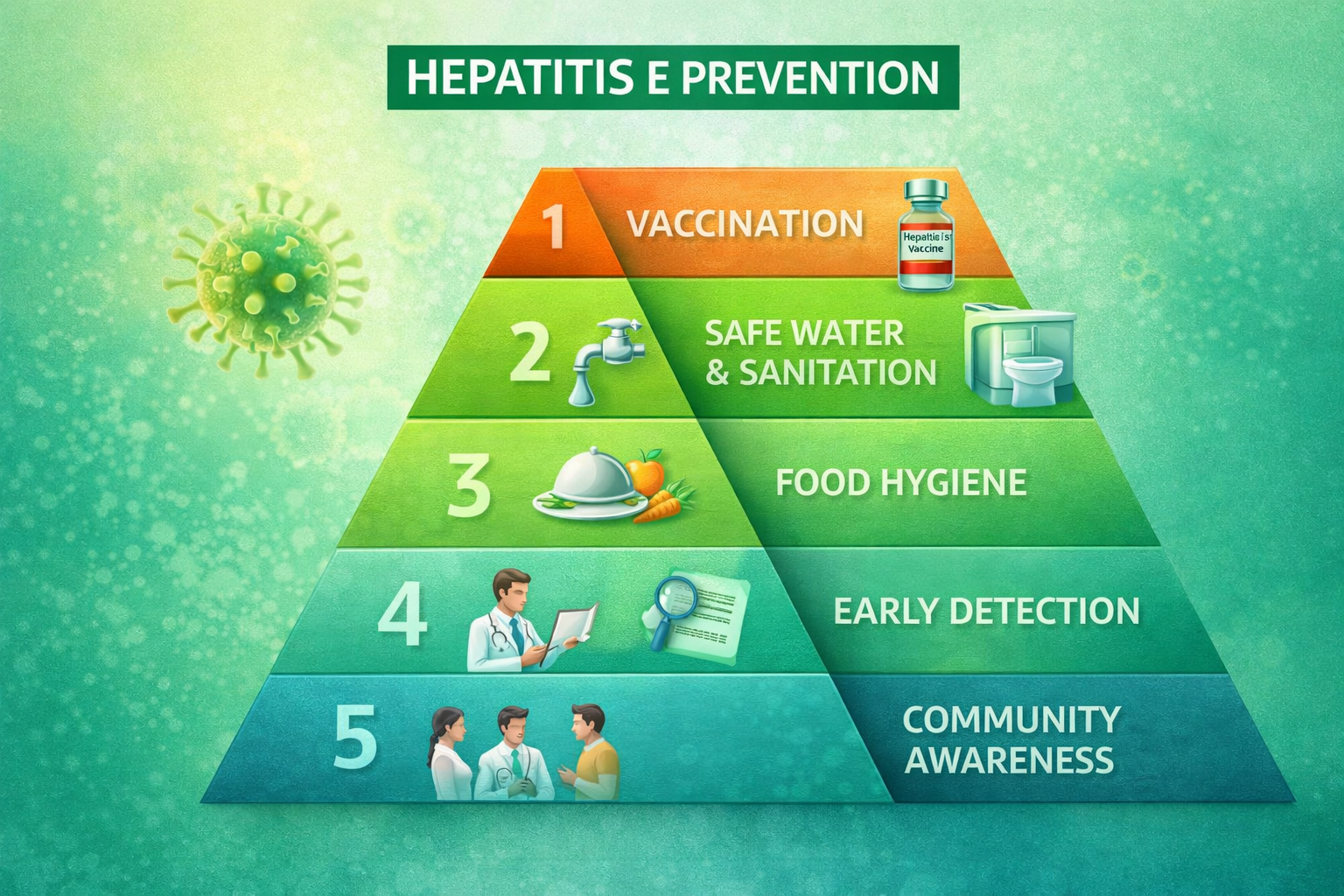
Each layer reinforces the others. Vaccination at the top provides the strongest individual protection.
Should I Get the Hepatitis E Vaccine?
Step-by-step guide to help you decide whether to prioritise Hepatitis E vaccination
Book a consultation at Fortis Hospital Mohali → 72728 72728
My Clinical Recommendation
Based on scientific evidence and my years treating liver disease at Fortis Hospital Mohali, I strongly recommend vaccination for:
- Women of childbearing age, before conception. Getting vaccinated before pregnancy eliminates one of the most dangerous threats to maternal and fetal health.
- All patients with chronic liver disease. Whether cirrhosis, fatty liver, or chronic Hepatitis B/C — the risk of ACLF is too high to leave to chance.
- Immunocompromised individuals (those with weakened immune systems) — transplant recipients, immunosuppressive therapy patients, chemotherapy patients.
- Residents of flood-prone or contamination-risk areas — much of Punjab, Haryana, and the Chandigarh Tricity region.
- Healthcare workers in gastroenterology, hepatology, and infectious disease.
- Travellers to endemic Hepatitis E regions.
Common Questions Patients Ask Me
“If I’ve had jaundice before, do I still need the vaccine?”
Possibly yes. Prior jaundice doesn’t necessarily mean you had Hepatitis E. Even if you did, vaccination provides additional immune reinforcement. Discuss your history with your doctor.
“Can pregnant women take this vaccine?”
Current approval is for adults 18–65 in general. Data in pregnancy is evolving. The ideal approach is to vaccinate before pregnancy. If already pregnant, discuss risk-benefit with your obstetrician.
“Is the vaccine available at Fortis Hospital Mohali?”
Yes. Our Gastroenterology & Hepatology department offers consultation, risk assessment, and vaccination for eligible patients. Book through our OPD or call directly.
“Does it have serious side effects?”
Clinical data shows it is well-tolerated. Side effects are mainly injection site soreness and mild fatigue. Serious events are rare — comparable to other widely used vaccines.
“What does Hepatitis E do to pregnant women?”
Hepatitis E during pregnancy can cause fulminant liver failure (sudden, severe liver shutdown) with mortality reaching 10–15%. Consequences include miscarriage, intrauterine death, premature delivery, low birth weight, and neonatal liver failure.
“How is Hepatitis E spread in India?”
Through the faecal-oral route (when sewage contaminates drinking water), most commonly via contaminated drinking water. Genotype 1 is predominant in India and causes outbreaks especially during and after monsoon when water supplies are vulnerable to sewage contamination.
Do Not Wait for the Next Outbreak
The arrival of India’s first Hepatitis E vaccine marks the end of a long wait. For too many years, pregnant women and liver disease patients had no defence against a virus that travelled silently through contaminated water.
Prevention is always more humane than treatment. One phone call today could protect a pregnancy, preserve a liver, or save a life.
“Hepatitis E has taken too many lives silently. With vaccination now available in India, we can protect our communities — one dose at a time.” — Dr. Arvind Sahni, Director, Gastroenterology & Hepatology, Fortis Hospital Mohali
Contact Us – Fortis Hospital Mohali
For appointments, consultations, and diagnostic services, please contact:
📞 72728 72728
Our care team will assist you with:
Doctor appointments
Diagnostic and screening services
Health check-ups
Call now to book your appointment at Fortis Hospital, Mohali.
Categories
Clear allMeet the doctor

- Gastroenterology and Hepatobiliary Sciences | Gastroenterology
-
 31 Years
-
 1750
1750
Related Blogs
View all
When Is A Liver Transplant Recommended?
Alcoholic Liver Disease - Why Worry?

Binge Drinking Trend Is The New Silent Killer


Irritable Bowel Syndrome

Digestive Disorders And Prevention

FAQs
Is Hepatitis E the same as Hepatitis A or Hepatitis B?
No. These are three different viruses requiring three different vaccines. Being vaccinated for Hepatitis A or B does NOT protect you against Hepatitis E.
Can Hepatitis E be cured with medicines?
No specific antiviral drug is approved for Hepatitis E. In healthy adults, the body clears it on its own. In high-risk groups, it can become severe or fatal before recovery — which is why vaccination is critical.
How many doses of the Hepatitis E vaccine are needed?
Three doses: Day 0, one month later, and six months after the first. Complete all three for maximum protection — 93% efficacy at 4.5 years, 87% at 10 years.
Is the Hepatitis E vaccine safe for people with existing liver disease?
Yes. It is a recombinant protein vaccine (not a live virus), so it is safe for liver patients. In fact, liver disease patients need it the most — Hepatitis E can trigger ACLF with mortality as high as 67%.
Can children get the Hepatitis E vaccine?
Current approval is for adults aged 18 to 65. Data for children is still being evaluated. Consult your paediatrician if your child is at risk.
Is Hepatitis E common during monsoon in North India?
Very common. Monsoon flooding in Delhi, Haryana, Punjab, and the Chandigarh-Panchkula corridor regularly contaminates water supplies. Seasonal peaks occur July–October and November–January. Residents should strongly consider vaccination before monsoon begins.

Keep track of your appointments, get updates & more!

