
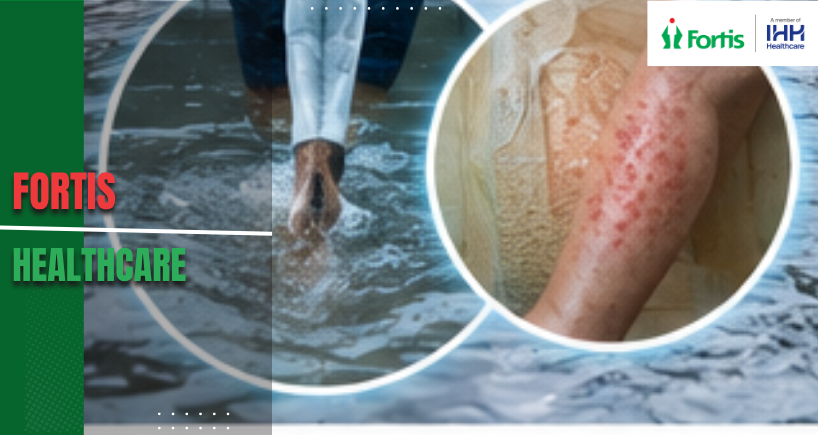


Flooded roads in Delhi- the health risks beyond traffic
When Delhi's roads go under water, the conversation is usually about jams, stalled cars and missed trains. But the more important story is what's in the water — because floodwater on a city street is rarely just rain.
Waterlogged roads mix rainwater with sewage, animal urine, chemicals and hidden debris. Wading through them exposes you to a set of health risks that outlast the traffic — some of them appearing days or even weeks later.
Quick takeaways
Delhi's flooded roads are more than a commute problem — the water itself carries real infection and injury risks.
Leptospirosis, a flood-linked bacterial infection spread through water contaminated with animal urine, is easily mistaken for a viral fever.
Waterlogging also spreads stomach infections, breeds dengue-carrying mosquitoes, and raises the risk of cuts, falls and electrocution.
Avoid wading where possible; if you must, protect your feet, wash and dry afterwards, and watch for fever in the days that follow.
The water is the hazard, not just the jam
Standing floodwater is a soup of contaminants. It picks up whatever the drains overflow with, and it hides the road's edges, open manholes and sharp objects beneath a murky, uniform surface.
That combination is what makes even a short wade riskier than it looks — the threats range from infections you can't see to injuries you can't anticipate.
Leptospirosis: the flood infection that looks like flu
Leptospirosis deserves special mention because it is both common after flooding and frequently missed. It spreads when water contaminated with the urine of infected animals — rats in particular — enters the body through small cuts or through the eyes, nose or mouth.
The early symptoms are non-specific: fever, headache, muscle aches (often in the calves), and red eyes. Because these mimic dengue or an ordinary viral fever, it can be overlooked unless recent floodwater contact is mentioned — so tell your doctor if you've waded through waterlogged streets. Left unrecognised, a minority of cases can progress to serious illness affecting the kidneys and liver.
This is not a fringe risk. Reviews of Indian surveillance data show the large majority of the country's leptospirosis cases cluster in the monsoon and immediate post-monsoon months — exactly when city streets flood.
How to protect yourself if you must go out in the flooding
Avoid wading through floodwater whenever you can find a way around it — this is the single most effective step.
- If you must cross, wear covered, waterproof footwear; never wade barefoot or in open sandals.
- Cover any cuts or grazes with a waterproof dressing before you go out.
- Don't touch your face, and keep floodwater away from your mouth, eyes and nose.
- Steer clear of electric poles, junction boxes and any fallen or hanging wires near water.
- Wash exposed skin and feet with clean water and soap afterwards, and dry thoroughly — especially between the toes.
- Keep children from playing or swimming in waterlogged areas.
After the water recedes
- Discard any food or stored drinking water that may have touched floodwater.
- Clean and dry your home promptly; lingering damp invites mould, which can trigger respiratory problems.
- Check any wounds for redness, swelling or discharge, and keep them clean and covered.
- Watch for fever, body aches or red eyes over the following days to weeks — and seek care if they appear.
- Continue mosquito prevention: the stagnant water left behind is prime breeding ground.
Warning signs that need a doctor
- Fever, chills, severe muscle aches (especially in the calves) or red eyes after floodwater contact.
- Yellowing of the eyes or skin, or reduced urine.
- Breathlessness, chest pain, or a fever that keeps rising.
- A wound that is red, swollen, painful or discharging, or any deep or dirty cut.
- Persistent vomiting, diarrhoea, or signs of dehydration.
- Any high or persistent fever, particularly in a child, older adult, pregnant woman or person with diabetes.
Categories
Clear allMeet the doctor

- Internal Medicine | Internal Medicine | General Physician
-
 20 Years
-
 800
800
Related Blogs
View all






FAQs

Keep track of your appointments, get updates & more!

