
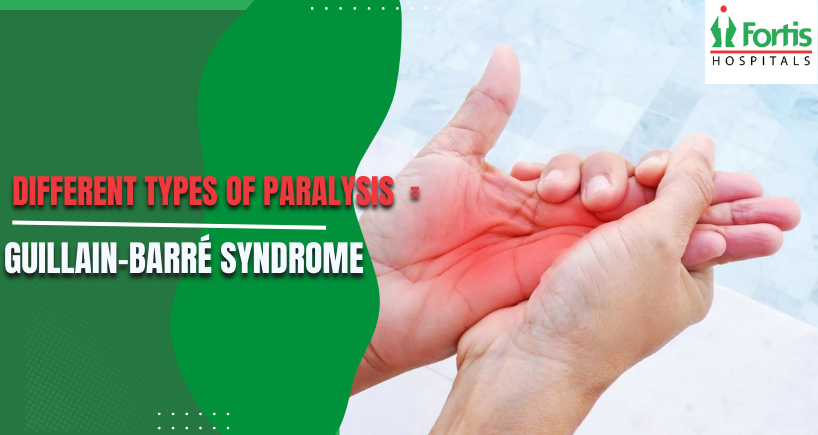


The Four Main Types of Guillain-Barré Syndrome Explained
Imagine waking up one day and the communication lines between your brain and your body start to fail. A strange tingling in your toes begins to spread, followed by a profound weakness that makes it difficult to stand, to walk, to even lift your arms. This sudden and frightening loss of function is the reality for someone experiencing Guillain-Barré syndrome (GBS), a rare and serious autoimmune disorder.
Most people think of this condition as a single disease, but this is not the full picture. Guillain-Barré syndrome is not a monolithic entity. It is an umbrella term for a group of related disorders, each with its own unique way of attacking the nervous system. Understanding the different types is crucial, as it helps doctors predict the course of the illness, anticipate challenges, and map out the long road to recovery.
The Body's Wiring Under Attack
To understand the different types of GBS, it helps to think of your peripheral nervous system, the nerves that connect your spinal cord to your muscles and organs, as a vast network of electrical wires. Each nerve fiber, or axon, is like the copper wire itself, carrying the electrical message. This wire is wrapped in a fatty layer called the myelin sheath, which acts as insulation, allowing the signal to travel quickly and efficiently.
Guillain-Barré syndrome is a case of mistaken identity. Following a trigger, often a common infection like a stomach flu or respiratory virus, the immune system gets confused. It mistakenly sees parts of the peripheral nerves as foreign invaders and launches a powerful attack. The specific part of the nerve that the immune system targets, the insulation or the wire itself, is what defines the 4 types of Guillain-Barré syndrome.
The Four Major Subtypes of GBS
While there are other very rare variants, neurologists classify most cases of this guillain barre disease into four main categories. Differentiating between them is a critical part of the diagnostic process, providing a clearer picture of what is happening on a microscopic level.
Acute Inflammatory Demyelinating Polyneuropathy (AIDP)
This is the classic and most common form of GBS syndrome in North America and Europe. In AIDP, the immune system’s attack is directed primarily at the myelin sheath. The insulation is stripped away from the nerve wires. This process is called demyelination. Without their proper insulation, the nerves cannot transmit signals effectively, leading to muscle weakness.
The classic guillain barre syndrome symptoms of AIDP are what most people associate with the disease: a progressive, symmetrical, ascending paralysis. It typically starts with tingling, numbness, and weakness in the feet and legs. Over the course of days to weeks, this weakness "ascends" up the body, moving to the trunk, arms, and eventually the facial muscles. In severe cases, it can affect the muscles of breathing, requiring mechanical ventilation.
Acute Motor Axonal Neuropathy (AMAN)
This subtype is more common in East Asia and Latin America. In AMAN, the immune system bypasses the insulation and attacks the axon, the nerve wire itself. A key distinction is that this attack is focused exclusively on the motor nerves, the wires that carry signals from the brain to the muscles.
The gbs symptoms of AMAN are therefore purely motor. Individuals experience a rapid onset of weakness, often more severe than in AIDP, but they do not have the sensory symptoms like tingling or numbness. Sensation remains intact. Because the myelin sheath is often spared, if the axon is not permanently destroyed, the signals can start transmitting again relatively quickly once the immune attack subsides. This can sometimes lead to a very rapid recovery.
Acute Motor-Sensory Axonal Neuropathy (AMSAN)
AMSAN is a more severe form of axonal GBS. As its name suggests, the immune system attacks both the motor and the sensory axons. This means both the wires carrying messages to the muscles and the wires carrying sensations like touch and pain back to the brain are damaged.
The symptoms are a combination of profound, rapid weakness, similar to AMAN, coupled with a significant loss of sensation. Patients may be unable to feel touch, vibrations, or the position of their limbs in space. Because the damage to the nerve "wires" is so extensive, recovery from AMSAN is often slower and less complete than in the other types.
Miller Fisher Syndrome (MFS)
Miller Fisher Syndrome is a rare and distinct variant that presents very differently from the others. It is strongly associated with a specific antibody, called anti-GQ1b, which helps to confirm the diagnosis.
Instead of an ascending paralysis that starts in the legs, MFS is known for a classic triad of "descending" gbs symptoms:
Ophthalmoplegia: Paralysis or weakness of the eye muscles, causing double vision and droopy eyelids.
Ataxia: A severe lack of coordination and an unsteady, clumsy gait.
Areflexia: A loss of the normal deep tendon reflexes, like the knee-jerk reflex.
Weakness in the limbs, if it occurs at all, is usually mild. For many with MFS, the first sign is a sudden problem with their vision.
A Unified Approach to Treatment
While understanding the subtype is crucial for prognosis, it is important to know that the initial guillain barre syndrome treatment is the same for all major types. The immediate goal is to stop the autoimmune attack as quickly as possible. This is done with one of two primary therapies:
Intravenous Immunoglobulin (IVIG): This involves an infusion of antibodies collected from thousands of healthy donors, which helps to modulate the immune system's attack.
Plasma Exchange (Plasmapheresis): This is a procedure that filters the patient's blood, removing the harmful antibodies that are attacking the nerves.
Understanding Your Path to Recovery
Knowing that Guillain-Barré syndrome is not one disease, but a spectrum of related disorders, is the first step in understanding your personal journey. Identifying the specific type of attack on your nervous system helps your medical team create a more accurate picture of the road ahead.
Recovery from this devastating illness is a marathon, not a sprint, requiring immense patience and dedicated rehabilitation. By partnering closely with your neurology and therapy teams, you can focus on regaining strength, function, and control, one step at a time.
Frequently Asked Questions
Q1. Does having a specific type of GBS change the initial treatment?
Ans. No. The acute guillain barre syndrome treatment, which is either IVIG or plasma exchange, is the same for all the major types. The primary goal is to halt the immune attack, regardless of whether it is targeting the myelin or the axon.
Q2. Is recovery different for the different types of GBS?
Ans. Yes, the pattern of recovery can be quite different. In general, demyelinating forms like AIDP have a good prognosis because the underlying nerve axon (the "wire") is often intact. Once the body remyelinates the nerve, function can return. Axonal forms like AMSAN can have a more prolonged and sometimes less complete recovery because the nerve itself has to regrow.
Q3. Can a person have more than one type of GBS at the same time?
Ans. No, a person is diagnosed with a single subtype. While there can sometimes be overlapping features, diagnostic tests like nerve conduction studies help to identify the primary mechanism of injury, whether it is mainly demyelinating or axonal.
Q4. How common is Miller Fisher Syndrome?
Ans. MFS is quite rare. It is estimated to account for only about 5% of all cases of Guillain-Barré syndrome in Western countries, although it may be slightly more common in some parts of Asia.
Categories
Clear allRelated Blogs
View all






Keep track of your appointments, get updates & more!

