
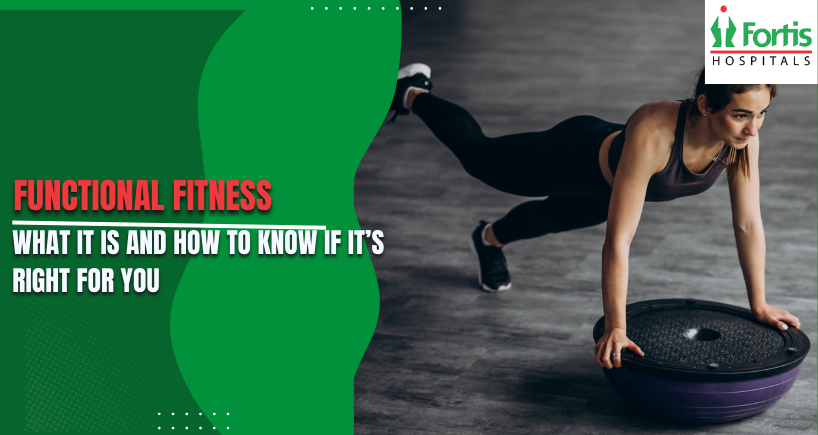


Functional Fitness: What It Is and How to Know If It’s Right for You
For decades, the image of a "workout" has been fairly consistent: rows of treadmills, the clanking of weight machines, and exercises that isolate a single muscle, like the bicep curl. We were taught to break the body down into parts: chest day, leg day, arm day. But in our daily lives, our bodies do not work in isolation. We bend, twist, lift, push, and pull in dynamic, complex ways. We lift a heavy suitcase into the car, carry groceries up the stairs, or twist to play with our children.
What if your workout was designed not just to make your muscles bigger, but to make these exact movements easier? What if your time in the gym directly translated to a more capable, resilient, and pain-free life? This is the core principle behind functional fitness. It is a training philosophy that is less about how you look and more about how you live.
What Is Functional Fitness?
At its heart, functional fitness is a form of exercise that trains your body to handle the demands of real life. It involves performing multi-joint, multi-muscle movements that mimic the patterns you use every day, from getting out of a chair to putting a heavy box on a high shelf.
A traditional leg extension machine, for example, isolates your quadriceps. It makes that one muscle stronger, but it does so while you are in a seated, supported position that has no real-world equivalent. A functional alternative, like a bodyweight squat, trains not only your quads but also your glutes, hamstrings, and calves. More importantly, it forces your core to engage to keep you stable, and it improves your balance and mobility; all at the same time.
The goal of functional fitness is to build a body that works as an integrated system. It is about improving coordination, stability, mobility, and strength in ways that have a direct and practical application to your daily activities.
The Core of a Functional Fitness Routine
A functional fitness routine is built around the "primal movement patterns" that are fundamental to human motion. By training these patterns, you build a foundation of strength that translates to virtually any activity.
The Squat: This is the pattern of sitting down and standing up. It is arguably the most essential functional movement we have.
In the Gym: Goblet squats, bodyweight squats, overhead squats.
In Real Life: Picking up a child, lifting a heavy box from the floor, sitting in a low chair.
The Hinge: This is the movement of bending at your hips, not your back, to pick something up.
In the Gym: Deadlifts, kettlebell swings, good mornings.
In Real Life: Tying your shoes, lifting a suitcase, gardening, picking a toddler up off the floor.
The Lunge: This is the pattern of stepping forward or backward with one leg, a fundamental part of walking, running, and changing levels.
In the Gym: Forward lunges, reverse lunges, side lunges.
In Real Life: Kneeling to get something from a low cabinet, stepping over an obstacle, playing sports like tennis or basketball.
The Push: This involves pushing an object away from your body.
In the Gym: Push-ups, overhead presses, dumbbell bench presses.
In Real Life: Pushing a grocery cart, putting a heavy item on an overhead shelf, pushing a stalled car.
The Pull: This involves pulling an object toward your body.
In the Gym: Pull-ups, bent-over rows, TRX rows.
In Real Life: Pulling open a heavy door, starting a lawnmower, dragging a heavy bag.
The Twist (Rotation): This is the pattern of rotating your torso.
In the Gym: Medicine ball twists, cable wood chops.
In Real Life: Reaching into the back seat of your car, swinging a golf club or tennis racket, looking behind you.
The Carry: This is simply the act of carrying a heavy load.
In the Gym: Farmer's walks (carrying a heavy weight in each hand), suitcase carries (one-sided).
In Real Life: Carrying groceries, a child, or two heavy pails of water.
The Top Benefits of Functional Training
Why choose a squat over a leg press? The benefits of functional training extend far beyond the gym walls.
Drastically Reduces Risk of Injury: By strengthening your body in the same patterns that you use in life, you are building a more resilient, stable, and coordinated machine. A strong core and better balance, both byproducts of functional training, are your best defense against falls and back injuries.
Improves Quality of Life: This is the primary goal. Daily activities become easier. You will feel less strain carrying the groceries, you will have more energy to play with your kids, and you will not have to ask for help lifting that bag into the overhead bin.
Builds Real-World Core Strength: Functional fitness is the ultimate core workout. Nearly every movement requires your core; which includes your abs, obliques, lower back, and hips to work in unison to stabilize your spine. This is a far cry from just doing crunches.
Enhances Mobility and Flexibility: These dynamic, multi-joint movements take your body through a full range of motion, which helps to improve your flexibility and joint mobility over time, reducing stiffness.
Improves Athletic Performance: If you play sports, even just as a "weekend warrior," functional training is key. It builds the explosive power, agility, and rotational strength that are at the heart of running, jumping, throwing, and swinging.
What Does a Functional Fitness Gym Look Like?
You can absolutely perform a functional fitness routine at home with minimal equipment. However, specialized gyms have emerged to support this style of training.
A traditional "big box" gym is often 90% machines and cardio equipment. A functional fitness gym (which includes CrossFit boxes, a popular high-intensity version) looks very different. You will find:
Large, open turf or rubber-matted spaces.
Squat racks and pull-up rigs.
A wide array of kettlebells, dumbbells, and barbells.
Medicine balls, slam balls, and sandbags.
Battle ropes, sleds (for pushing and pulling), and climbing ropes.
The focus is on free weights, bodyweight movements, and open space, rather than on restrictive machines that isolate single muscles.
Is Functional Fitness Right for You?
This training philosophy is highly adaptable and beneficial for almost everyone, but it is an especially good fit for certain people and goals.
Functional fitness is an excellent choice if:
You are bored with traditional, repetitive gym workouts and want more variety.
Your primary goal is to improve your overall health, mobility, and energy for daily life.
You want to reduce your risk of injury from everyday tasks or sports.
You are an older adult looking to maintain independence, bone density, and balance to prevent falls.
You are an athlete, and you want your training to directly improve your performance in your sport.
You enjoy workouts that challenge your body and mind in new ways.
Functional fitness might not be your only focus if:
Your exclusive goal is maximum muscle size (hypertrophy) for bodybuilding. Bodybuilders rely on isolation exercises to develop specific muscles to their peak, which functional training does not prioritize.
Your exclusive goal is maximum strength in the "big three" lifts (powerlifting). While powerlifters use functional movements (squat, deadlift), their training is highly specialized and does not include the full variety of functional patterns.
A Practical Path to Real-World Strength
Functional fitness closes the gap between your workout and your life. It redefines the purpose of exercise, shifting the goal from simply "burning calories" or "building muscle" to building a body that can serve you well in everything you do.
For the vast majority of people, this approach is one of the most efficient and effective ways to build a body that is not just fit, but genuinely capable. If you are ready to train for life, not just for the gym, this philosophy may be the perfect fit for you.
Frequently Asked Questions
Q1. Is functional fitness the same as CrossFit?
Ans. Not exactly. CrossFit is a specific brand of high-intensity functional fitness. It uses many functional movements, but it combines them with gymnastics and Olympic weightlifting in a competitive, high-intensity format. You can do functional training without doing CrossFit, often at a lower intensity and with a different structure.
Q2. Can I do a functional fitness routine at home?
Ans. Absolutely. Many of the most effective functional exercises use your own body weight. A routine built around squats, lunges, push-ups, and planks is highly functional and requires no equipment at all. Adding a few simple tools like dumbbells or kettlebells can expand your options significantly.
Q3. Is functional fitness good for weight loss?
Ans. Yes, it can be very effective for weight loss. A functional fitness routine often involves compound movements that engage multiple large muscle groups at once, which can be very effective at burning calories. It also builds muscle, which increases your overall metabolism.
Q4. How is functional fitness different from using weight machines?
Ans. Weight machines isolate a single muscle and guide your movement along a fixed path. Functional fitness uses free weights (like dumbbells) or your body weight, which forces your body to stabilize itself. This engages many smaller, stabilizing muscles, especially your core, and more closely mimics real-life movements.
Categories
Clear allRelated Blogs
View all
Single Incision Laparoscopic Surgery (SILS) for Hernia Repair

Understanding Gallbladder Stones: Causes, Symptoms, and Treatment Options

Understanding Hernia - Causes, Symptoms, and Treatment Options

Gallstone Complications: When to Seek Medical Attention
Common Myths and Misconceptions About Bariatric Surgery
Understanding Appendicitis: Causes, Symptoms, Risk Factors & Treatment
Understanding Varicose Veins: Causes, Symptoms, Risk Factors & Treatment Options



Keep track of your appointments, get updates & more!

