
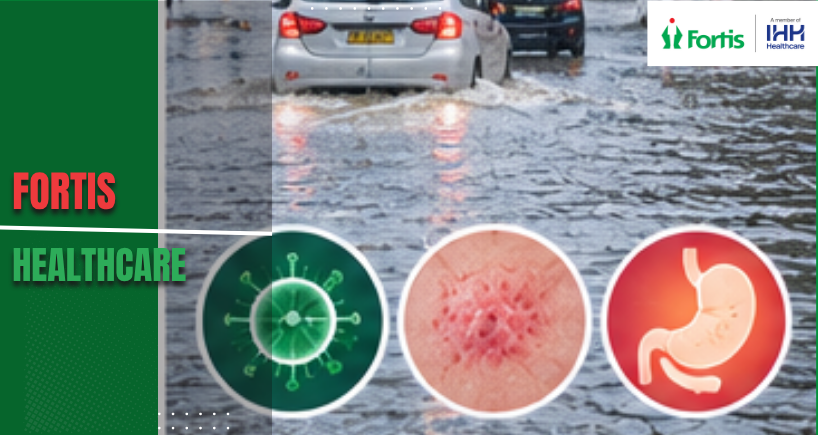


Gurugram Waterlogging - Health Risks You Shouldnot Ignore
If you work or live in Gurugram, you already know the drill. The first heavy monsoon rain of the season — and it doesn't even need to be exceptional rainfall — turns the Golf Course Road underpass into a lake, strands vehicles on NH-48, and floods basement parking lots from Sector 14 to Cyber City. Most residents accept this as the monsoon tax of living in a rapidly built city. What they don't account for is the health bill that arrives two to three weeks later.
Waterlogging in Gurugram carries a specific and underappreciated health risk profile. The city's mix of construction runoff, industrial drainage from Udyog Vihar and Manesar, household sewage from densely populated sectors, and stagnant water in low-lying areas creates conditions that are ideal for disease transmission and vector breeding. This article explains what those risks are, who is most vulnerable, and exactly when a symptom warrants a same-day visit to a doctor rather than a paracetamol and a wait.
⚡ Quick Takeaways
- Gurugram's waterlogging is not just a traffic problem — stagnant water carries leptospirosis bacteria, dengue mosquito breeding grounds, and enteric pathogens.
- Residents of low-lying sectors, basement apartments, and those whose workplaces flood are at highest direct contact risk.
- Leptospirosis, dengue, typhoid, and fungal skin infections are the four most commonly seen post-waterlogging illnesses in Gurugram.
- The highest illness burden typically presents 1–3 weeks after a waterlogging event — not immediately.
- Fever with jaundice or fever with severe muscle pain after waterlogging exposure is a medical emergency — do not wait.
Why Gurugram's Waterlogging Is Unusually Hazardous
Gurugram's rapid urbanisation — from agricultural land to one of India's densest commercial and residential zones in under three decades — has consistently outpaced its drainage infrastructure. The city's natural drainage patterns, which historically moved rainwater toward the Najafgarh Lake basin, have been disrupted by construction on natural drains, inadequate storm-water drain capacity in new sectors, and low-lying topography in areas including old Gurugram, Sector 10, Palam Vihar, and multiple DLF phases.
When this water stagnates — which in many areas it does for 12 to 72 hours after a significant rain event — it is not rainwater. It is a mixture of surface runoff, overflow from the overwhelmed sewer network, construction site chemical runoff from Gurugram's numerous active building sites, and in areas near Udyog Vihar, light industrial effluent. This mixture supports the survival of several disease-causing organisms that are not present in fresh rainwater.
The Rat Problem Nobody Talks About
Gurugram's combination of food courts, restaurant clusters, construction debris, and rapid development has created a large urban rodent population. Rats are the primary reservoir of Leptospira interrogans — the bacteria responsible for leptospirosis. During waterlogging, rat burrows flood, forcing rodents above ground and spreading their urine into the standing water that humans then wade through. This is the primary transmission route for leptospirosis in urban settings, and Gurugram's ecology makes it a genuine risk during every monsoon season.
The Four Major Health Risks After Gurugram Waterlogging
1. Leptospirosis — The Hidden Fever
Leptospirosis is caused by Leptospira bacteria that enter the body through skin abrasions, cuts, or mucous membranes including the eyes, when someone comes into contact with water contaminated with infected rodent urine. It is one of the most underdiagnosed urban infections in India because its early symptoms — high fever, severe headache, muscle pain, and redness of the eyes — closely mimic influenza or dengue.
The danger is what happens in severe, untreated cases: Weil's disease, the severe form of leptospirosis, causes liver failure, kidney failure, lung haemorrhage, and myocarditis. Early antibiotic treatment — typically doxycycline for mild disease and IV penicillin G for severe cases — dramatically improves outcomes. The clinical window for early intervention is narrow, which is why delay in seeking care is the main driver of severe outcomes.
Key warning sign: fever starting 2–14 days after wading through floodwater or waterlogged streets, combined with severe calf muscle pain and redness of the eyes, should prompt an immediate hospital visit — not home monitoring.
2. Dengue — The 2-Week Lag
Dengue does not come from contact with waterlogged water directly — it comes from Aedes aegypti mosquitoes that breed in stagnant water. Gurugram's post-waterlogging environment is ideal for Aedes breeding: construction site water containers, cooler trays, flower pots, and puddles that persist for more than 4–5 days after flooding all support mosquito development.
The 2-week lag between waterlogging and dengue cases is clinically important. Residents who associate fever only with immediate post-flood exposure may not make the connection when they develop high fever, severe body ache, and rash in mid-August after a July waterlogging event. Dengue should always be in the differential diagnosis for fever in Gurugram between July and October.
3. Typhoid and Waterborne Gastroenteritis
Gurugram's water supply — a combination of HSVP (Haryana Shahari Vikas Pradhikaran) piped water, groundwater from private borewells, and tanker supply — is vulnerable to contamination during monsoon. Waterlogging raises the water table and increases pressure differentials that can force sewage contamination into ageing distribution pipes. Tanker supply, on which a large proportion of older sectors and newer, under-connected areas depend, carries an additional contamination risk during monsoon when tank hygiene is compromised.
Typhoid fever presents 7–21 days after consuming contaminated water or food. A prolonged fever — lasting more than three days, often with abdominal discomfort and headache — in a Gurugram resident during monsoon should be investigated with blood cultures and a Widal test rather than treated empirically with broad-spectrum antibiotics.
4. Skin and Wound Infections
Anyone who wades through waterlogged streets in Gurugram with open footwear is at risk of skin and wound infections. Intact skin provides a reasonable barrier, but small cuts, insect bites, or abrasions — which most people have without being aware of them — are entry points for a range of bacteria present in stagnant urban water, including Staphylococcus aureus, Pseudomonas aeruginosa, and in contaminated water near construction sites, soil organisms.
Tinea pedis (athlete's foot) and other superficial fungal infections also increase significantly after prolonged skin-to-water contact in monsoon. The warm, moist conditions between the toes after repeated wading exposure are ideal for fungal colonisation.
Who Is at Highest Risk in Gurugram?
Not all Gurugram residents face equal exposure. The following groups carry the highest risk of post-waterlogging illness:
- Residents of ground-floor or basement apartments in flood-prone sectors — direct home flooding creates prolonged skin contact and food/water contamination risk.
- Daily commuters who wade through waterlogged underpasses, particularly the Golf Course Road underpass, Hero Honda Chowk, and NH-48 waterlogging points.
- Construction workers on Gurugram's active building sites — direct soil and water exposure, often without protective footwear.
- Delivery and field sales workers whose jobs require outdoor movement during and after waterlogging.
- Children who play in waterlogged areas — higher exposure and faster dehydration if gastrointestinal illness develops.
- People with diabetes — impaired wound healing means skin infections from waterlogging can progress rapidly and are harder to treat.
Protective Measures: What Actually Works
During and Immediately After Waterlogging
- Avoid wading in stagnant water wherever possible. If unavoidable, wear closed footwear and cover any skin breaks with waterproof dressing before entry.
- Wash all skin that contacted floodwater with soap and clean running water immediately after exposure — do not delay until you reach home.
- Do not touch your eyes, nose, or mouth with hands that have been in contact with waterlogged surfaces.
- Any food that has come into contact with floodwater — including sealed packaging that was submerged — should be discarded.
At Home
- Empty all standing water from flower pots, cooler trays, overhead tank overflow areas, and any outdoor containers within 24 hours of a flooding event to eliminate Aedes breeding sites.
- Check your RO + UV filter maintenance status — if the filter cycle is overdue, waterlogging season is the highest-risk time to be on an expired filter.
- Boil drinking water if you have any doubt about supply integrity — particularly if you are on tanker supply or in areas with known pipe damage.
At the Office
- If your office basement or ground floor flooded, report any electrical or plumbing concerns to facilities before returning to work — contaminated water in HVAC systems is an underappreciated mould and bacterial risk.
- Avoid eating from roadside vendors immediately after a waterlogging event — surface water contamination of food preparation areas at street stalls persists for several days.
Symptoms That Need Same-Day Medical Attention
Do not manage the following at home with OTC medications after waterlogging exposure. These warrant a prompt visit to Fortis Gurugram:
- Fever above 38.5°C starting 2–14 days after waterlogging contact — especially with severe calf or thigh muscle pain.
- Any yellowing of the eyes or skin (jaundice) — this is a red flag for leptospirosis or hepatitis A and needs immediate evaluation.
- Reduced or absent urination accompanying fever — suggests kidney involvement in leptospirosis.
- Fever with a rash appearing on the trunk, or fever with spontaneous bleeding from gums or nose — classic dengue warning signs.
- A skin wound exposed to floodwater that is expanding in redness or developing pus despite basic antiseptic care.
- More than 5 loose stools in 24 hours, or any diarrhoea with blood — needs a stool culture, not just ORS.
When Is It Safe to Return to a Flooded Home or Area?
From a health perspective, a flooded home or area is not safe simply because the water has receded. The following checks are necessary before extended re-entry:
- Structural safety must be assessed by a qualified engineer before re-entering a home that was flooded above floor level.
- All food, including sealed packaged food that was submerged, should be discarded — do not use it.
- Any damp surfaces should be dried within 24–48 hours to prevent mould colonisation. Mould growth in walls and fabric begins within 24–48 hours of wetting.
- Drinking water supply should be assumed to be compromised until verified — boil or use purified water until your supply is confirmed clean.
Categories
Clear allRelated Blogs
View all
When Is A Liver Transplant Recommended?

Alcoholic Liver Disease - Why Worry?

Binge Drinking Trend Is The New Silent Killer



Irritable Bowel Syndrome

Digestive Disorders And Prevention



FAQs

Keep track of your appointments, get updates & more!

