
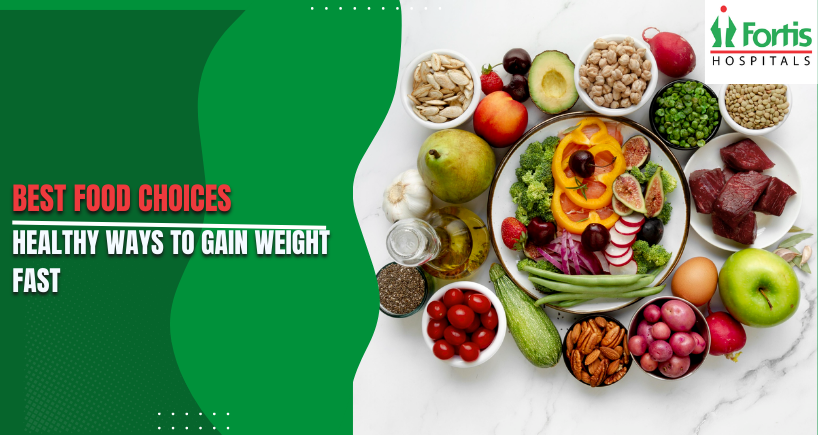


Healthy Ways to Gain Weight Fast: Best Food Choices
In a world that seems overwhelmingly focused on weight loss, the journey of how to gain weight can feel like a lonely and frustrating one. For those who are underweight, whether due to a fast metabolism, a medical condition, or a period of illness, the goal is not just to see a higher number on the scale. It is about feeling stronger, healthier, and more energetic. The desire for results often leads to the question of how to gain weight fast, but it is essential to reframe this. The goal is not just to gain weight, but to gain healthy weight.
Piling on body fat through processed foods and sugar will only harm your health in the long run. The true aim is to build lean muscle mass and healthy tissue. This requires a smart, strategic approach. You need a surplus of high-quality calories to build a stronger, healthier body.
The Fundamental Principle of Healthy Weight Gain
To gain weight, the formula is simple. You must consume more calories than your body burns. This is known as a caloric surplus. There is no other way around this basic law of thermodynamics. However, what those extra calories are made of will determine whether you are building a strong house of brick or a flimsy one of straw.
A 500-calorie surplus from a greasy fast-food meal is not the same as a 500-calorie surplus from avocados, salmon, and quinoa. The first leads to fat gain and inflammation. The second provides the building blocks for muscle, energy, and vitality. A healthy, steady rate of gain is typically about 0.5 to 1 pound per week. This ensures that a majority of the weight you are gaining is lean tissue, not just fat.
Quality Over Quantity: The Building Blocks of Healthy Weight
A successful plan for how to gain weight is not just about eating more, it is about eating smarter. Your focus should be on nutrient-dense foods that provide the right macronutrients to fuel your body and build muscle.
Protein Is Your Foundation
Protein is the single most important building block for new muscle tissue. While in a caloric surplus, your body will use protein to repair the micro-tears in your muscles and build them back stronger. If you do not eat enough protein, those extra calories are much more likely to be stored as body fat. Aim for high-quality protein sources with every single meal.
Complex Carbs Are Your Fuel
Carbohydrates provide the energy your body needs to function and, crucially, to fuel your workouts. They also spare your protein. If you do not eat enough carbs, your body may start to break down your hard-earned muscle tissue for energy. Focus on complex carbohydrates that provide sustained energy and fiber, rather than simple sugars that cause a crash.
Healthy Fats Are Your Most Efficient Tool
Fat is your most powerful ally in gaining weight. It is the most calorie-dense of all the macronutrients, containing nine calories per gram, which is more than double the four calories per gram in protein and carbs. This means you can add a significant number of calories to your meals without dramatically increasing the food volume. This is one of the most effective weight gain tips for those who feel full quickly.
The Best Foods to Help Gain Weight
Your goal is to choose foods that are both high in calories and high in nutrients. Here are some of the best foods to help gain weight in a healthy, sustainable way.
Calorie-Dense and Nutrient-Rich Staples
Nuts and Nut Butters: Almonds, walnuts, peanuts, and their natural butters are packed with protein, healthy fats, and calories. A single tablespoon of peanut butter has nearly 100 calories.
Avocados: This fruit is a fantastic source of monounsaturated fats and fiber. One large avocado can pack over 300 calories.
Healthy Oils: Extra virgin olive oil and avocado oil are perfect for adding calories. Be generous when roasting vegetables or making salad dressings.
Seeds: Chia seeds, flaxseeds, and hemp seeds are small but mighty. They are rich in omega-3 fats, protein, and fiber.
High-Quality Proteins
Salmon and Oily Fish: Salmon is not only high in protein but also rich in healthy omega-3 fatty acids, which support overall health.
Eggs: The whole egg is a perfect food for weight gain. The yolk is full of nutrients and healthy fats, while the white is pure protein.
Chicken Thighs: While chicken breast is leaner, the thigh meat contains more fat and is more calorie-dense, making it a great choice for gaining weight.
Full-Fat Greek Yogurt: This provides both protein and fat. You can easily add more calories by mixing in honey, nuts, and fruit.
Smart Carbohydrates
Oats: A bowl of oatmeal is a perfect base. You can make it with whole milk instead of water and load it up with nut butter, seeds, and fruit.
Brown Rice and Quinoa: These whole grains provide complex carbs and fiber, serving as a solid base for any meal.
Sweet Potatoes: A delicious and nutrient-dense source of carbohydrates.
Whole Fruits: Dried fruits like raisins and dates are a very concentrated source of calories. Fresh fruits like bananas and mangoes are also higher in calories and great for smoothies.
Practical Weight Gain Tips for Daily Life
Knowing what to eat is the first step. Here are some practical weight gain tips for how to gain weight fast and healthily.
Eat More Frequently: If you feel full quickly, trying to eat three massive meals a day is a recipe for failure. Instead, aim for five or six smaller, calorie-dense meals and snacks throughout the day.
Make Your Meals Calorie-Dense, Not Just Bigger: This is the most important tip. You do not have to eat an uncomfortably large volume of food. Instead, "fortify" your existing meals. Add a tablespoon of olive oil to your pasta. Put an extra handful of nuts in your oatmeal. Top your salad with avocado and seeds. These small additions add hundreds of calories without making you feel stuffed.
Drink Your Calories: Sipping on calories can be much easier than eating them. A high-calorie smoothie is a perfect tool. Blend full-fat milk or Greek yogurt with protein powder, a banana, a large spoonful of peanut butter, and a handful of spinach.
Incorporate Resistance Training: This is the non-negotiable partner to your new diet. If you eat in a caloric surplus without exercise, you will gain fat. If you eat in a surplus and do resistance training (lifting weights), your body will use those extra calories and protein to build muscle. This is the secret to healthy weight gain.
A Proactive Partnership in Your Health Goals
Gaining weight in a healthy way is a marathon, not a sprint. It requires patience, consistency, and a smart, deliberate plan.
By focusing on nutrient-dense foods, eating in a consistent caloric surplus, and committing to resistance training, you will be providing your body with both the energy and the blueprint it needs to build a stronger, healthier version of you.
Frequently Asked Questions
Q1. How fast can I realistically gain healthy weight?
Ans. A safe and sustainable rate of weight gain is about 0.5 to 1 pound (0.25 to 0.5 kg) per week. Gaining weight faster than this significantly increases the likelihood that you are gaining fat, not muscle.
Q2. Do I need to use protein powder to gain weight?
Ans. No, you do not. Protein powder is a convenient supplement, but it is not magical. You can absolutely get all the protein you need from whole foods to help gain weight, such as chicken, fish, eggs, dairy, and legumes.
Q3. I feel like I eat all the time and never gain weight. Why?
Ans. This is a very common feeling. It often comes down to a mismatch between perception and reality. You may be eating foods that are not very calorie-dense, or you may have a very high metabolism (a high NEAT, or non-exercise activity thermogenesis). The solution is to track your calorie intake for a few days to get a real baseline, and then focus on adding the calorie-dense foods listed above to your meals.
Q4. Should I avoid cardio if I'm trying to gain weight?
Ans. You should not avoid it completely, as cardiovascular health is vital. However, excessive, long-duration cardio burns a significant number of calories, which can work against your goal. Prioritize resistance training and use cardio as a tool for health, not for high-volume calorie burning.
Categories
Clear allRelated Blogs
View all
Single Incision Laparoscopic Surgery (SILS) for Hernia Repair


Understanding Gallbladder Stones: Causes, Symptoms, and Treatment Options
Understanding Hernia - Causes, Symptoms, and Treatment Options

Gallstone Complications: When to Seek Medical Attention

Common Myths and Misconceptions About Bariatric Surgery
Understanding Appendicitis: Causes, Symptoms, Risk Factors & Treatment
Understanding Varicose Veins: Causes, Symptoms, Risk Factors & Treatment Options



Keep track of your appointments, get updates & more!

