
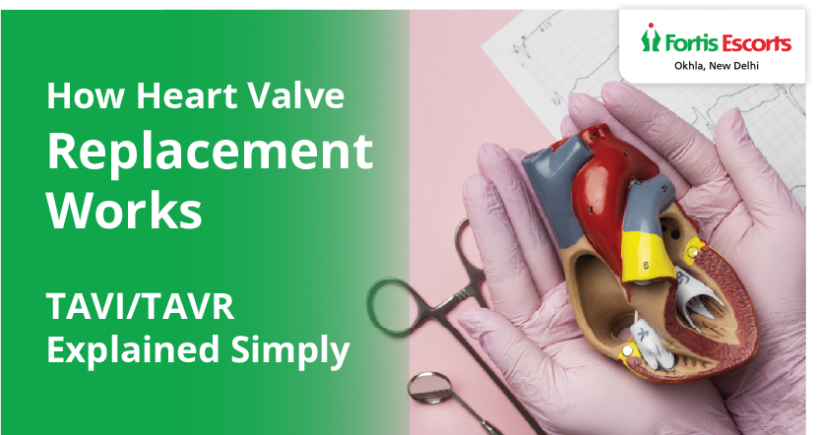


How Heart Valve Replacement Works- TAVI/TAVR Explained Simply
If you or a loved one has been diagnosed with a heart valve problem, the idea of surgery can feel overwhelming. Many people worry about open-heart surgery, slow recovery, and surgical risks, especially as age progresses. This is where newer, less invasive procedures like TAVI or TAVR have transformed heart valve treatment. ¹
TAVI (Transcatheter Aortic Valve Implantation), also known as TAVR (Transcatheter Aortic Valve Replacement), offers a safer alternative for many individuals who are not ideal candidates for open-heart surgery.
What Is Heart Valve Disease?
Heart valves ensure that blood flows smoothly in the correct direction through the heart. When a valve becomes narrowed or stiff, a condition known as valve stenosis, the heart must work much harder to pump blood. The most common and serious form is aortic stenosis, where the heart’s main valve narrows, making it harder for the blood to flow. This condition often develops with age. ¹,²
As the valve narrows, individuals may experience shortness of breath while walking, chest pain, dizziness, or fainting. Without treatment, a serious heart valve condition can lead to heart failure and significantly reduced life expectancy. ¹
What Is TAVI/TAVR?
TAVI or TAVR is a minimally invasive procedure used to replace a diseased aortic valve without opening the chest. Instead of removing the old valve, doctors place a new valve inside it using a thin tube called a catheter, usually inserted through an artery in the leg. ³
Once positioned correctly, the new valve expands and immediately begins regulating blood flow, allowing the heart to pump more efficiently.
How TAVI/TAVR Works Step by Step
During the procedure, the catheter carrying the replacement valve is guided through blood vessels to the heart under advanced imaging guidance. When the new valve reaches the diseased valve, it is carefully expanded, pushing the old valve leaflets aside. The new valve then takes over normal valve function. ²,³
Because the chest is not opened and the heart does not need to be stopped, recovery is typically faster and less physically demanding than traditional surgery.
Who Benefits Most from TAVI/TAVR?
TAVI was initially developed for older age groups or those considered high risk for open-heart surgery due to age, frailty, or multiple medical conditions. Over time, studies have shown excellent outcomes even in people with intermediate surgical risk. ³,⁴
People with severe aortic stenosis who experience breathlessness, chest pain, dizziness, or fainting may be evaluated for TAVI after detailed heart imaging and clinical assessment.
Benefits Compared to Open-Heart Valve Surgery
Compared to surgical valve replacement, TAVI is associated with shorter hospital stays, faster recovery, and reduced physical trauma. Many individuals receiving care are able to sit up and walk within a day of the procedure and return to daily activities sooner. ²,⁴
For suitable people, TAVI has shown comparable survival outcomes with fewer complications related to surgery.
Life After TAVI/TAVR
After valve replacement, most people experience significant improvement in symptoms such as breathlessness and fatigue. Regular follow-up, heart imaging, and medication adherence are essential to ensure long-term valve function and overall heart health. ¹,³
Lifestyle management and control of associated conditions like high blood pressure, diabetes, and cholesterol remain important even after successful valve replacement.
The Bottom Line
TAVI/TAVR has revolutionised the treatment of severe aortic valve disease, offering a safer and less invasive option for many individuals. Restoring normal blood flow without open-heart surgery, it improves quality of life, reduces symptoms, and lowers the risk of heart failure.
If symptoms such as shortness of breath, chest pain, or dizziness are present, timely evaluation by a cardiologist can determine whether valve replacement and whether TAVI is the right option.¹–³
References
- Otto CM, Nishimura RA, Bonow RO, et al. 2020 ACC/AHA guideline for the management of patients with valvular heart disease. Circulation. 2021;143(5):e72–e227.
- Vahanian A, Beyersdorf F, Praz F, et al. 2021 ESC/EACTS guidelines for the management of valvular heart disease. Eur Heart J. 2022;43(7):561–632.
- Mack MJ, Leon MB, Thourani VH, et al. Transcatheter aortic-valve replacement with a balloon-expandable valve in low-risk patients. N Engl J Med. 2019;380(18):1695–1705.
- Leon MB, Smith CR, Mack MJ, et al. Transcatheter or surgical aortic-valve replacement in intermediate-risk patients. N Engl J Med. 2016;374(17):1609–1620.
Categories
Clear allMeet the doctor

- Cardiac Sciences | Heart Transplant | Interventional Cardiology
-
 20 Years
-
 2000
2000
Related Blogs
View all






FAQs

Keep track of your appointments, get updates & more!

