
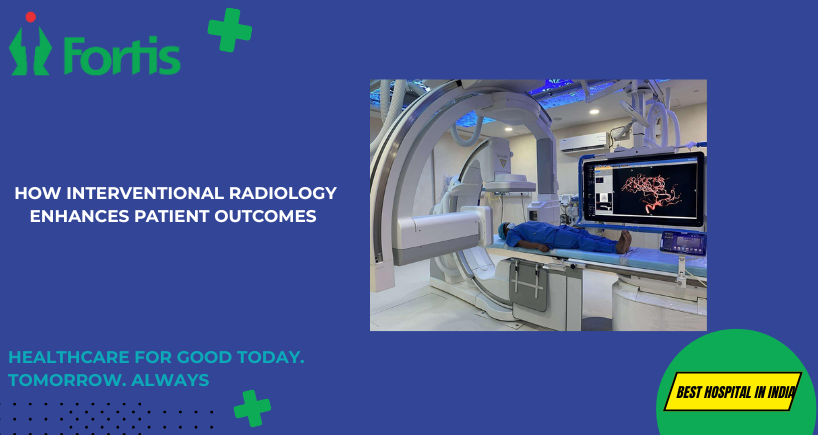


How Interventional Radiology Enhances Patient Outcomes
For generations, the word "surgery" painted a very specific picture in our minds: a large incision, a lengthy hospital stay, and a long, often painful road to recovery. While traditional open surgery remains a vital and life-saving field of medicine, a quiet revolution has been changing that picture entirely. Imagine treating complex conditions deep within the body, from blocked arteries to cancerous tumors, through an incision no bigger than the tip of a pencil.
This is not science fiction. This is the world of interventional radiology, a field that combines the power of advanced medical imaging with minimally invasive techniques to deliver targeted, effective treatments with remarkable benefits for patients.
What Is Interventional Radiology?
At its core, interventional radiology (IR) is often described as "image-guided surgery." It is a medical specialty where physicians use imaging technologies like X-rays (fluoroscopy), computed tomography (CT), ultrasound, and magnetic resonance imaging (MRI) to see inside the body in real-time. This live roadmap allows them to guide tiny instruments, such as catheters, wires, and needles, through blood vessels and other pathways to diagnose and treat a vast range of conditions.
Instead of making a large incision to directly see and access the problem area, an interventional radiologist navigates the body's natural highways to reach the target with pinpoint accuracy. This approach represents a fundamental shift in medical treatment, moving from major open operations to highly precise, minimally disruptive procedures.
The Advanced Tools of a Modern Specialty
The ability to perform these intricate procedures relies on a combination of sophisticated technology and specialized medical expertise. The interventional radiologist's toolkit is a testament to modern medical innovation.
Imaging Guidance: This is the cornerstone of IR. Live X-ray imaging, known as fluoroscopy, acts like a GPS system, allowing the physician to watch the progress of their instruments on a screen as they move through the body. CT and ultrasound provide detailed cross-sectional views that help plan the procedure and ensure absolute precision.
Catheters and Wires: These are the primary instruments. A catheter is a very thin, flexible plastic tube, and a guidewire is an even thinner, steerable wire. The physician can skillfully navigate these tools through complex networks of blood vessels to reach virtually any organ in the body.
Specialized Instruments: Once the catheter is in place, it acts as a portal through which a variety of tiny tools can be delivered directly to the site of the problem. These can include balloons to open blocked vessels, stents to hold them open, tiny coils to block blood flow to tumors, or needles to deliver targeted treatments.
A Spectrum of Interventional Radiology Procedures
The applications for this technology are incredibly broad and are constantly expanding. Many conditions that once required major surgery can now be treated with minimally invasive interventional radiology procedures.
Treating Vascular and Arterial Disease
This is a domain where vascular interventional experts have a profound impact. For patients with Peripheral Artery Disease (PAD), where arteries in the legs become narrowed, an interventional radiologist can perform an angioplasty. This involves inflating a small balloon inside the artery to open it up, often followed by placing a small metal scaffold called a stent to keep it open. They can also treat aneurysms by placing coils or stent-grafts to prevent them from rupturing, all done from inside the vessel.
Advancing Cancer Care
Interventional oncology is a rapidly growing subspecialty. Instead of systemic chemotherapy that affects the whole body, procedures like chemoembolization allow physicians to deliver high-dose chemotherapy drugs directly into the artery feeding a tumor, primarily in the liver. This maximizes the drug's effect on the cancer while minimizing side effects. Another technique, tumor ablation, uses special needles to deliver heat (radiofrequency ablation) or cold (cryoablation) to "cook" or freeze and destroy tumors without a single surgical incision.
Precise Biopsies and Drainages
When a doctor needs a tissue sample from a deep or delicate location, such as the lung or liver, IR provides a safer alternative to surgical biopsy. Using CT or ultrasound guidance, a needle can be precisely guided to the target to retrieve a sample. Similarly, if a patient develops an abscess or fluid collection deep within the body, a small drainage tube can be placed with image guidance to remove the fluid and treat the infection.
The Transformative Benefits for Patients
The most compelling story of interventional radiology is told through its impact on the patient experience and outcomes. The advantages over traditional open surgery are significant and multifaceted.
Less Invasive: The procedures are performed through tiny nicks in the skin, not large incisions. This means less trauma to the body.
Reduced Pain: Less damage to skin, muscle, and tissue results in significantly less pain after the procedure and a reduced need for narcotic pain medications.
Faster Recovery: Because the procedures are less traumatic, recovery is dramatically faster. Many interventional radiology procedures are performed on an outpatient basis, and hospital stays are much shorter. Patients can return to their normal lives and activities in days, not weeks or months.
Lower Risk of Complications: Smaller incisions and less disruption to the body lead to a lower risk of bleeding, infection, and other complications often associated with open surgery.
New Hope for Patients: IR often provides a viable and effective treatment option for patients who may be too old or too sick to be candidates for traditional surgery.
The Experts Behind the Technology
An interventional radiologist is a board-certified physician who possesses a unique combination of skills. They are first and foremost radiologists, with years of training in interpreting medical images to diagnose diseases. They then undergo extensive additional training to become experts in performing minimally invasive, image-guided procedures. These vascular interventional experts have an intimate knowledge of the body's anatomy as seen on imaging and the technical skill to navigate its most delicate pathways. They work as part of a collaborative care team, consulting with surgeons, oncologists, and primary care doctors to determine the best course of treatment for each individual patient.
A New Frontier in Patient-Centered Care
Interventional radiology has fundamentally changed the landscape of modern medicine. It has ushered in an era where treatment can be more targeted, more precise, and far gentler on the patient, all while delivering exceptional outcomes.
This evolution empowers you to be a more active participant in your healthcare. By knowing that these advanced, minimally invasive options exist, you can have more informed conversations with your care team about the path that is best for your health and your life.
Frequently Asked Questions
Q1. Are interventional radiology procedures painful?
Ans. Most procedures are performed with local anesthesia to numb the small entry site and "twilight sedation" to keep you comfortable and relaxed. Patients typically report minimal discomfort, especially when compared to the significant pain associated with recovering from a large surgical incision.
Q2. How long does recovery take?
Ans. Recovery time is one of the biggest benefits. While it varies depending on the specific procedure, most patients are up and walking within a few hours. Many procedures are done on an outpatient basis, meaning you go home the same day, and a full return to normal activities often takes just a few days.
Q3. What is the difference between a radiologist and an interventional radiologist?
Ans. A diagnostic radiologist is a doctor who specializes in interpreting medical images, like X-rays and MRIs, to diagnose conditions. An interventional radiology specialist is a radiologist who has additional, extensive training to use those same imaging technologies to actively perform procedures and treat diseases from inside the body.
Q4. Is interventional radiology a safe alternative to surgery?
Ans. All medical procedures carry some level of risk. However, because interventional radiology procedures are so much less invasive than open surgery, they generally have a significantly lower risk of major complications, such as infection, bleeding, and adverse reactions to general anesthesia. Your doctor will discuss the specific risks and benefits for your situation.
Categories
Clear allRelated Blogs
View all

MRI: A Closer Look at the Purpose, Mechanism and Risks of the Technique

Navigating Radiation Therapy: Minimizing Side Effects and Enhancing Recovery




Keep track of your appointments, get updates & more!

