
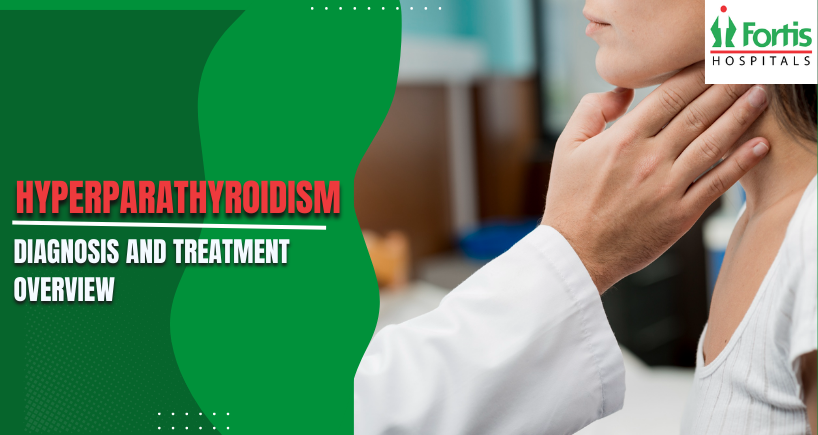


Hyperparathyroidism: Diagnosis and Treatment Overview
Our bodies are masters of maintaining a delicate balance. Deep within your neck, four tiny glands, each no larger than a grain of rice, work as the body's master calcium thermostats. These are your parathyroid glands, and they perform a job so critical that without them, our nervous and muscular systems would fail. But what happens when this finely tuned system goes awry?
This is the reality of hyperparathyroidism, a condition where these glands become overactive, leading to a silent but potentially serious disruption of your body's calcium balance.
For many, the first hint of this disorder comes as a complete surprise; an abnormal result on a routine blood test. The signs of parathyroid disease are often so subtle and non-specific that they can be missed for years. But a definitive diagnosis is the start of a clear path back to health. Understanding how this condition is diagnosed and the effective treatments available is the key to managing the disease and protecting your bones, kidneys, and overall well-being.
What Is Hyperparathyroidism?
The parathyroid glands produce parathyroid hormone (PTH). The sole purpose of PTH is to regulate the level of calcium in your blood. If your calcium level drops, the glands release PTH, which signals your bones to release calcium, your intestines to absorb more calcium from your food, and your kidneys to conserve calcium. If your calcium level rises, the glands shut off PTH production.
Hyperparathyroidism occurs when one or more of these glands become overactive and produce too much PTH, regardless of the calcium level in the blood. This leads to a persistently high level of calcium in your blood, a condition called hypercalcemia.
There are two main types of this hyper parathyroid condition:
Primary Hyperparathyroidism: This is the most common form. The problem originates in the parathyroid glands themselves. In about 85% of cases, it is caused by a small, benign (non-cancerous) tumor called an adenoma on one of the four glands.
Secondary Hyperparathyroidism: In this type, the parathyroid glands are not the initial problem. They become overactive in response to another disease that is causing a chronically low calcium level in the body. The most common cause of secondary hyperparathyroidism is chronic kidney disease.
The Diagnostic Journey: From Suspicion to Certainty
The path to a diagnosis of primary hyperparathyroidism is a methodical process of confirmation. It starts with a simple blood test and ends with pinpointing the exact source of the problem.
The First Clue: A Routine Blood Test
The vast majority of people are diagnosed after a routine blood test, ordered for another reason, reveals a high calcium level. This unexpected finding is the critical first clue. However, a high calcium level alone is not enough for a diagnosis. The next, most important step is to measure the blood calcium level and the parathyroid hormone (PTH) level at the same time.
In a healthy person, if the calcium is high, the PTH should be very low (the glands should be "off"). The definitive biochemical sign of primary hyperparathyroidism is a high calcium level and a high (or inappropriately normal) PTH level. This combination confirms that the parathyroid glands are the source of the problem.
Assessing the Impact on the Body
Once the diagnosis is confirmed, your doctor, likely an endocrinologist, will want to see what effect the high calcium has had on your body. This may involve:
A 24-Hour Urine Collection: To measure how much calcium your kidneys are excreting.
A Bone Mineral Density Test (DEXA Scan): To check for bone loss (osteoporosis), as the excess PTH has been leaching calcium from your bones.
Kidney Imaging: An ultrasound or CT scan may be used to look for kidney stones, which are a common complication.
Finding the Culprit: Localization Scans
It is crucial to understand that imaging scans are not used to diagnose the disease. They are used after the diagnosis is confirmed by blood tests to help the surgeon locate the overactive gland before an operation. The two most common localization studies are:
Sestamibi Scan: A small amount of a safe radioactive tracer is injected, which is selectively absorbed by the overactive parathyroid gland, causing it to "light up" on a special scan.
Neck Ultrasound: An experienced sonographer can often visualize an enlarged parathyroid adenoma in the neck.
An Overview of Hyperparathyroidism Treatments
The treatment approach depends entirely on whether you have primary or secondary hyperparathyroidism.
Surgery: The Only Cure for Primary Hyperparathyroidism
For primary hyperparathyroidism, the only definitive cure is hyperparathyroidism surgery. The procedure, called a parathyroidectomy, involves a surgeon carefully exploring the neck to identify and remove the overactive parathyroid gland (or glands).
Today, this is often a minimally invasive procedure. If localization scans have clearly identified a single adenoma, the surgeon can make a very small incision and go directly to that spot. During the operation, the surgeon will often measure the PTH levels in your blood in real-time. After the adenoma is removed, the PTH level should drop by more than 50% within minutes, confirming that the operation was a success. The cure rate for this surgery, when performed by an experienced endocrine surgeon, is over 95%.
Medical Management of Secondary Hyperparathyroidism
The treatment for secondary hyperparathyroidism is completely different because the goal is to treat the underlying cause. Since this is most often chronic kidney disease, the treatment focuses on managing the mineral and bone disease associated with kidney failure. This can include a low-phosphate diet, medications called phosphate binders, special forms of activated vitamin D, and a class of drugs called calcimimetics that trick the parathyroid glands into producing less PTH.
A Proactive Partnership in Your Health
While the signs of parathyroid disease can be subtle and develop over many years, the condition is highly treatable. A clear diagnosis of hyperparathyroidism marks the end of a period of unexplained symptoms and the beginning of a clear path to restoring your body’s natural balance.
By working closely with an endocrinologist and an experienced endocrine surgeon, you can effectively resolve the condition, protect your bones and kidneys, and improve your overall quality of life.
Frequently Asked Questions
Q1. What kind of doctor treats hyperparathyroidism?
Ans. The diagnosis and medical management of hyperparathyroidism are typically handled by an endocrinologist, a specialist in hormone disorders. If surgery is needed, you will be referred to an endocrine surgeon or a general surgeon with extensive experience in parathyroid surgery.
Q2. Is hyperparathyroidism surgery dangerous?
Ans. All surgery has risks, but a parathyroidectomy is generally a very safe procedure when performed by a high-volume, experienced surgeon. The main risks are specific to the neck and include potential injury to the recurrent laryngeal nerve (which controls the voice box) and damage to the remaining healthy parathyroid glands, which could lead to temporarily or permanently low calcium levels.
Q3. What is recovery like after the surgery?
Ans. For a minimally invasive parathyroidectomy, the recovery is very quick. Most people go home the same day or the next morning. You may have a sore throat and some neck stiffness for a few days, but you can typically resume most normal activities within a week.
Q4. Will I need to take medication for life after my surgery?
Ans. After a successful surgery for primary hyperparathyroidism, where only the adenoma is removed, your remaining three healthy glands will take over and regulate your calcium normally. In most cases, you will not need to take any long-term medication.
Categories
Clear allRelated Blogs
View all








Keep track of your appointments, get updates & more!

