
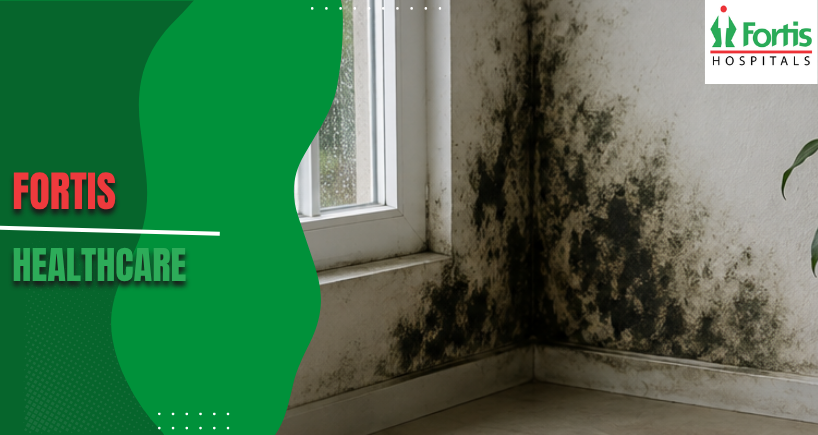


Indoor mould after the rains A hidden asthma trigger
By the end of the monsoon, many homes carry the tell-tale signs: a musty smell, dark patches spreading across a bathroom ceiling, peeling paint near a damp wall. Those patches are mould — and for a lot of people, they are a hidden reason coughs, sneezing, a blocked nose or wheezing get worse indoors during the rains.
Mould isn't only a housekeeping problem. The tiny spores it releases into indoor air can irritate the airways and set off allergies and asthma, sometimes long after the rain itself has stopped.
Quick takeaways
- Monsoon humidity and damp walls let mould grow indoors, releasing spores into the air you breathe.
- Mould spores are a common trigger for allergic rhinitis, sinus problems and asthma flare-ups.
- People with asthma, allergies, COPD or weak immunity — and young children and older adults — are most affected.
- Controlling indoor damp (ventilation, fixing leaks, drying wet areas) is the single most effective step.
Why the monsoon is peak season for indoor mould
Mould is a type of fungus that grows wherever there is moisture and something to feed on — plaster, wood, paint, fabric or dust. It thrives when indoor humidity stays high, which is exactly what the monsoon delivers for weeks at a stretch.
Leaking roofs and pipes, seepage through walls, wet clothes drying indoors, and poor ventilation all keep surfaces damp. Once indoor humidity sits above roughly 60%, mould can take hold on walls, ceilings, bathrooms, wardrobes and even air-conditioning units.
How indoor mould affects your airways
Mould constantly releases microscopic spores into the air. When you breathe them in, they can irritate the lining of the nose, sinuses and airways — and in people prone to allergy, the immune system overreacts to them.
That reaction shows up as sneezing, a runny or blocked nose, itchy eyes, cough, chest tightness or wheezing. In people with asthma, mould exposure is a well-recognised trigger for flare-ups, and it can worsen sinus problems too.
This is a general guide, not a diagnosis. Symptoms overlap, and only a doctor can confirm what's actually going on.
Who is most vulnerable
- People with asthma, allergic rhinitis or chronic sinus problems.
- People with COPD or other chronic lung disease.
- Young children and older adults.
- People with weakened immunity, or on long-term steroids or chemotherapy.
In people with asthma or weakened immunity, certain moulds (such as Aspergillus) can occasionally cause more serious problems, including allergic bronchopulmonary aspergillosis (ABPA) or fungal sinus infections. These need specialist assessment — another reason not to ignore persistent, damp-linked symptoms.
How to reduce indoor mould
The goal is simple: keep indoor surfaces dry and air moving. Removing existing mould helps, but it will return unless the underlying damp is fixed.
- Ventilate: open windows when it's dry outside, and use exhaust fans in the kitchen and bathroom.
- Fix leaks and seepage promptly; don't let damp patches sit for weeks.
- Dry wet areas within 24–48 hours; avoid drying large amounts of washing indoors.
- Use a dehumidifier or the AC's dry mode to keep humidity down in closed rooms.
- Clean small mouldy areas with appropriate cleaners while wearing a mask; get large or recurring growth assessed professionally.
- Service AC units and clean or change filters before and during the season.
When to see a doctor
- Wheezing, breathlessness or chest tightness, or asthma that's harder to control than usual.
- A cough or blocked nose that persists for weeks and eases when you leave the house.
- Repeated sinus infections, or facial pain and pressure.
- Coughing up thick mucus plugs, or any blood in the sputum.
- Any breathing difficulty in a child, an older adult or someone with existing lung disease.
Categories
Clear allRelated Blogs
View all
Single Incision Laparoscopic Surgery (SILS) for Hernia Repair


Understanding Gallbladder Stones: Causes, Symptoms, and Treatment Options

Understanding Hernia - Causes, Symptoms, and Treatment Options

Gallstone Complications: When to Seek Medical Attention

Common Myths and Misconceptions About Bariatric Surgery

Understanding Appendicitis: Causes, Symptoms, Risk Factors & Treatment
Understanding Varicose Veins: Causes, Symptoms, Risk Factors & Treatment Options


FAQs
Can mould really trigger asthma, or is that exaggerated?
It's well established. Mould spores are a recognised indoor allergen and asthma trigger. Reducing damp indoors often noticeably improves symptoms, but any change to medication should be guided by your doctor.
I cleaned the mould but symptoms continue — why?
Spores linger in the air, and hidden growth (behind furniture, inside walls or AC units) may remain. If symptoms persist, get both the home damp and your symptoms assessed.
Is a musty smell alone enough to worry about?
A persistent musty smell usually means moisture and possibly hidden mould. It's worth finding and fixing the source, especially if anyone at home has asthma or allergies.

Keep track of your appointments, get updates & more!

