
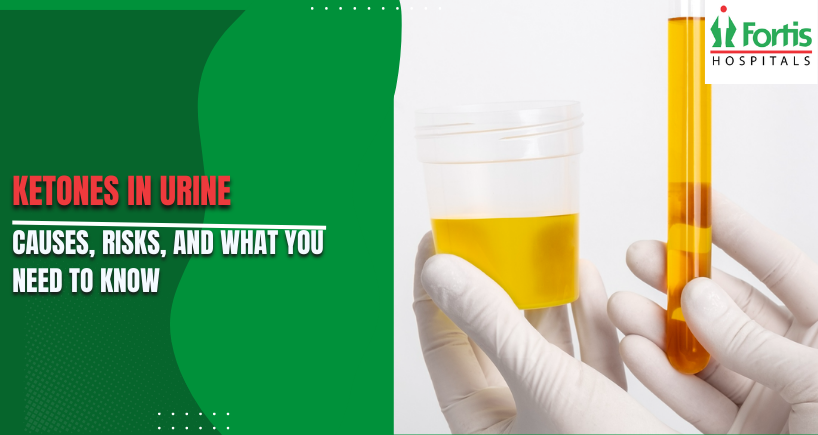


Ketones in Urine: Causes, Risks, and What You Need to Know
You may have seen them in a pharmacy or online. Small, unassuming plastic strips designed to be dipped in urine, which then change color. For many, a urine ketone test is an unfamiliar tool. But for some, it is a vital part of their daily health management. Seeing this strip change color can be confusing or even frightening. It is a sign that your body is producing ketones in urine, a clear signal that your body's metabolism has shifted its primary fuel source.
This shift can be a harmless, intentional result of a specific diet. It can also be a critical warning sign of a life-threatening medical emergency. Understanding what ketones are, the primary ketones in urine causes, and what your results mean is essential for your health and safety.
What Are Ketones Exactly?
Think of your body as a hybrid engine. Its preferred, main fuel source is glucose, a simple sugar that comes from the carbohydrates you eat. Your cells, especially your brain, run on glucose. When this fuel is readily available, your body uses it for all its energy needs.
But what happens when glucose is not available? Your body does not shut down. It intelligently switches to its backup fuel tank: your stored body fat. When your body starts to burn fat for energy at a high rate, your liver breaks down these fats and produces byproducts called ketones. These ketones are an alternative, high-energy fuel source that your brain and other organs can use to keep functioning.
These ketones circulate in your blood. When their level gets too high, your kidneys, which act as your body's filtration system, begin to filter out the excess ketones and excrete them from your body. This is why they appear in your urine.
The Major Ketones in Urine Causes
Seeing ketones on a test strip means one simple thing: your body is burning fat for fuel. The vital question is why. The answer to this question separates a safe metabolic state from a dangerous medical condition.
The Critical Danger: Diabetic Ketoacidosis
This is the most serious and dangerous cause. Diabetic ketoacidosis (DKA) is a life-threatening complication that primarily affects people with Type 1 diabetes, though it can occur in Type 2 diabetes as well.
Here is the process: In a person with Type 1 diabetes, the body does not produce insulin. Insulin is the key that unlocks your cells, allowing glucose from your blood to enter and be used for energy. Without insulin, glucose gets "stuck" in the bloodstream, leading to very high blood sugar. Even though there is plenty of fuel (glucose) in the blood, the cells are starving because they cannot access it.
In response, the starving body triggers a panic signal. It begins to burn fat at an uncontrolled rate to create ketone energy. This produces so many ketone acids that the blood's pH level begins to drop, becoming dangerously acidic. DKA is a medical emergency that requires immediate hospitalization.
Intentional Nutritional Ketosis
This is the most common benign cause of ketones. A ketogenic ("keto") diet is a very low-carbohydrate, high-fat eating plan. By intentionally restricting carbohydrates, you are forcing your body to switch from using glucose as its main fuel to using fat. This metabolic state is called nutritional ketosis.
In this context, having "small" or "moderate" ketones in urine is an expected and intended outcome. It is a sign that the diet is working as designed. This is a controlled, safe process and is not the same as the uncontrolled, acidic state of DKA.
Fasting, Starvation, or Illness
Any situation where your body is not getting enough glucose can trigger ketone production. This includes:
Prolonged Fasting: If you have not eaten for 12 hours or more, your body will have used up its stored glucose and will begin burning fat.
Illness or Infection: A fever, vomiting, or diarrhea can cause you to eat less, leading to fasting ketosis. Illness also releases stress hormones, which can raise blood sugar and interfere with insulin, pushing a person with diabetes toward DKA.
Strenuous Exercise: An extremely long or intense workout can deplete your body's stored glucose (glycogen), forcing it to burn fat for a short time.
Recognizing the Symptoms of High Ketones
The ketones in urine symptoms are not actually caused by the ketones in the urine, but by the high level of ketones in the blood (ketosis or ketoacidosis).
In benign nutritional ketosis, early symptoms can include:
Fruity-smelling breath: This is the smell of acetone, a type of ketone, being exhaled.
Increased thirst
Fatigue or "keto flu" as the body adapts
However, the red flag symptoms that signal a dangerous progression toward DKA are:
Severe nausea, vomiting, or abdominal pain
Deep, rapid breathing or shortness of breath
Flushed skin, confusion, or difficulty concentrating
Extreme fatigue or lethargy
If these ketones in urine symptoms are present, especially in a person with diabetes, it is a medical emergency.
How to Use a Urine Ketone Test
The urine ketone test is a simple and inexpensive tool. The strips come in a bottle with a color chart on the side. While the specific urine ketone test procedure can vary slightly by brand, the general steps are:
Collect a Sample: Collect a small amount of urine in a clean, dry cup.
Dip the Strip: Dip the test end of the strip into the urine briefly (or pass it through the urine stream).
Wait: Shake off any excess urine. Wait for the amount of time specified in the instructions, usually between 15 and 60 seconds.
Compare: Compare the color of the test pad to the color chart on the bottle.
What Is a Dangerous Level of Ketones in Urine?
The answer to "what is a dangerous level of ketones in urine?" depends entirely on who you are. The test strips typically show results as negative, trace (very low), small, moderate, or large.
For a Person on a Keto Diet: Seeing a "small" or "moderate" level is a sign of successful nutritional ketosis. "Large" ketones might simply mean you are dehydrated, but it is a good idea to monitor.
For a Person with Type 1 Diabetes: This is where the danger lies.
Trace or Small: This is a warning sign. You should check your blood sugar and take corrective action as advised by your doctor.
Moderate or Large: This is a very dangerous level and signals that DKA may be developing. This is a medical emergency. You should contact your doctor or go to the nearest emergency room immediately, especially if your blood sugar is also high.
A Proactive Partnership in Your Metabolic Health
Ketones in urine are simply a message. They are a sign that your body's metabolic "engine" has switched to its backup fuel. That message can be a sign of successful fat adaptation from a diet, or it can be a critical warning of a dangerous hormonal imbalance.
Never ignore moderate or high ketone levels, especially if you have diabetes or are experiencing symptoms of illness. A simple urine ketone test is a powerful tool. Talk to your doctor to understand what your results mean for your specific health situation.
Frequently Asked Questions
Q1. What should I do if my urine ketones are high?
Ans. If you have Type 1 diabetes and your ketones are "moderate" or "large" and your blood sugar is high, this is a medical emergency. Contact your doctor or go to an emergency room. If you are on a keto diet, "large" ketones can be a sign of dehydration. Drink plenty of water and re-check in a few hours.
Q2. Can I have ketones in my urine and not have diabetes?
Ans. Yes, absolutely. People on a low-carbohydrate or ketogenic diet, or people who are fasting, will have ketones in urine. This is a normal and expected metabolic state called nutritional ketosis and is not the same as diabetic ketoacidosis.
Q3. Are blood ketone tests better than a urine ketone test?
Ans. Blood ketone meters, which work like a glucose meter, are considered more accurate. They measure the ketones currently in your blood, which is a real-time measurement. Urine ketones reflect the ketones your body has excreted over the last few hours. However, a urine ketone test is much cheaper and more accessible for casual monitoring.
Q4. What time of day is best to test for urine ketones?
Ans. For the most consistent results, many people find that testing in the late afternoon or early evening gives a more accurate reflection of their ketone levels than testing first thing in the morning, when levels can sometimes be misleadingly high or low.
Categories
Clear allRelated Blogs
View all









Keep track of your appointments, get updates & more!

