
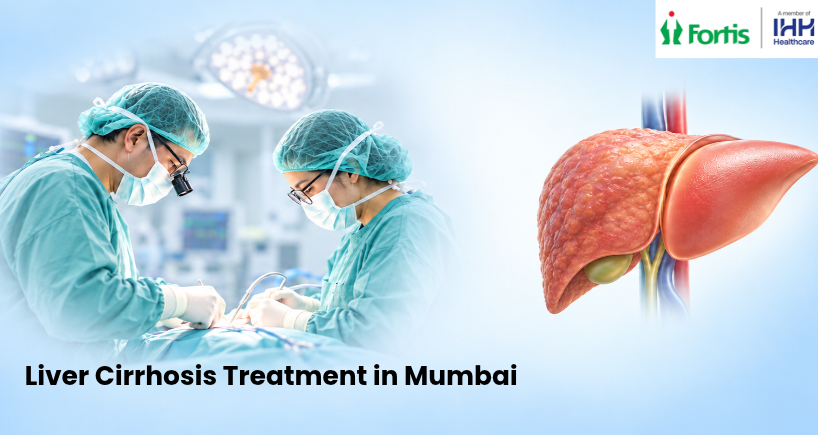


Liver Cirrhosis Treatment in Mumbai
Liver Cirrhosis and Transplantation: What Patients Need to Know
When Is Transplantation Recommended for Cirrhosis?
Cirrhosis is the end stage of liver disease where scar tissue slowly replaces healthy liver tissue. Some individuals with cirrhosis may stay stable for years with proper treatment and routine surveillance, but the disease can advance to a point where the liver can no longer adequately carry out its vital functions.
Liver transplantation for cirrhosis is an option when the disease becomes decompensated or serious complications arise, or when liver function continues to deteriorate despite appropriate therapy. The complications, such as recurrent ascites, hepatic encephalopathy, variceal bleeding, worsening jaundice and some cases of liver cancer might be signs that liver transplant evaluation may be needed.
Patients can consult Dr. Aditya J. Nanavati, Director – Multi-Organ Transplant & Hepatobiliary Surgery at Fortis Hospital, Mulund for liver transplant evaluation and treatment in Mumbai. Dr. Nanavati specializes in liver transplantation, including living and deceased donor liver transplantation, complex hepatopancreatobiliary surgery and abdominal multi-organ transplantation. His clinical experience includes more than 800 liver transplants and complex HPB and other abdominal transplant procedures.
Importantly, cirrhosis does not necessarily mean someone needs a liver transplant. depends on how severe the liver disease is, whether complications have developed, overall health and findings from a detailed transplant evaluation.
What Is Liver Cirrhosis and How Does It Affect the Liver?
Cirrhosis is when the liver is repeatedly or continually injured and healthy tissue is replaced with scar tissue.
Scarring can increase and affect blood flow through the liver, and decrease its ability to perform important functions, such as:
- Removing toxins from the blood
- Processing of nutrients and medicines
- Producing proteins needed for blood clotting
- Maintenance of fluid
- Bile production
- Aiding in immune functions of the body
Cirrhosis may develop from a number of underlying conditions, including alcohol-related liver disease, metabolic fatty liver disease, chronic viral hepatitis, autoimmune liver disorders and certain genetic or metabolic diseases.
The degree and rate of progression can be very different between patients.
Decompensated vs. Compensated Cirrhosis
The presence of compensated versus decompensated cirrhosis is one of the most important factors in determining whether a patient may need liver transplant evaluation.
Compensated Cirrhosis
Compensated cirrhosis means the liver is scarred but still able to do many of its vital functions. A few patients may have minimal symptoms and remain stable for a long period of time with appropriate medical treatment, lifestyle modification, and regular monitoring. Being diagnosed with compensated cirrhosis alone does not necessarily mean that a liver transplant is needed.
Decompensated Liver Cirrhosis
Decompensated cirrhosis is when the liver can no longer adequately compensate for the damage and major complications start to occur.
These could be:
- Fluid accumulation in the abdomen or ascites
- Hepatic encephalopathy
- Variceal bleeding
- Jaundice
- Recurrent infections
- Kidney dysfunction
Current liver transplant guidance considers the development of a first decompensating event—such as ascites, variceal bleeding, hepatic encephalopathy, jaundice or hepatocellular carcinoma—an important reason to consider referral for liver transplant evaluation.
When Is Liver Transplantation Recommended for Cirrhosis?
Liver transplantation may be an option when cirrhosis advances to the point where the damaged liver is unable to sufficiently meet the needs of the body or when severe complications develop despite treatment.
Some important situations that may require a transplant evaluation are:
1. Recurrent or Difficult-to-Control Ascites
Ascites is the accumulation of fluid within the abdomen and is a common complication of advanced cirrhosis.
Some patients respond to medication and dietary measures . However, persistent ascites, which recurs or is difficult to manage despite adequate treatment, can be a sign of significant liver decompensation.
Refractory ascites is listed as a complication that can support consideration for liver transplantation in the Indian liver transplant consensus guidance .
2. Recurrent hepatic encephalopathy.
If the liver is severely damaged and cannot adequately remove toxins from the bloodstream, these substances can affect the brain and cause hepatic encephalopathy.
Symptoms can include:
• Confusion
• Excessive sleepiness
• Difficulty concentrating
• Changes in behaviour
• Disorientation
• Reduced consciousness in severe cases
Recurrent or persistent episodes of hepatic encephalopathy can be an indication of advanced liver disease and a reason for transplant evaluation.
3. Recurrent variceal bleeding
Cirrhosis can lead to increased pressure in the portal venous system and development of dilated veins called varices in the esophagus or stomach.
If these veins break, serious internal bleeding can occur.
Recurrent variceal bleeding despite appropriate treatment may indicate advanced portal hypertension and can be considered during liver transplant assessment.
4. Worsening Jaundice
Jaundice is when the skin and eyes become yellow because of a buildup of bilirubin in the blood.
Persistent or worsening jaundice, especially if associated with other complications of cirrhosis, may be a sign of deterioration in liver function and should be evaluated by a liver specialist.
5. Reoccurring Infections
Patients with advanced cirrhosis may become at increased risk of serious infections.
For example, patients with ascites may develop spontaneous bacterial peritonitis, an infection of the fluid in the belly.
Evaluation of patients with decompensated cirrhosis for transplantation includes known complications such as spontaneous bacterial peritonitis.
6. Kidney or Other Organ Complications
Advanced liver disease can affect other organs.
Complications can be:
• Decreasing kidney function
• Hepatorenal syndrome.
• Hydrothorax hepaticus
• Hepatopulmonary syndrome
• Portopulmonary HTN
Development of organ dysfunction may impact the need and urgency of liver transplant evaluation.
7. Liver Cancer in a Patient With Cirrhosis
Cirrhosis is a major risk factor for hepatocellular carcinoma, the most common type of primary liver cancer.
Liver transplantation can be considered as a treatment option for properly selected patients whose cancer is within accepted transplant criteria and has not spread beyond the liver.
In Indian consensus recommendations, select patients with hepatocellular carcinoma within transplant criteria are specifically included as potential candidates for transplantation.
What is a MELD Score?
The Model for End-Stage Liver Disease, or MELD score, is an important tool used to estimate the severity of advanced liver disease. It uses clinical and laboratory information to help doctors assess how severely liver function has been affected.
In general, A higher MELD score indicates more severe liver disease. Indian consensus recommendations for deceased-donor liver transplantation identify MELD ≥15 as an important listing threshold for adults with decompensated cirrhosis, unless other recognised indications for transplantation are present. However, MELD should not be considered in isolation.
A patient may have serious complications such as recurrent ascites, encephalopathy or variceal bleeding even when the MELD score does not completely reflect the clinical severity of their condition.
Therefore, transplant specialists consider the MELD score together with:
- Previous episodes of decompensation
- Ascites
- Hepatic encephalopathy
- Variceal bleeding
- Kidney function
- Liver cancer, if present
- Overall health and surgical fitness
Does everyone with cirrhosis need a liver transplant?
The answer is No.
Many patients with cirrhosis may continue to be managed without transplantation especially if their liver disease remains compensated and if the underlying cause can be treated or controlled.
Management may include :
- Treatment of the underlying liver disease
- Medicines to manage side effects
- Proper nutrition
- Abstinence from alcohol and other causes of further liver damage
- Routine liver function tests
- Imaging & monitoring
- Screening of liver cancer
- Treatment of portal hypertension
The goal is to preserve liver function and, whenever possible, to prevent or delay further progression.
The more relevant indication for liver transplantation is the further progression of the disease or the occurrence of important complications in spite of adequate treatment.
What Happens During a Liver Transplant Evaluation?
Being referred for transplant evaluation does not mean that a patient will immediately undergo liver transplantation.
The assessment aims to identify:
• How advanced the liver disease is
• Whether transplantation is necessary
• Whether other treatment options are available
• Whether the patient is medically fit to undergo surgery
• Which type of transplant may be appropriate
A full assessment might include:
- Lung assessment
- Tests of liver function
- Tests of kidney function.
- Scan the liver
- Cardiac assessment,
- Screening for infection
- Nutritional assessment
- Cancer screening when appropriate
- Review of past medical history and treatments
- Evaluation of general fitness for surgery
Indian liver transplantation guidelines recommend a multidisciplinary evaluation of patients being evaluated for transplantation.
Living Donor Vs Deceased Donor Liver Transplant
There are two major donor pathways for patients who require liver transplantation.
1. Living Donor
In a living-donor liver transplant, a healthy donor who is medically appropriate donates part of his or her liver to the recipient.
Before surgery, both the donor and the recipient are carefully evaluated.
The liver has regenerative capacity and therefore the remaining liver in the donor and the transplanted portion in the recipient can increase in volume after surgery.
2. Liver transplantation from deceased donors
In deceased-donor liver transplantation, the liver is recovered from a deceased organ donor and allocated to a suitable recipient via the relevant organ-allocation system.
The best option depends on variables such as:
• Disease severity in liver
• Medical emergency condition
• Availability of a suitable living donor
• Compatibility of donor and recipient
• General health of patient
• Assessment by the transplant team
The Importance of Early Liver Transplant Evaluation
One of the most common misconceptions is that patients should wait until their liver disease is at end stage before seeing the transplant specialist.
In many cases early evaluation can be helpful because it allows the transplant team to :
• Assess the extent of liver disease
• Handle complications
• Enhance nutrition
• Assess heart and lung fitness
• Identify medical problems that may affect transplantation
• Evaluate potential living donors when appropriate
• Plan pre-critically unwell patient treatment
The current AASLD guidance emphasizes the importance of earlier referral following liver decompensation, rather than an unflexible MELD cutoff.
This is an important point: a transplant evaluation may still recommend continued medical treatment and monitoring rather than immediate transplantation.
Takeaways :
Patients diagnosed with cirrhosis should consider discussing evaluation for liver transplant with their treating doctor if they experience:
- Ascites or recurrent abdominal swelling
- Recurrent gastrointestinal bleeding or vomiting blood
- Recurrent encephalopathy or confusion
- Persistent or worsening jaundice
- Multiple infections
- Declining kidney function
- Substantial decline despite medical treatment
- Cancer of the liver
- Recurrent hospitalizations due to complications of cirrhosis
Those patients who have a MELD score of 15 or higher, or have had their first major episode of liver decompensations, should particularly consider whether they should be evaluated for transplant.
Serious bleeding, confusion, loss of consciousness, trouble breathing or sudden worsening need immediate medical care.
Why Fortis Hospital, Mulund for Liver Transplant?
Liver transplantation is a complicated therapy that requires coordinated care before, during and after the surgery.
Fortis Hospital, Mulund, Mumbai, provides multidisciplinary evaluation and management for liver transplantation and complex hepatobiliary conditions in patients with advanced liver disease.
The transplant journey may involve coordination between transplant surgeons, hepatologists, gastroenterologists, anesthesiologists, intensivists, radiologists, nutrition specialists and other medical teams.
Dr. Aditya J. Nanavati, Director – Multi-Organ Transplant & Hepatobiliary Surgery, has performed over 800 liver transplants and has experience in living- and deceased-donor transplantation, complex HPB and abdominal multi-organ transplant surgery.
His academic work includes research in living-donor liver transplantation, acute-on-chronic liver failure, ABO-incompatible liver transplantation and robotic donor hepatectomy, further supporting his focus on advanced liver transplant care.
In Mumbai, patients with cirrhosis can benefit from early evaluation by an experienced liver transplant team to determine if continued medical management or transplantation is the next appropriate step.
If you are looking for liver transplant evaluation in Mumbai, you can consult Dr. Aditya J. Nanavati and the Liver Transplant team at Fortis Hospital, Mulund.
Categories
Clear allMeet the doctor

- Liver Transplant and Hepatobiliary Sciences | Liver Transplant and Hepatobiliary Sciences
- Organ Transplant | Bowel Transplant | Pancreas Transplant | Kidney Transplant | Liver Transplant
-
 13 Years
-
 2000
Related Blogs
View all
Types of liver transplantation by Dr. Kishore GSB

Autoimmune Hepatitis a non-infectious condition: Know its Symptoms, Causes and Treatment

Hepatitis C: Symptoms, Transmission And Treatment Options

हेल्दी’ पैकेज्ड फूड में छिपा सोडियम बम: सेहत पर असर और बचाव के स्मार्ट टिप्स


Why Many Patients with Liver Cancer Are Told They Are Inoperable? And Why That Is Not Alwa...

Why Are Some Liver Cancer Patients Told They Are Inoperable?

Where to Go After an Inoperable Diagnosis? Choosing the Right Liver Cancer Specialist or C...


FAQs
When does a patient with cirrhosis require a liver transplant?
If the cirrhosis becomes decompensated or serious complications develop despite treatment, a liver transplant may be an option. These may include recurrent ascites, hepatic encephalopathy , variceal bleeding , deteriorating jaundice, kidney dysfunction or certain cases of liver cancer . The final decision is based on the general condition of the patient, MELD score and detailed transplant evaluation.
Is a transplant needed for every patient with liver cirrhosis?
No. Many people with compensated cirrhosis can be treated of the underlying cause, with medications, lifestyle changes and regular monitoring. Liver transplantation is typically considered when liver function significantly declines or complications of advanced liver disease start to manifest.
What are the signs that cirrhosis is getting worse?
Signs of trouble could be increasing abdominal swelling from ascites, jaundice, confusion or excessive sleepiness, vomiting blood or black stools, repeated infections, increasing weakness and deteriorating kidney function. Symptoms like these can be a sign of decompensated cirrhosis and should be evaluated by a liver specialist promptly.
What MELD score is used for liver transplant?
The MELD score assists doctors in determining the severity of advanced liver disease. Higher scores generally mean more severe liver dysfunction. In adults, symptoms, complications and overall health are also considered but a MELD score of around 15 or above is frequently used as a key factor in liver transplant listing.
Is there a way to treat cirrhosis without a liver transplant?
Yes. Cirrhosis can frequently be managed without transplantation, especially if it is diagnosed before severe complications develop. Treatment may involve treatment of the underlying cause, control of ascites or portal hypertension, maintenance of appropriate nutrition, avoidance of further liver injury and regular monitoring for complications and liver cancer.
When to consult Liver Transplant specialist in Mumbai for a person suffering from Cirrhosis?
Patients with cirrhosis who develop complications such as recurrent ascites, hepatic encephalopathy, variceal bleeding, worsening jaundice or repeated hospitalizations, or if their gastroenterologist recommends transplant evaluation, should consider seeing a liver transplant specialist. For Liver Transplant Evaluation in Mumbai, Dr. Aditya J. Nanavati, Director – Multi Organ Transplant & Hepatobiliary Surgery, is available at Fortis Hospital, Mulund.

Keep track of your appointments, get updates & more!

