
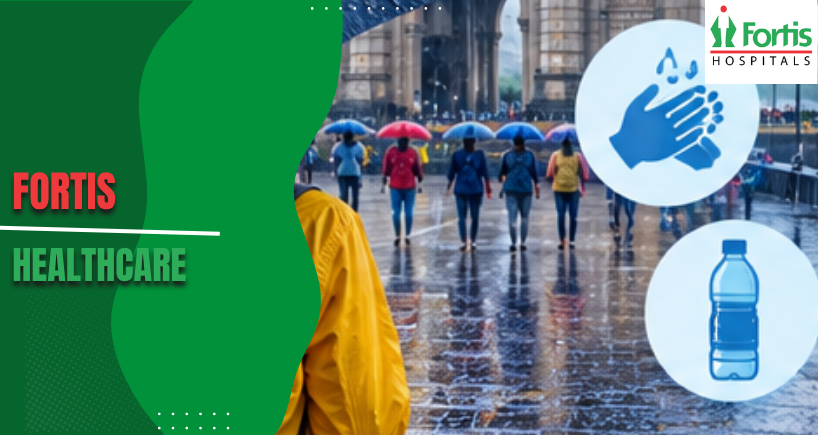


Mumbai Monsoon Survival Guide Common Illnesses and Prevention Tips
Mumbai receives between 2,200 and 2,500 mm of rainfall between June and September — among the highest monsoon rainfall figures for any major Indian city. Most of that rain falls in the city's 4–5 wettest weeks, when the Arabian Sea's south-west monsoon moves ashore with full force. For Mumbai's roughly 21 million residents, this is as much a health event as a weather event.
Every monsoon, Fortis hospitals across Mumbai see predictable surges in specific illness categories: leptospirosis from wading through flood water, dengue and malaria from mosquito proliferation in stagnant pools, gastroenteritis and typhoid from contaminated water supplies, and respiratory infections from the season's damp conditions. This guide is a doctor's practical walkthrough of each major risk — who is most vulnerable, what the early symptoms look like, and when a symptom needs a clinic visit rather than home management.
⚡ Quick Takeaways
Mumbai's monsoon brings a combination of waterborne, vector-borne, and airborne health risks that peak in different weeks — June–July for waterborne illness, August–September for peak dengue and malaria.
Leptospirosis is Mumbai's most dangerous post-flood infection and is frequently misdiagnosed as viral fever in its early stage.
Malaria (both P. vivax and P. falciparum) is endemic to Mumbai and peaks in August–September — fever in monsoon should always be tested, not assumed viral.
Boiling or purifying drinking water is non-negotiable during Mumbai monsoon — the municipal supply is vulnerable to contamination during heavy rain.
Children under 5 and the elderly are at highest risk of severe dehydration from monsoon gastroenteritis.
Mumbai Monsoon Disease Calendar: What Peaks When
Understanding the timing of monsoon illness peaks helps Mumbaikars know which risks to prioritise in which weeks. The pattern is consistent across years:
Leptospirosis in Mumbai: The Most Misdiagnosed Monsoon Illness
Leptospirosis is caused by Leptospira bacteria, shed in the urine of infected rats, that enters the human body through breaks in the skin or through mucous membranes — including the eyes — when someone wades through contaminated water. Mumbai's dense rodent population, combined with the city's flooding pattern that forces rats above ground and spreads their urine into standing water across low-lying areas, creates ideal transmission conditions.
Areas at highest risk include Dharavi, Kurla, Ghatkopar, Sion, parts of Dadar, Worli chawl areas, Mankhurd, and any low-lying colony that experiences persistent waterlogging. The illness begins 2–14 days after exposure with fever, severe headache, and muscle pain — particularly intense calf cramps that patients often describe as the worst of their lives.
Why Leptospirosis Gets Missed
The early phase of leptospirosis is nearly indistinguishable from a bad viral fever or dengue. Many patients self-medicate for 4–7 days before seeking care, by which point the disease may have progressed. The clinical flag that separates leptospirosis from uncomplicated viral fever is the combination of fever + severe muscle pain + conjunctival redness (red eyes without discharge) + a history of waterlogging exposure. If all four are present — go to hospital that day.
Severe Leptospirosis: Weil's Disease
In a subset of patients, leptospirosis progresses to Weil's disease — a multi-organ syndrome involving jaundice (liver involvement), reduced or absent urination (kidney failure), bleeding (haemorrhagic complications), and in severe cases, respiratory failure. Patients who develop jaundice after initial fever in monsoon season need emergency evaluation, not a follow-up appointment.
Dengue and Malaria in Mumbai: The August Peak
Mumbai is one of the few major Indian cities where both dengue and malaria co-circulate during the same monsoon season. This creates a diagnostic challenge because both present with high fever, body ache, and headache, and differentiating them by symptoms alone is unreliable. A blood smear for malaria and a dengue NS1 antigen test (or dengue IgM/IgG serology) are the standard workup for any monsoon fever of more than 2 days in Mumbai.
Dengue in Mumbai
Aedes aegypti mosquitoes breed in clean, stagnant water — cooler trays, flower pots, overhead tank lids with pooled water, and construction site containers. Dengue cases in Mumbai typically peak in August–September, 2–3 weeks after maximum waterlogging. Warning signs that indicate severe dengue requiring hospitalisation include spontaneous bleeding (gums, nose, skin), severe abdominal pain, persistent vomiting, and restlessness — these are signs of plasma leakage and require same-day hospital care.
Malaria in Mumbai: P. falciparum Risk
Mumbai carries both Plasmodium vivax (the more common, less dangerous strain) and Plasmodium falciparum (the severe malaria strain capable of causing cerebral malaria and death). Dharavi, Govandi, Mankhurd, Chembur, and Malad West have historically reported higher P. falciparum burden. Any high fever in monsoon Mumbai that does not resolve within 48 hours must be tested with a blood smear to rule out malaria — empirical treatment without a confirmed diagnosis delays appropriate care and contributes to drug resistance.
Waterborne Illnesses in Mumbai: Typhoid, Hepatitis A, and Gastroenteritis
Mumbai's water supply — sourced from the Tulsi, Vihar, Powai, and Bhatsa reservoir system — is generally treated, but the distribution network, particularly in older parts of the city and in areas serviced by private tankers, is vulnerable to contamination during monsoon. Pipe joint failures, flooding of sump tanks, and tanker contamination all contribute.
Typhoid During Mumbai Monsoon
Typhoid caused by Salmonella Typhi presents 7–21 days after consuming contaminated food or water. Unlike viral gastroenteritis, typhoid is characterised by a sustained, step-wise rising fever that persists without the diarrhoea that many patients expect. A blood culture is the gold-standard diagnostic — Widal testing, while commonly used, has significant false-positive rates and should not be used as the sole basis for treatment decisions.
Hepatitis A During Mumbai Monsoon
Hepatitis A (HAV) circulates through contaminated water and food. The 2–6 week incubation means that Mumbaikars who consumed contaminated water in June may develop jaundice only in July or August and not connect the cause. There is no antiviral treatment for hepatitis A — management is supportive. Vaccination (a 2-dose course) provides long-term protection and is particularly recommended for children, frequent travellers, and people with pre-existing liver conditions.
Respiratory Illness During Mumbai Monsoon: Not Just a Cold
The humid, damp conditions of Mumbai's monsoon — combined with the mould spore surge from wet surfaces, AC units, and waterlogged soil — trigger respiratory illness in a significant proportion of the population. The majority of these cases are self-limiting upper respiratory tract infections or allergic rhinitis exacerbations. However, several presentations warrant a doctor visit rather than home management:
- Fever accompanying respiratory symptoms — this is not a feature of simple allergic rhinitis and suggests infection.
- Breathlessness or wheeze with monsoon symptoms — may indicate an asthma exacerbation triggered by mould or humidity.
- Cough lasting more than 2 weeks, with or without phlegm — should not be assumed to be viral and self-limiting.
- Chest pain or tightness with cough — warrants same-day evaluation.
Food Safety During Mumbai Monsoon: Practical Prevention Rules
A large share of Mumbai's waterborne illness is transmitted through food, not just water. Mumbai's street food culture — an integral part of the city — carries elevated risk during monsoon when water used for food preparation, washing vegetables, and making ice may be contaminated.
- Eat freshly cooked, hot food — avoid pre-cut fruit, cold salads, and uncooked chutneys from outside during peak monsoon months.
- Do not add ice from unknown sources to beverages — ice made from unboiled water is a common source of typhoid and hepatitis A transmission.
- Roadside bhajia and vada pav stalls are beloved but their water source is rarely known — limit consumption during the peak July–August contamination window.
- At home, wash all vegetables in purified or boiled water before cooking or consuming raw.
- Do not use water from a flooded sump tank for drinking or cooking until the tank has been cleaned, disinfected, and refilled from a clean source.
Monsoon Vaccination in Mumbai: What You Should Have Before the Season
Two vaccines provide direct protection against the most common monsoon waterborne illnesses in Mumbai and are recommended for all adults who have not previously received them:
- Typhoid vaccine — both the injectable Vi polysaccharide vaccine (single dose, protection for 3 years) and the oral Ty21a vaccine (4-capsule course, protection for 5 years) are available. Discuss options with a Fortis physician.
- Hepatitis A vaccine — a 2-dose course (6–12 months apart) provides long-lasting protection. Particularly recommended for children over 1 year, adults without prior immunity, and anyone with liver disease.
- Consult a Fortis physician before monsoon to assess your current vaccination status and discuss any additional vaccines appropriate for your health profile, age group, or occupation.
Mumbai Monsoon Emergency Warning Signs: Go to Hospital Today
The following symptoms should not be managed at home during monsoon season. Go to Fortis Hospital's emergency department or call for assistance immediately:
- Fever with yellowing of eyes or skin — possible leptospirosis with liver involvement or hepatitis A.
- Fever with severe headache, stiff neck, or altered consciousness — possible cerebral malaria or bacterial meningitis.
- Fever with spontaneous bleeding from gums, nose, or skin — severe dengue warning sign.
- Fever with reduced urination and severe muscle pain — possible leptospirosis with kidney involvement.
- Profuse diarrhoea with signs of severe dehydration (sunken eyes, very dry mouth, no urination for 6+ hours) — needs IV fluids.
- Breathlessness at rest, or breathlessness severe enough to interrupt speech — respiratory emergency.
Categories
Clear allMeet the doctor

- Internal Medicine | Internal Medicine
-
 20 Years
-
 1200
1200
Related Blogs
View all






FAQs

Keep track of your appointments, get updates & more!

