
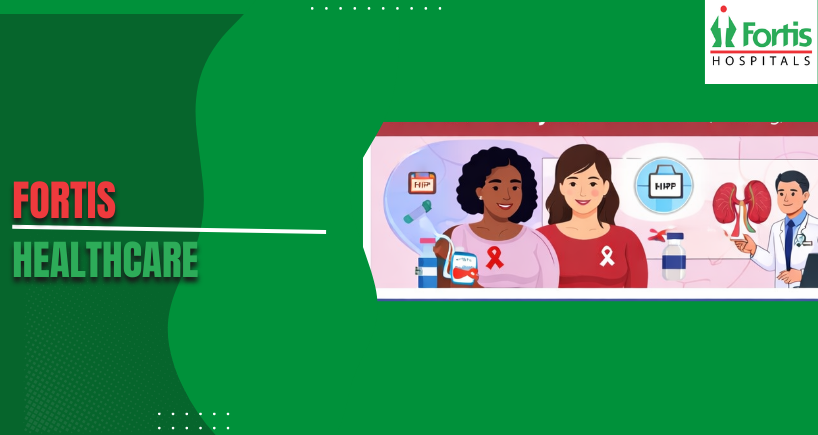


National Women and Girls HIV/AIDS Awareness Day 2026: Prevention, Testing, and Care
More than half of the people in the world; who have HIV are women. Even the large share of all new cases in sub-Saharan Africa, however, occur in young women and teenage girls. Despite this, HIV is generally seen as a condition that impacts different populations – and because of that, a lot of women aren’t very knowledgeable regarding the risks to themselves.
National Women and Girls HIV/AIDS Awareness Day 2026 is intended to tackle this very problem. Women are open to HIV through organic, communal, and institutional causes, which conventional guidance on avoiding it does not completely deal with. Proper safety is only possible via knowing these specific reasons.
Why Biological and Social Factors Compound Risk
The inside surface of the female reproductive tract is notably larger than a man’s, and so provides a greater area for viruses to enter the body during unprotected sexual contact. Small cuts during sex can make transmission even easier. Younger women, with cervical tissue that has not completely developed, are more easily infected – a susceptibility that lessens as they age and the transformation zone shrinks.
Sexually transmitted diseases, such as herpes, gonorrhoea and chlamydia, damage the mucosal lining and greatly increase the risk of HIV transmission if left untreated. Women are more often affected by STIs that show no symptoms, so infections which make them more vulnerable often go unnoticed, and untreated, for quite some time. Screening for STIs, and HIV prevention and testing, are clinically linked.
Social factors also increase risk in ways that biology alone can’t explain. Partner abuse, relationships where there’s a big age gap, being financially reliant on someone, and having little say in whether or not a condom is used, are all linked to higher rates of HIV in women. Prevention plans which don’t address these issues usually don’t work well.
Understanding HIV Testing and When to Access It
The time it takes for a test to be accurate – the ‘window period’ – is important. Current combination antigen-antibody tests can reliably detect infection from around eighteen days after possible exposure, and are ninety-nine percent accurate by forty-five days. Earlier antibody-only tests have longer window periods. It is important to know which test has been used when interpreting a negative result after a possible recent exposure.
Infectious diseases doctors suggest testing for sexually active women who haven’t been tested before, for anyone with a new sexual partner, and after any potential exposure, no matter how small the perceived risk. Women with multiple partners, or who live in areas where HIV is common, should be tested yearly. Because HIV often has no symptoms for many years, testing is the only certain way to know your status.
Public health services support telling partners after a positive result, and this can be done anonymously in most places. Testing during pregnancy is normal in India, and identifies mothers who need antiretroviral medicine to stop the virus passing to their babies – and when treatment starts early, the risk to the baby is reduced to under two percent.
HIV Care and Treatment: What Current Medicine Offers
Treatment with antiretroviral drugs has turned HIV, which used to be rapidly deadly, into a condition most individuals are able to live with for many years, often needing only a single tablet daily. These combined therapies lower the viral load – the quantity of virus – in both the blood and the areas of the body involved in reproduction, to the point where it is undetectable; this rebuilds the immune system and eliminates the danger of transmitting the virus to anyone with whom one has sexual contact, provided the medication is taken consistently.
The infectious diseases team looks after HIV-positive patients with thorough monitoring, including tracking CD4 counts, viral load testing, and screening for opportunistic infections and other health problems which affect the long-term health of people living with HIV.
Presently, HIV care and treatment incorporates long-acting injectable medications – administered monthly, or bi-monthly – so that women who want to can avoid a daily oral medication. Difficulties in remaining compliant with treatment, formerly a reason for its ineffectiveness, are presently addressed by a greater variety of treatment regimens designed to fit varied lives and situations.
Pre-Exposure Prophylaxis and Its Place in Prevention
PrEP, taken daily as one pill, cuts the risk of getting HIV by over ninety-nine percent in women who take it regularly. It’s suitable for women at continuing high risk – for example, those with an HIV-positive partner who isn’t on treatment, women who can’t always use condoms, and those in areas with high rates of HIV.
PrEP doesn’t protect against other sexually transmitted infections, and doesn’t replace condoms. A negative HIV test is needed before starting PrEP, and every three months during use. Using PrEP, regular STI screening, condoms, and periodic HIV testing together provides the best protection from the tools currently available for prevention.
Mental Health, Stigma, and Long-Term Wellbeing
Women living with HIV experience stigma which is linked to their gender, sexuality, and reproductive health in ways that men with the same diagnosis often don’t. Fear of telling partners and family, worries about being able to have children, and social isolation all affect mental health and sticking to treatment – as has been shown by research.
Women living with HIV experience depression and anxiety at rates far higher than those of the overall public. Integrating mental health care into HIV treatment – not providing it as something different – helps people remain in treatment for longer, adhere to medication more effectively, and have a better standard of living. Mental and emotional evaluation ought to be a regular component of HIV medical assessment, and not only begun when difficulties arise.
Categories
Clear allRelated Blogs
View all


Dengue Fever in Children: Know its Symptoms, Treatment and Prevention

Dengue – causes, symptoms, prevention, diagnosis, risk factors

Fever: Causes, Types, and Effective Management for Early Recovery



Keep track of your appointments, get updates & more!

