
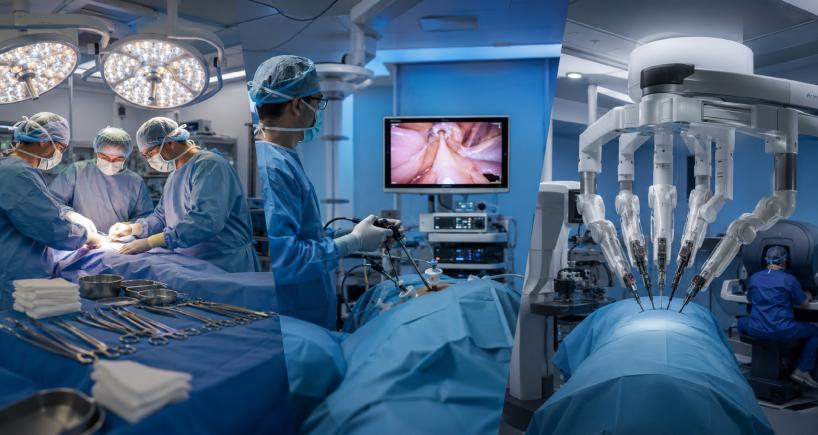


Open Surgery vs Minimally Invasive Surgery vs Robotic Surgery for Cancer Which Is Better?
Being advised to undergo cancer surgery often raises another important question:
"Should I choose open surgery, minimally invasive surgery, or robotic surgery?"
With advancements in surgical technology, patients today have more treatment options than ever before. However, each approach has its own advantages, limitations, and indications.
Understanding these differences can help you have a more informed discussion with your surgical oncologist and make confident decisions about your treatment.
Understanding the Three Surgical Approaches
Although the goal is the same—to remove cancer safely and effectively—the way surgeons access the tumour differs.
Open Surgery
Open surgery is the traditional surgical approach in which the surgeon makes a larger incision to directly access the affected area.
It remains the gold standard for many cancers, particularly when:
- The tumour is large.
- The cancer involves multiple nearby structures.
- Complex reconstruction is required.
- The surgeon needs maximum access and visibility.
Despite newer technologies, open surgery continues to play an essential role in cancer treatment.
Minimally Invasive Surgery
Minimally invasive surgery is performed through several small incisions using a camera and long, specialised surgical instruments.
This approach includes laparoscopic and thoracoscopic techniques, depending on the area being treated.
Compared with open surgery, minimally invasive procedures generally cause less tissue disruption while maintaining the same surgical principles.
Robotic-Assisted Surgery
Robotic surgery is an advanced form of minimally invasive surgery.
The surgeon controls robotic arms from a nearby console while viewing the surgical field through a high-definition, magnified 3D camera.
Contrary to a common misconception, the robot never performs the operation independently. Every movement is directed by the surgeon.
Open Surgery vs Minimally Invasive Surgery vs Robotic Surgery
Feature | Open Surgery | Minimally Invasive Surgery | Robotic Surgery |
|---|---|---|---|
Incision size | Larger | Small | Small |
Camera magnification | Direct vision | High-definition camera | High-definition 3D magnified view |
Instrument movement | Standard surgical instruments | Long straight instruments | Wristed robotic instruments with greater flexibility |
Blood loss | May be higher | Often lower | Often lower |
Post-operative pain | Usually more | Usually less | Usually less |
Hospital stay | Generally longer | Often shorter | Often shorter |
Recovery | May take longer | Usually faster | Usually faster |
Suitable for all cancers | Yes, when indicated | Selected cancers | Selected cancers |
Key point: These are general trends. Recovery and outcomes vary depending on the type of surgery and individual patient factors.
Which Surgical Approach Removes Cancer More Effectively?
One of the biggest concerns patients have is whether one method is better at removing cancer than another.
The answer is reassuring:
When appropriately selected, open, minimally invasive, and robotic-assisted surgery can all achieve excellent cancer control.
The priority is always:
- Complete tumour removal
- Clear surgical margins (removing the tumour with a surrounding rim of healthy tissue)
- Appropriate lymph node assessment when indicated
- Patient safety
The surgical approach is chosen only if these oncological principles can be maintained.
When Is Open Surgery Preferred?
Open surgery may be recommended when:
- The tumour is large or locally advanced.
- The cancer involves major blood vessels or surrounding organs.
- Complex tumour removal is anticipated.
- Reconstructive surgery is required after tumour removal.
- Previous surgeries or scar tissue make minimally invasive surgery difficult.
- Unexpected findings during surgery require a wider surgical approach.
For many patients, open surgery remains the safest and most appropriate option.
When Is Minimally Invasive Surgery Recommended?
Minimally invasive surgery may be suitable when:
- The tumour is detected at an earlier stage.
- The cancer is well localised.
- The procedure can be performed safely through small incisions.
- The expected cancer outcomes are comparable to open surgery.
Potential benefits include:
- Smaller scars
- Less pain
- Reduced blood loss
- Earlier mobilisation
- Faster recovery
- Shorter hospital stay
However, suitability depends on careful patient selection.
When Is Robotic Surgery Recommended?
Robotic-assisted surgery may be considered when greater precision is helpful, particularly in anatomically confined spaces or technically demanding procedures.
Depending on the cancer type and individual patient, robotic surgery may offer:
- Enhanced visualisation
- Greater instrument flexibility
- Improved precision
- Better ergonomics for the surgeon during complex operations
It is important to understand that robotic surgery is not automatically superior to other techniques. It is simply another surgical tool that may be beneficial in selected cases.
Which Patients Benefit Most from Robotic Surgery?
Your surgical oncologist may consider robotic surgery if:
- Your cancer is suitable for a minimally invasive approach.
- The tumour can be safely removed robotically.
- There is no evidence that open surgery would provide better cancer clearance.
- You are medically fit for surgery.
Not every patient is a candidate, and that is entirely normal.
Does Robotic Surgery Mean Faster Recovery?
Many patients undergoing robotic-assisted surgery experience:
- Earlier walking after surgery
- Less post-operative discomfort
- Reduced need for pain medication
- Smaller scars
- Shorter hospital stay in selected procedures
- Earlier return to routine activities
However, recovery depends on several factors, including:
- The type of cancer
- The complexity of surgery
- Your age and general health
- Nutritional status
- Any additional treatments such as chemotherapy or radiation therapy
Are There Situations Where Surgery May Need to Change?
Yes.
Occasionally, a procedure that begins as minimally invasive or robotic-assisted may need to be converted to open surgery.
This is not a complication or a failure. Instead, it is a decision made to prioritise patient safety or achieve complete cancer removal if unexpected findings arise during the operation.
Myth vs Fact
Myth | Fact |
|---|---|
Robotic surgery is always better than open surgery. | The best surgical approach depends on the cancer, patient, and procedure. |
Open surgery is outdated. | Open surgery remains the preferred approach for many complex cancer operations. |
Smaller incisions always mean better cancer treatment. | Complete and safe cancer removal is more important than incision size. |
The robot performs the surgery independently. | The surgeon controls every movement of the robotic system throughout the operation. |
Questions to Ask Your Surgical Oncologist
Before deciding on surgery, consider asking:
- Why are you recommending this surgical approach for my cancer?
- Am I eligible for minimally invasive or robotic surgery?
- What are the expected benefits and limitations in my case?
- Will this approach provide the same cancer control as open surgery?
- What will recovery involve?
- Will I need chemotherapy or radiation therapy after surgery?
These questions can help you understand your treatment plan and set realistic expectations.
The Importance of Personalised Surgical Planning
No two cancer patients are the same. Factors such as tumour characteristics, overall health, previous surgeries, and treatment goals all influence the choice of surgical technique.
At Fortis Hospital, Shalimar Bagh, patients are evaluated through a multidisciplinary approach involving surgical oncologists, medical oncologists, radiologists, anaesthesiologists, and other specialists. The surgical plan is tailored to the individual's diagnosis, using evidence-based protocols and advanced surgical techniques—including minimally invasive and robotic-assisted procedures where clinically appropriate—to achieve the best possible outcomes while prioritising patient safety.
Key Takeaways
- There is no universally "best" type of cancer surgery.
- Open, minimally invasive, and robotic surgery each have specific indications.
- The primary goal is complete and safe cancer removal.
- Minimally invasive and robotic surgery may offer faster recovery for carefully selected patients.
- Open surgery remains the preferred option for many complex cancers.
- A personalised evaluation by a surgical oncologist is essential to determine the most appropriate approach.
When Should You Consult a Surgical Oncologist?
Consider consulting a surgical oncologist if:
- You have been diagnosed with a cancer that may require surgery.
- You would like to understand the different surgical options available.
- You are seeking a second opinion before undergoing cancer surgery.
- You want to know whether minimally invasive or robotic surgery is appropriate for your diagnosis.
An early consultation can help you understand your treatment choices and plan the most suitable course of care.
Categories
Clear allMeet the doctor

- Oncology | ENT Oncology | Breast Oncology | Robotic Surgery | Surgical Oncology | Head and Neck Oncosurgery | Gynaecologic Oncology
- Thoracic Surgery | Thoracic Oncology
-
 16 Years
-
 1500
1500
Related Blogs
View all









FAQs
Which type of cancer surgery has the fastest recovery?
For suitable patients, minimally invasive and robotic-assisted surgery often result in faster recovery than open surgery. However, recovery also depends on the complexity of the procedure and your overall health.
Is robotic surgery always better than open surgery?
No. Robotic surgery is beneficial for selected patients, but open surgery may be the safest and most effective option for certain cancers.
Does minimally invasive surgery remove cancer as effectively as open surgery?
When recommended for appropriate patients, minimally invasive surgery is designed to follow the same cancer surgery principles as open surgery, including complete tumour removal and appropriate lymph node assessment.
Can every patient choose robotic surgery?
No. Eligibility depends on factors such as the type, stage, and location of the cancer, as well as your overall health and the planned procedure.
Will I have less pain after robotic surgery?
Many patients experience less post-operative pain and smaller scars compared with open surgery, although individual experiences vary.
Can robotic or minimally invasive surgery be converted to open surgery?
Yes. If required for patient safety or to achieve complete tumour removal, the surgeon may convert to open surgery during the operation.

Keep track of your appointments, get updates & more!

