
Oncology


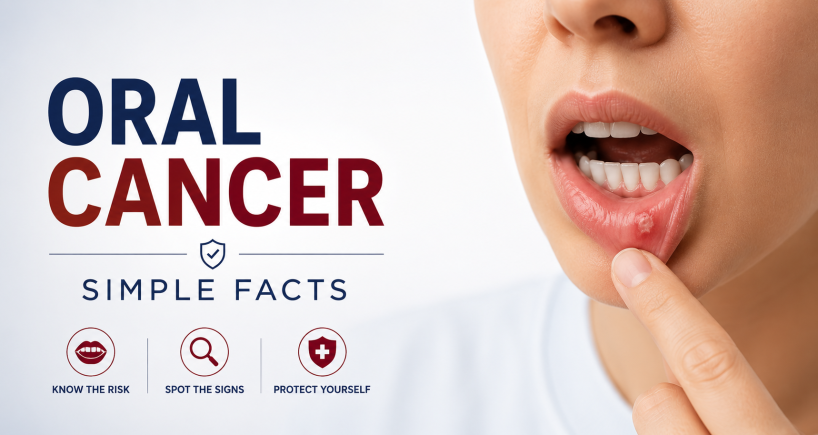
Oral Cancer : Simple Facts
Dr. Shubham Jain Jun 04, 2026
Oral cancer affects the mouth and throat, including the lips, tongue, gums, cheeks, and the roof or floor of the mouth. It develops when abnormal cells grow uncontrollably. Early changes are often small and painless, making them easy to miss.
Warning Signs
Be alert to the following symptoms:
- Difficulty opening the mouth, chewing, or swallowing
- A sore or ulcer in the mouth that does not heal within two weeks
- Red or white patches inside the mouth or on the tongue
- New loosening of teeth without an obvious cause
- Persistent hoarseness, sore throat, or the feeling of something stuck in the throat
- A lump, thickened area, or swelling in the mouth or neck
If any of these symptoms persist, seek medical or dental advice promptly.
How to Lower Your Risk
Several healthy habits can help reduce the risk of oral cancer:
- Avoid smoking, vaping, and chewing tobacco in any form
- Limit alcohol consumption
- Eat a balanced diet rich in fruits and vegetables
- Maintain good oral hygiene by brushing and flossing daily
- Regularly check your mouth for any new or unusual changes
- Use lip balm with sun protection and avoid excessive sun exposure
Categories
Clear allMeet the doctor

Dr. Shubham Jain
Senior Director Surgical Oncology | FCI Defence Colony
- Oncology | Oncology | Surgical Oncology | Head and Neck Oncosurgery | Paediatric Oncology | Robotic Surgery | Breast Oncology
- Obstetrics and Gynaecology | Gynaecologic Oncology
- Gastroenterology and Hepatobiliary Sciences | Robotic Surgery
- Thoracic Surgery | Thoracic Oncology
- Paediatrics | Paediatric Oncology
-
 11 Years
-
 2000
2000
 Available at 1 different locations

Fortis Vasant Kunj
Related Blogs
View all









FAQs

Keep track of your appointments, get updates & more!

