
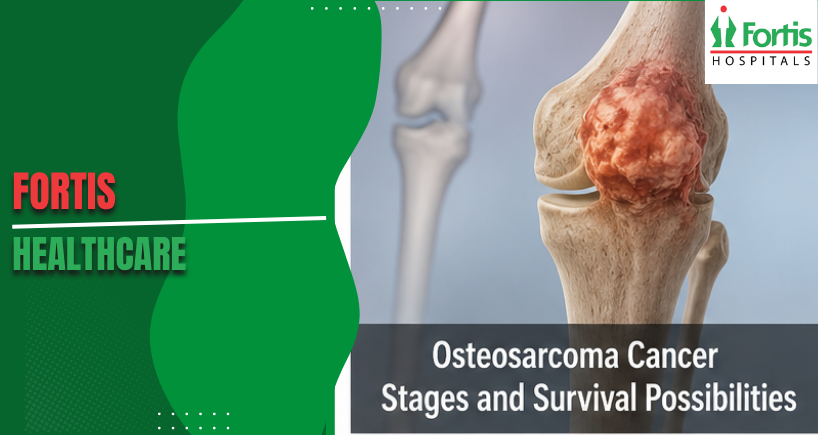


Osteosarcoma Cancer Stages and Survival Possibilities
Systems for medically categorising disease are created to make complicated details of an illness easy to understand; this helps doctors decide how to treat people, and also to work out what the likely results of treatment will be. When a cancer is found, the people involved – families, naturally – want definite information about the chances of recovery, though medicine doesn’t often give certain answers. Knowing how doctors judge how severe a disease is assists patients and families with planning their treatment, whilst at the same time keeping sensible ideas about what might happen over the long term.
The process of staging osteosarcoma involves a full look at the size of the tumour, where it is, how advanced it is, and whether it has possibly spread to other parts of the body. All of these things together affect how intense the treatment is, and what survival rates are expected. Current staging methods use scans, what surgeons find during operations, and analysis of tissues – all to create a precise picture of the disease, which then allows treatments to be designed to suit each patient’s individual situation.
How Staging Systems Show Severity of Illness
The Enneking staging system – made especially for bone sarcomas – puts tumours into groups according to how advanced they are, how far they’ve grown locally, and whether cancer cells have moved to other sites. Stage I means low-grade tumours which are contained within the original area of bone, while Stage II shows high-grade illness which has not moved from its first location. Stage III is used for any tumour which has metastasised – that is, spread to other sites – no matter what its grade or size.
Most osteosarcoma cancer is found as Stage IIB illness, meaning high-grade tumours which have gone past the hard outer part of the bone, into the soft tissues around it. This staging shows the quickly-developing nature of these cancers. Assessing the grade looks at the way cells appear and divide when seen under a microscope, to find out how fast tumours are likely to grow if nothing is done.
What Metastatic Illness Means for Treatment Plans
If the cancer has spread, it most often affects the lungs, where cancer cells which are travelling around the body form new tumours before the main illness has even been found. Around 15-20% of patients are found to have metastases in the lungs when first diagnosed. This changes the treatments used, demanding more powerful, systemic treatment to target the illness throughout the body.
Illness which has not spread – and is limited to the original bone – has a much better outlook than illness which has metastasised. Advanced imaging facilities like Fortis Memorial Research Institute, Gurgaon provide a complete staging assessment, to ensure that the disease is correctly identified. A full assessment prevents unwelcome surprises in treatment, and allows for sensible discussions about what is likely to happen.
Survival Rates Showing Progress in Modern Treatment
With the current combination of treatments – chemotherapy and surgery – five-year survival rates for osteosarcoma which has not spread come to 70-75%. These numbers show a huge improvement on what happened in the past, when surgery on its own gave survival rates of less than 20%. Modern chemotherapy, which aims at microscopic disease, has completely changed the outlook.
Metastatic illness has a more careful outlook, with five-year survival rates of about 30-40% depending on how much spread there is. Patients with limited lung metastases which can be removed by surgery do better. Understanding what causes osteosarcoma doesn’t change these numbers, though research which is ongoing may in the end allow for more personal judgements of risk.
Things Apart From Stage Which Affect Long-Term Results
Where the tumour is affects the surgical options, and how well people can function after treatment. Tumours in the lower femur and upper tibia – close to the knee – are usually easier to treat with limb-saving procedures than tumours in the upper femur or pelvis, which need more extensive removals. Involvement of the axial skeleton – including the spine or pelvis – gives a worse outlook, because of the difficulty of surgery and the closeness to important organs.
A patient’s age affects results, with younger teenagers generally doing better with treatment than older adults or very young children. The size of the tumour when found is linked to outlook; masses over 8 centimetres usually show more advanced local illness. Finding osteosarcoma symptoms quickly allows for earlier diagnosis, when tumours are smaller and easier to manage with standard treatments.
How Chemotherapy Response Shows Ultimate Survival
Detailed microscopic examination of tumours removed by surgery shows the percentage of cancer cells killed by chemotherapy before the operation, for osteosarcoma. Good responders – showing more than 90% tumour necrosis – have much better five-year survival rates, coming to 80-85%, compared to poor responders who still have a lot of living tumour even after treatment.
Assessment of how well chemotherapy works is extremely important in deciding what to do after surgery; it gives vital information about what is likely to happen. People who do not respond well to chemotherapy could do better with more aggressive chemotherapy, or with treatments being tried in clinical studies. What the cancer does in response to treatment is often a better sign of what will happen than the stage it was at first – this underlines how important it is to give neoadjuvant therapy, which allows this assessment.
Surgical Margins and the Risk of Local Recurrence
The most important thing in getting local control is to completely remove the tumour, along with enough healthy tissue all around it. If margins are positive – that is, microscopic disease remains – the risk of the cancer coming back in the same place is much higher, and more surgery or radiotherapy will be needed. Getting wide margins, which means taking the tumour out with a good rim of healthy tissue, reduces the chance of recurrence and gives the best possibility of a cure.
If a tumour is broken into during surgery – intralesional resection – the outlook is very bad, with recurrence rates of 90 to 100 per cent. Modern scans and careful surgical planning now make it possible to assess margins accurately before an operation begins. While a better understanding of what causes osteosarcoma at a molecular level may, one day, allow for targeted treatments, at the moment success in treatment depends mainly on completely removing the cancer with surgery, and using good systemic chemotherapy.
Long-Term Follow-Up to Watch for Recurrence
Most recurrences happen within three years of treatment finishing, though sometimes they appear after five or more years. The most common pattern of recurrence is spread to the lungs, so regular chest scans are needed during follow-up. Local recurrence – the cancer coming back where the original tumour was – is less frequent when adequate surgical margins were achieved at the beginning.
Finding recurrences early allows treatment to start before the disease has spread too far and limits what can be done. Follow-up usually involves chest scans every three months for the first few years, and then less and less frequently – every six months after a while. It’s important to recognise any new symptoms of osteosarcoma during follow-up, though many recurrences show up on routine scans before the patient notices anything.
Secondary Primary Cancers After Childhood Treatment
Because of DNA damage caused by intensive osteosarcoma chemotherapy, survivors have a little higher risk of developing other, new cancers many years after finishing treatment. The risk of a second cancer goes up with the dose of radiotherapy given. These late effects usually appear 10-20 years after the first treatment, so lifelong follow-up is needed, and doctors must be alert for new cancers.
Secondary leukaemias can develop within a few years of chemotherapy; solid tumours – including breast cancer and thyroid cancer – appear later. People with genetic conditions making them prone to cancer, such as Li-Fraumeni syndrome, have a much higher risk of secondary cancer than is caused by treatment alone. Although conditions such as olfactory neuroblastoma create different late-effect patterns, all childhood cancer survivors need thorough long-term monitoring to deal with all the possible problems.
Why Individual Prognosis Differs From What Statistics Say
Statistics describe what happens to groups of people, not what will happen to any one person, and this creates uncertainty which is difficult for patients who want a definite prediction. Two people with exactly the same stage of cancer may have very different outcomes because of biological factors that the current staging systems don’t measure. The genetics of the tumour and the person’s immune response affect how the cancer goes, beyond what staging can predict.
Some people with poor signs of prognosis live a long time, while others with good signs progress quickly. This variation shows that we don’t completely understand cancer biology. Understanding how osteosarcoma progresses helps families make informed decisions, but they need to be aware of the unavoidable uncertainty about individual outcomes, despite how much staging information is available.
Categories
Clear allRelated Blogs
View all







FAQs

Keep track of your appointments, get updates & more!

