
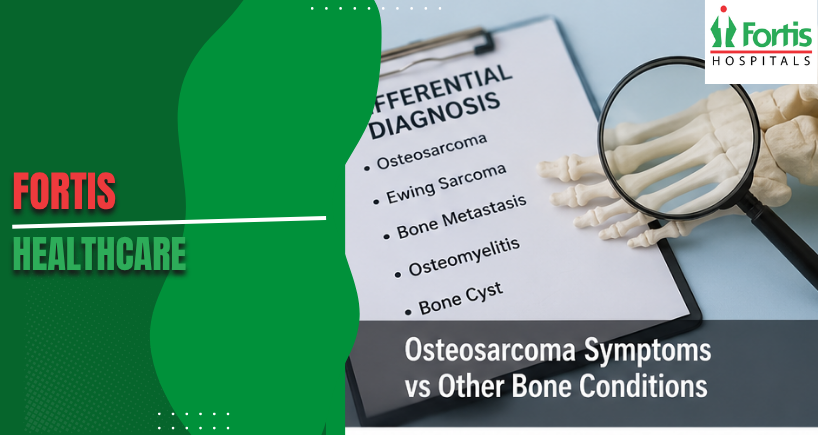


Osteosarcoma Symptoms vs Other Bone Conditions
When a teenager who has continuing pain in the leg reports it to them, mothers and fathers generally struggle to know whether it’s just a typical part of development, or something seriously wrong – because problems with bones could be everything from not-dangerous stress breaks and swelling, to life-threatening growths which require swift care. If a family needs to have a prompt examination, or can just watch the situation at their place, relies on seeing the little changes in the ways that the ailments present.
The manner in which osteosarcoma presents itself is unlike the usual forms of athletic injuries, normal pains of growth, or non-serious bone issues in adolescents; the strength of the suffering, when it occurs, and its worsening provide physicians with signals – signals which they combine with the results of imaging and laboratory investigations. Families should be in a better position to request the correct healthcare if they grasp what sets these illnesses apart and what to be alert for when they are concerned.
Pain Patterns: Telling Malignant and Benign Disease Apart
The most obvious sign that osteosarcoma is different from harmless conditions is bone pain at night, as cancerous growths cause ongoing pain which gets worse as evening comes on. Growing pains usually get better with rest, and do not often wake children up, but osteosarcoma pain regularly stops sleep, even with painkillers. This pattern – getting worse at night and not with activity – should mean people see a doctor right away, instead of continuing to manage it at home.
Pain from sports injuries which happens with activity gets better with rest, over days or weeks, following a predictable path to healing. Pain from cancer in the bone goes on for longer than you would expect during recovery, and slowly gets worse even when activity is limited and standard treatments such as ice or anti-inflammatory drugs are used. Parents often find they need to give more and more medicine, as over-the-counter painkillers stop working, and end up needing to ask for prescription pain relief before a diagnosis is made.
How Swelling Differs in Bone Cancer and Inflammation
If osteosarcoma cancer gets through the hard outer layer of bone, swelling appears over the affected bone – creating firm lumps which do not move, and which get bigger over weeks. Swelling from injuries due to inflammation changes with activity, and responds to anti-inflammatory treatments; but cancerous lumps steadily grow, whatever is done to help. A tumour feels hard and fixed to the bone underneath, rather than soft and able to move like blood clots or fluid build-ups.
Infection or injury causes warmth and redness with inflammatory processes, but osteosarcoma does not usually cause skin changes on top until it is at a very advanced stage. Harmless bone growths such as osteochondromas make bony bumps which have been present since childhood, with no recent changes in size – in sharp contrast to the quick appearance of osteosarcoma. Carefully measuring worrying lumps records how they are growing, and comparing photos can show growth which happens slowly enough to not be noticed immediately.
How Growing Pains Are Different From Malignant Symptoms
Growing pains affect both legs in the same way, and usually involve the muscles in the thigh and calf rather than particular areas of bone. These harmless feelings happen from time to time in the evening, and go away completely by morning with no lasting tenderness. Osteosarcoma symptoms stay in one bone, and create pain in a specific place over the tumour which lasts through the day and the night.
Children who have growing pains carry on with their usual activity levels between episodes, taking part fully in sports and PE with no problems. Osteosarcoma slowly limits what people can do as the pain gets worse, causing them to limp, avoid activity, and have a drop in performance in sports.
Parents notice changes in behaviour, such as not wanting to go upstairs or take part in things they used to enjoy. A full assessment at places like Fortis Memorial Research Institute, Gurgaon uses advanced scans with experienced children’s cancer assessments. Teams of specialists from different areas tell the difference between harmless conditions and cancers which need immediate treatment, using systematic ways of making a diagnosis.
Fracture Risk and Signs of Structural Weakness
Pathological fractures happen when weak bones break under normal pressure, showing the underlying osteosarcoma cancer through unexpected injury. These fractures happen during everyday things like walking or light sports, rather than from serious impacts – and this is different from normal breaks due to injury. Pain for weeks or months before a fracture suggests that the bone’s structure has already been damaged by the growth of a tumour, destroying the normal bone structure.
Stress fractures from over-use develop slowly in athletes, and get better with changes to activity and rarely cause complete breaks. Fractures through bone weakened by cancer need surgery to stabilise them as well as cancer treatment, which makes things much more complicated to manage. X-rays which show unusual damage to bone, or soft tissue lumps along with fractures, should mean people are immediately sent to a cancer specialist, and not just given normal treatment for broken bones.
Joint Involvement and Limits to Movement
Limits to how far joints can move develop when tumours affect joint areas, creating mechanical problems along with pain which makes people protect the joint. The lower femur and upper tibia – common places for osteosarcoma – lie next to the knee joints, where the growth of the tumour limits normal bending and straightening. Arthritis, or inflammatory ailments, causes matching joint issues, with morning stiffness lessening as the day goes on; however, cancerous illness affects individual joints and gets steadily worse.
Fluid inside joints indicates inflammation, not bone growths, although advanced osteosarcoma sometimes causes a build-up of responding fluid. A physical check-up tells apart problems within the joint from growths around it, using particular tests of joint firmness and the nature of soft tissues. Long-term joint pain, if not checked with pictures, could mean missing early cancers which need quick action to get the best results.
What Diagnostic Imaging Shows About Different Growths
Basic X-rays show clear features telling osteosarcoma apart from harmless growths, via patterns of bone breakdown, soft tissue growths and reactions in the periosteum. Bad growths make a mix of bone being broken down and built up oddly, making ‘sunburst’ patterns from new bone in the periosteum. Harmless conditions usually have clear borders with hard edges, unlike osteosarcoma’s spreading borders which go into nearby structures.
MRI scans show how far soft tissue goes and if nerves and blood vessels are involved, helping plan surgery; and a CT scan of the chest finds lung spread which is in 15-20% of patients when first seen. Bone scans show other bone issues suggesting spread of the illness, or rare cases of many growths, which need different treatment. PET-CT scans show how active the growth is, telling aggressive growths from healing breaks or harmless issues which look the same anatomically.
Comparing Osteosarcoma to Ewing Sarcoma Symptoms
Ewing sarcoma has the same age range and bone places as osteosarcoma symptoms, but shows clear clinical features needing careful telling apart. Ewing patients often have general symptoms like fever, high inflammation signs, and tiredness, seeming like infection instead of just bone pain. Pain patterns are largely the same, but Ewing sarcoma more often affects flat bones – pelvis and ribs – as well as long bones.
X-ray images are very different, with Ewing sarcoma making classic ‘onion skin’ reactions in the periosteum from rings of new bone being made in response. Osteosarcoma makes mainly osteoblastic matrix formation, seen as thick, cloud-like opacities inside the growths. A biopsy is still needed for a firm diagnosis, as treatment plans are very different despite seeming similar on the surface, needing correct pathological classification.
When Symptoms Need Quick Medical Checking
Bone pain which goes on for over two weeks without a clear injury needs checking by a doctor, no matter the patient’s age or what they do. Pain at night, growing swelling, or being unable to do things as before are warning signs needing urgent checking, not ‘wait and see’. Fever with bone pain suggests infection or aggressive cancer, both needing quick action.
Loss of weight, tiredness, or a fall in performance in young people who were active before, along with bone symptoms, shows a general illness needing a full check-up. Growths you can feel over bones need checking even without pain, as some patients first have swelling before discomfort. Early diagnosis greatly improves results by starting treatment quickly before spreading to other places.
Categories
Clear allRelated Blogs
View all








FAQs

Keep track of your appointments, get updates & more!

