
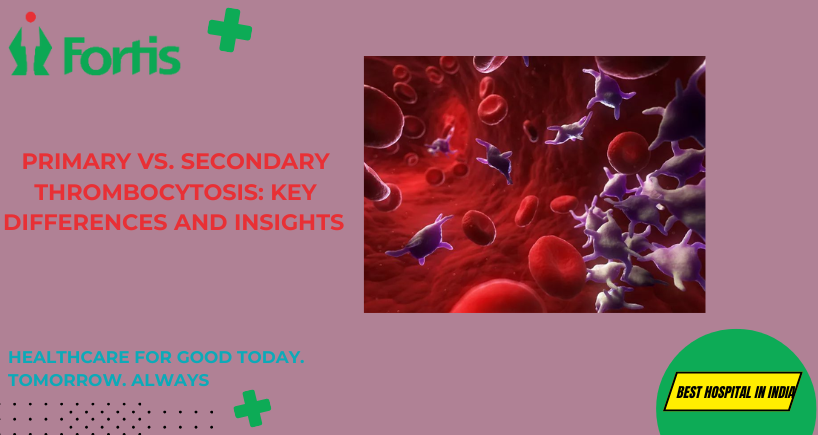


Primary vs. Secondary Thrombocytosis: Key Differences and Insights
A routine blood test can sometimes reveal unexpected information. One such finding is a higher-than-normal number of platelets, the tiny cell fragments in your blood that are essential for clotting. This condition is known as thrombocytosis. For most people, hearing this term for the first time can be confusing and a little alarming. It immediately brings up a host of questions, starting with the most basic: what is thrombocytosis?
It is crucial to understand that thrombocytosis is not a single disease. It is a sign, a laboratory finding that points to an underlying process in your body. The most important step in your medical journey is to determine why your platelet count is high. The answer to this question divides the condition into two very different categories: primary and secondary thrombocytosis. While they share the same name, their causes, risks, and treatments are worlds apart.
What Is Thrombocytosis?
To understand thrombocytosis, you first need to understand platelets. Platelets, or thrombocytes, are small, disc-shaped cell fragments that circulate in your blood. They are produced in your bone marrow. Think of them as your body’s first responders to an injury. When you get a cut, platelets rush to the scene, stick together, and form an initial plug to stop the bleeding, initiating the clotting process.
A normal platelet count typically ranges from 150,000 to 450,000 platelets per microliter of blood. Thrombocytosis is the medical term for when this count is elevated above 450,000. This finding tells your doctor that your bone marrow is producing too many platelets, and the next step is to figure out why.
The Two Main Pathways to a High Platelet Count
The investigation into the thrombocytosis causes leads down two distinct paths. Is the problem with the "factory" (the bone marrow) itself, or is the factory simply responding to an "order" from the rest of the body?
Primary Thrombocytosis (Essential Thrombocythemia)
This is the rarer of the two types. Primary thrombocytosis, more accurately known as essential thrombocythemia (ET), is a disorder of the bone marrow itself. It is a type of myeloproliferative neoplasm, which means the factory has a fundamental defect.
The Cause: In ET, a genetic mutation (most commonly in the JAK2, CALR, or MPL gene) occurs in a bone marrow stem cell. This mutation acts like a stuck accelerator pedal, causing the cell to produce an uncontrolled, excessive number of platelets.
The Platelets: The platelets produced in ET are often abnormal. Not only are they too numerous, but they may not function correctly, paradoxically increasing the risk of both blood clots and bleeding.
The Risk: The primary concern in ET is the increased risk of blood clots forming in the arteries or veins, which can lead to a heart attack, stroke, or a clot in the leg or lung.
Secondary Thrombocytosis (Reactive Thrombocytosis)
This is by far the more common type, accounting for over 80% of all cases of high platelet counts. In secondary, or reactive, thrombocytosis, the bone marrow factory is working perfectly. The high platelet count is a normal reaction to another medical condition happening elsewhere in the body.
The Cause: The body is sending out signals, often inflammatory proteins called cytokines, that tell the healthy bone marrow to ramp up platelet production. The list of potential thrombocytosis causes for this type is long:
Infection: Acute or chronic infections, from pneumonia to tuberculosis, are a very common cause.
Inflammation: Chronic inflammatory diseases like rheumatoid arthritis, inflammatory bowel disease, or vasculitis.
Iron Deficiency: This is a classic cause. For reasons not fully understood, a lack of iron can stimulate the bone marrow to produce more platelets.
Post-Surgery or Trauma: The body's natural healing response to a major surgery or injury involves an increase in platelet production.
Cancer: A high platelet count can sometimes be a sign of an underlying malignancy, particularly lung, stomach, or ovarian cancer.
The Platelets: The platelets produced are normal in function; there are just a lot of them.
The Risk: The risk of blood clots from the high platelet count itself is much lower than in primary thrombocytosis. The main health risks are related to the underlying condition that is causing the reaction.
Differentiating the Thrombocytosis Symptoms
The thrombocytosis symptoms also differ significantly between the two types.
Secondary Thrombocytosis: In most cases, this condition has no symptoms of its own. The symptoms a person experiences are those of the underlying cause. For example, if the cause is rheumatoid arthritis, the symptoms will be joint pain and swelling. If it is an infection, the symptom will be a fever.
Primary Thrombocytosis (ET): While some people have no symptoms, the abnormal platelets and high count can cause specific issues. These can include headaches, dizziness or lightheadedness, a burning sensation or redness in the hands and feet (erythromelalgia), or visual disturbances. More seriously, the first symptom could be that of a blood clot, such as chest pain or stroke-like symptoms.
An Overview of Thrombocytosis Treatment
Because the two conditions are so different, the thrombocytosis treatment strategies are completely opposite.
Treatment for Secondary Thrombocytosis: The treatment is not aimed at the platelets. It is focused entirely on identifying and treating the underlying cause. If you have an infection, you will be given antibiotics. If you have iron deficiency, you will be prescribed iron supplements. Once the underlying condition is resolved, the platelet count will almost always return to normal on its own.
Treatment for Primary Thrombocytosis (ET): The treatment is focused on managing the platelet count and reducing the risk of complications. This is a long-term management plan created by a hematologist. It may include:
Low-Dose Aspirin: This is often prescribed to make the platelets less "sticky" and reduce the risk of blood clots.
Cytoreductive Therapy: For individuals at high risk of clotting, medications like hydroxyurea or anagrelide may be used to lower the platelet count by slowing down their production in the bone marrow.
A Proactive Partnership in Your Hematologic Health
An elevated platelet count on a blood test is a starting point, not a final diagnosis. It is a signal that requires a careful and methodical investigation. Distinguishing between a primary and secondary cause is the most critical step, as it dictates your prognosis and your entire treatment plan.
By working closely with your doctor, you can unravel the "why" behind your high platelet count. This partnership is the key to ensuring you receive the correct diagnosis and the appropriate care, whether that means treating a simple iron deficiency or starting a lifelong management plan for a bone marrow disorder.
Frequently Asked Questions
Q1. Is thrombocytosis a form of cancer?
Ans. This is a common and important question. Secondary (reactive) thrombocytosis is absolutely not cancer. It is a normal reaction to another condition. Primary thrombocytosis (Essential Thrombocythemia) is classified as a chronic myeloproliferative neoplasm, which is a type of slow-growing blood cancer of the bone marrow. However, it is often very manageable and many people live a normal lifespan with it.
Q2. How do doctors tell the difference between primary and secondary thrombocytosis?
Ans. A doctor will start by taking a thorough medical history and looking for any signs of infection, inflammation, or other underlying conditions. They will order blood tests to check for iron deficiency and inflammatory markers. If no secondary cause can be found, they will then test for the specific genetic mutations (like JAK2) that are the hallmark of primary thrombocytosis.
Q3. Can my diet cause a high platelet count?
Ans. There is no specific food that directly causes thrombocytosis. However, a diet that is very low in iron can lead to iron deficiency anemia, which is a well-known cause of secondary thrombocytosis. A balanced diet is important for overall health but is not a direct treatment for a high platelet count.
Q4. What is a normal platelet count?
Ans. A normal platelet count in a healthy adult is typically between 150,000 and 450,000 platelets per microliter of blood. A count above 450,000 is considered thrombocytosis. A count below 150,000 is called thrombocytopenia.
Categories
Clear allRelated Blogs
View all







Keep track of your appointments, get updates & more!

