
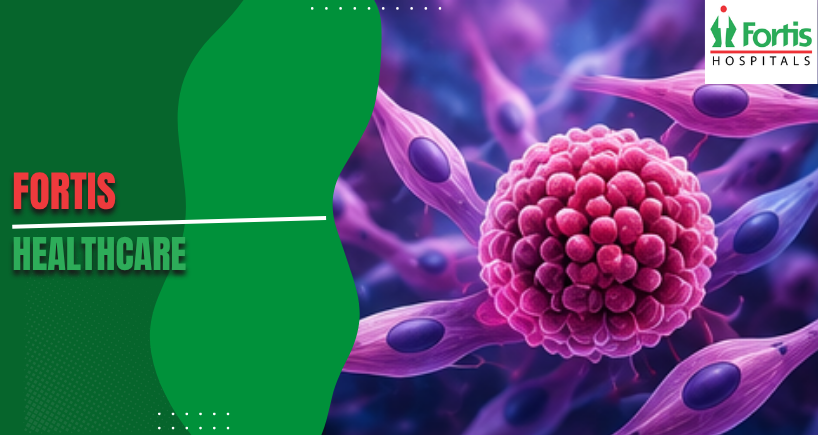


Rhabdomyosarcoma Cancer: A Complete Beginner's Guide
Unlike what most people think about cancer - rhabdomyosarcoma is quite different. It develops from the immature muscle cells of the body and can spread all over the body. It is the most frequent soft tissue sarcoma that doctors find in children. The way it acts and how it spreads is very unlike nearly all other cancers seen in practice.
Rhabdomyosarcoma cancer does not show itself in ways that are easy to anticipate. As it can begin almost anywhere, from inside the eye socket to the bladder, the symptoms depend on its location. Knowing what this tumour is about helps patients, and their families, to understand a diagnosis which, at the beginning, is usually not simple or obvious.
How Rhabdomyosarcoma Differs From Other Soft Tissue Cancers
Soft tissue sarcomas affect the tissues that connect, support and surround other body tissues, but rhabdomyosarcoma is a special case within this group. It comes from mesenchymal cells - the cells that would usually become skeletal muscle when a foetus is developing. Oddly, the tumour appears in places where there isn’t much, or any, working skeletal muscle; these include the eye socket, the bladder, and the area behind the nose and mouth.
Tumours in these places grow rapidly, go into tissue close by, and often spread to nearby lymph nodes before anyone notices symptoms. About forty per cent of all cases are in the head and neck, and that’s why changes in eyesight, unevenness in the face, or unexplained stuffiness of the nose are sometimes the first things people observe. It is common for this to be recognised late, as the symptoms are much like those of far less serious illnesses.
Understanding the Three Rhabdomyosarcoma Types
Rhabdomyosarcoma types are decided by how the cells look under a microscope and the genetic makeup, and not just by where they are. This is important as each type behaves differently biologically, reacts to chemotherapy in a different way, and has a different impact on what will happen with the disease. If all three types were treated the same, results would be much worse than if treatment was chosen depending on the type. That is why getting the type correct is essential before treatment begins.
- Embryonal rhabdomyosarcoma is the most common form; it mainly affects children and is usually in the head, neck, and urinary/reproductive systems.
- Alveolar rhabdomyosarcoma is more aggressive, develops in the arms and legs and main body, and has chromosome changes that are linked to it spreading faster.
- Pleomorphic rhabdomyosarcoma is the least common form, and is almost only seen in adults, and has a cell pattern unlike the other two types.
Recognising Rhabdomyosarcoma Symptoms Before They Escalate
Rhabdomyosarcoma symptoms don’t often come on very quickly. The most common early sign is a lump that is growing, or swelling which has no explanation; what this means depends completely on where it is. The following should receive quick medical attention:
- The eyeball clearly moving forward, because of a tumour behind it in the eye socket
- Blood in urine, but with no signs of infection – especially in younger children under ten
- A blocked nose, or continuous liquid coming from it, which doesn’t get better with normal treatment
- A hard, painless swelling in an arm, leg, or stomach area that is getting bigger
Each of these signs could easily be put down to something less serious. This is exactly why rhabdomyosarcoma symptoms are frequently overlooked when people first see a doctor. The time between the first symptom and a diagnosis being confirmed is often several months, and that affects what treatment options are still available.
Known Causes and Genetic Risk Factors in This Cancer
Most patients with rhabdomyosarcoma do not have a cause that can be identified. The tumour seems to come about from chance errors while muscle cells are developing, and not from the way people live or what they are exposed to in the environment. The lack of a definite cause can be very worrying for families wanting to know why a diagnosis has been made. Genetic advice is available to see if a hereditary issue should be looked into more closely.
Certain inherited illnesses notably increase the risk; Li-Fraumeni syndrome, Beckwith-Wiedemann syndrome, and neurofibromatosis type one are genetic conditions which show a higher rate of occurrence. Children diagnosed with these conditions would benefit from closer monitoring. However, the large number of rhabdomyosarcoma cancers happen in people who have no known genetic problems or family history of the disease.
How Patient Age Shapes the Disease and Its Response
- Rhabdomyosarcoma in children makes up almost all cases found across the world. It is the most common soft tissue sarcoma in patients below the age of fifteen. Childhood cases mostly show the embryonal type and react in a more regular manner to a number of treatments, particularly when the illness is only in one place when first found.
- Rhabdomyosarcoma in adults shows a very different clinical presentation. Adult cases are rarer, usually show the pleomorphic type, and often reach advanced stages before being diagnosed. Specialized Centres such , deal with both groups of people, using special sarcoma programmes, and putting together surgical, medical oncology, and radiotherapy skills in combined care plans.
Staging and Diagnosis Before Any Treatment Begins
Clinical staging puts patients into one of four groups, based on the size of the tumour, whether lymph nodes are involved, and if the cancer has spread to other parts of the body when diagnosed. Group one shows the illness was fully removed and was only in one place. Group four means the cancer has spread to places such as the lungs or bone marrow. Each group directly affects how strong the treatment is and what is expected to happen, so staging is one of the most important parts of the whole clinical process.
To be sure of a diagnosis, a sample of tissue needs to be taken to find the type of cells and to help molecular tests. MRI scans look at how much the illness has spread locally, whilst CT scans look at distant areas to see if it has spread. A bone marrow biopsy is used in some cases. This full diagnostic process forms the base on which all later treatment choices for rhabdomyosarcoma are made.
Treatment Approaches That Address Multiple Disease Factors
For most patients, treatment involves surgery, chemotherapy and radiotherapy in amounts decided by the stage, type and age of the patient. Embryonal rhabdomyosarcoma reacts well to VAC chemotherapy – a treatment using vincristine, actinomycin-D, and cyclophosphamide. This good reaction rate has helped to make a real improvement in survival in children’s cancer treatment over thirty years of clinical trial data and improvements to treatment plans.
Alveolar rhabdomyosarcoma needs more powerful treatment as it is more likely to spread early and is less sensitive to chemotherapy to start with. Radiotherapy plays a bigger part when complete removal by surgery is not possible. Treatments aimed at the PAX-FOXO1 fusion proteins which are specific to this type are still being actively researched by oncologists around the world.
Prognosis, Recurrence Risk, and Life After Treatment
The chances of survival for rhabdomyosarcoma in children; which is in one place and of low risk, have greatly improved over the years through improvements to treatment plans and clinical trial data. In this group, five year survival rates are often over seventy percent. Illness which has already spread is much harder to treat, and the results in cases which have metastasised show how truly difficult the treatment is.
Pleomorphic rhabdomyosarcoma in adults has a less good outlook in most clinical studies. Whereas; Rhabdomyosarcoma in adults of this type have a higher risk of the illness returning even after it seems to have completely gone. Long term follow up, through regular scans and medical checks over several years, remains vital, as late returns of the illness are well known and can happen a long time after the first treatment has finished.
Categories
Clear allRelated Blogs
View all








FAQs

Keep track of your appointments, get updates & more!

