
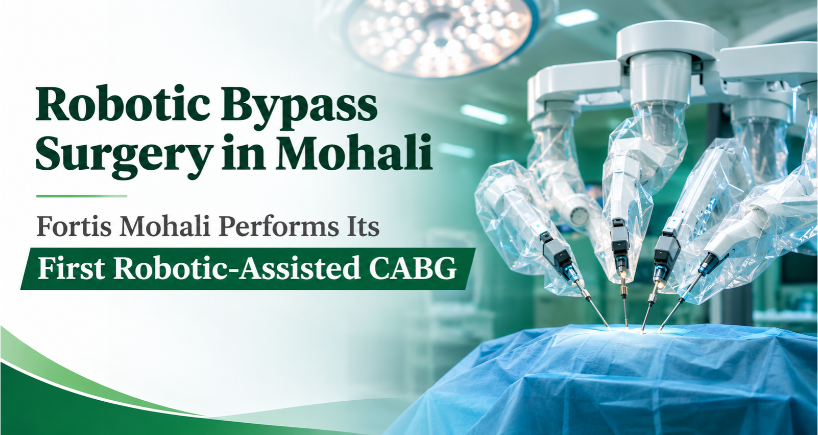


Robotic Bypass Surgery in Mohali - Fortis Mohali Performs Its First Robotic-Assisted CABG
Dr T.S. Mahant and the cardiac surgery team have performed Fortis Hospital, Mohali's first robotic-assisted coronary artery bypass graft (CABG) surgery on the da Vinci Xi, adding a keyhole option for selected patients who need bypass surgery.
Written by Dr T.S. Mahant
Executive Director & HOD, Cardiothoracic and Vascular Surgery, Fortis Hospital, Mohali
MBBS (Medical College, Shimla) · MS, General Surgery and MCh, Cardiovascular and Thoracic Surgery (PGIMER, Chandigarh) · Fellowship in cardiac surgery, University of Alabama at Birmingham, USA
At a glance
- Fortis Hospital, Mohali has performed its first robotic-assisted CABG, led by Dr T.S. Mahant's team on the da Vinci Xi surgical system.
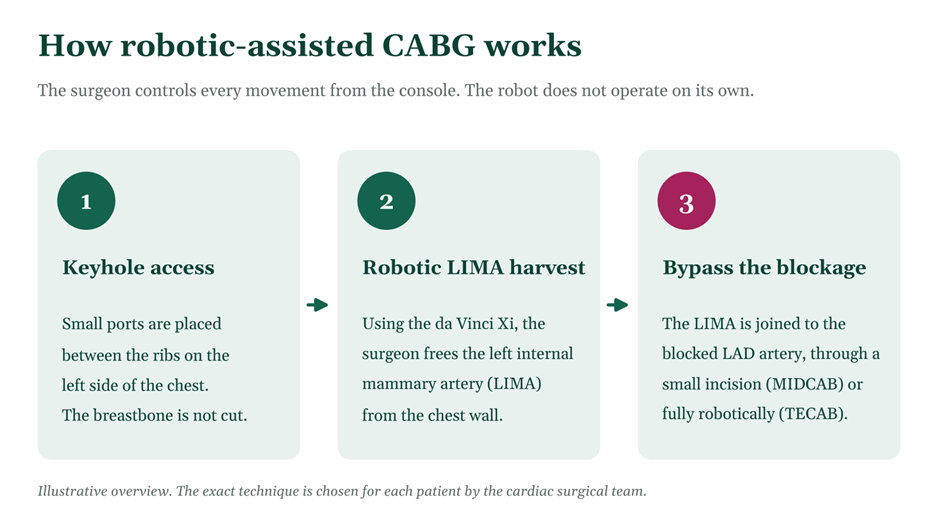
- The surgeon uses the robot to free an artery from the inside of the chest wall (the LIMA) through small ports, then uses it to bypass the blocked artery without cutting the breastbone.
- It suits selected patients, most often those whose key blockage is in the left anterior descending (LAD) artery, sometimes combined with stents for other arteries.
- A heart team decides who is suitable after reviewing the angiogram, heart function and overall health.
Why bypass surgery still matters
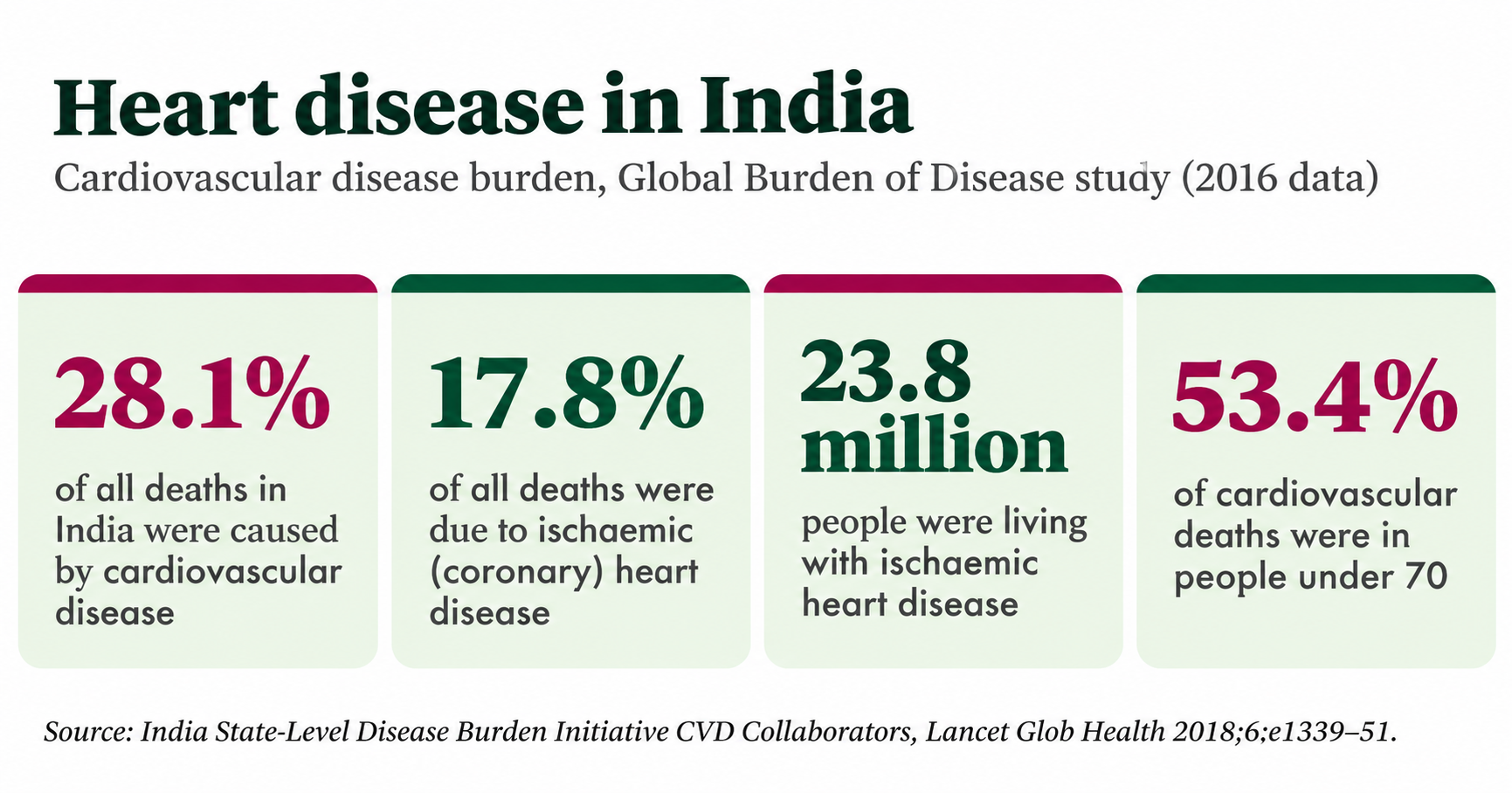
Coronary artery disease is India's leading heart problem. In 2016, cardiovascular diseases caused 28.1% of all deaths in India, up from 15.2% in 1990, and ischaemic heart disease alone caused 17.8%. [1] More than half of these cardiovascular deaths were in people younger than 70. [1]
When blockages are severe, or affect several arteries, coronary artery bypass grafting (CABG) creates a new route for blood to reach the heart muscle. The cornerstone of bypass surgery is the left internal mammary artery (LIMA), an artery on the inside of the chest wall, joined to the left anterior descending (LAD) artery, which supplies the front of the heart. In a landmark study, patients who received a LIMA–LAD graft had better 10-year survival than those who received vein grafts alone. [2]
Conventional CABG reaches the heart through a median sternotomy: an incision of about 20–25 cm down the middle of the chest, with the breastbone divided and wired back together afterwards. It's a proven operation. But the breastbone usually takes around 6–8 weeks to heal, and that shapes how soon people can drive, lift and return to work.
What is robotic-assisted CABG?
Robotic-assisted CABG is bypass surgery in which the surgeon uses a robotic system for part or all of the operation, working through small openings between the ribs instead of opening the breastbone.
The surgeon sits at a console in the operating theatre and controls every movement. The da Vinci Xi doesn't operate on its own. It translates the surgeon's hand movements into smaller, steadier movements of wristed instruments inside the chest, and gives a magnified, high-definition 3D view.
There are three main approaches: [3]
- Robotic-assisted MIDCAB: the robot is used to free the LIMA from the chest wall through keyhole ports. The surgeon then joins it to the LAD by hand through a small incision of a few centimetres on the left side of the chest, usually on a beating heart.
- Totally endoscopic CABG (TECAB): the whole operation, including the connection to the coronary artery, is done robotically through ports.
- Hybrid coronary revascularisation: a robotic LIMA–LAD bypass is combined with stents for blockages in other arteries, planned jointly by the cardiac surgeon and the cardiologist.
Robotic CABG is still offered at relatively few centres worldwide. In the United States, it makes up roughly 1% of all bypass operations. [7]
How it compares with conventional bypass surgery
- Access
Conventional CABG: an incision of about 20–25 cm down the middle of the chest
Robotic-assisted CABG: small ports and/or a small incision between the ribs - Breastbone
Conventional CABG: divided and wired; usually heals over about 6–8 weeks
Robotic-assisted CABG: left intact - Main graft
Conventional CABG: LIMA to LAD, plus vein or other arterial grafts as needed
Robotic-assisted CABG: LIMA to LAD, harvested robotically; more grafts or stents in selected cases - Heart-lung machine
Conventional CABG: often used; some operations are done off-pump
Robotic-assisted CABG: often avoided (beating-heart surgery) - Hospital stay
Conventional CABG: varies; typically several days
Robotic-assisted CABG: often shorter in experienced centres; about 2.4 days on average in one large series [5] - Return to routine
Conventional CABG: several weeks, with breastbone precautions
Robotic-assisted CABG: often quicker; full activities at about 2 weeks in the same series [5] - Suited to
Conventional CABG: most patients, including complex disease in several arteries
Robotic-assisted CABG: selected patients, most often LAD disease or a hybrid plan
Fortis Mohali's first robotic-assisted CABG
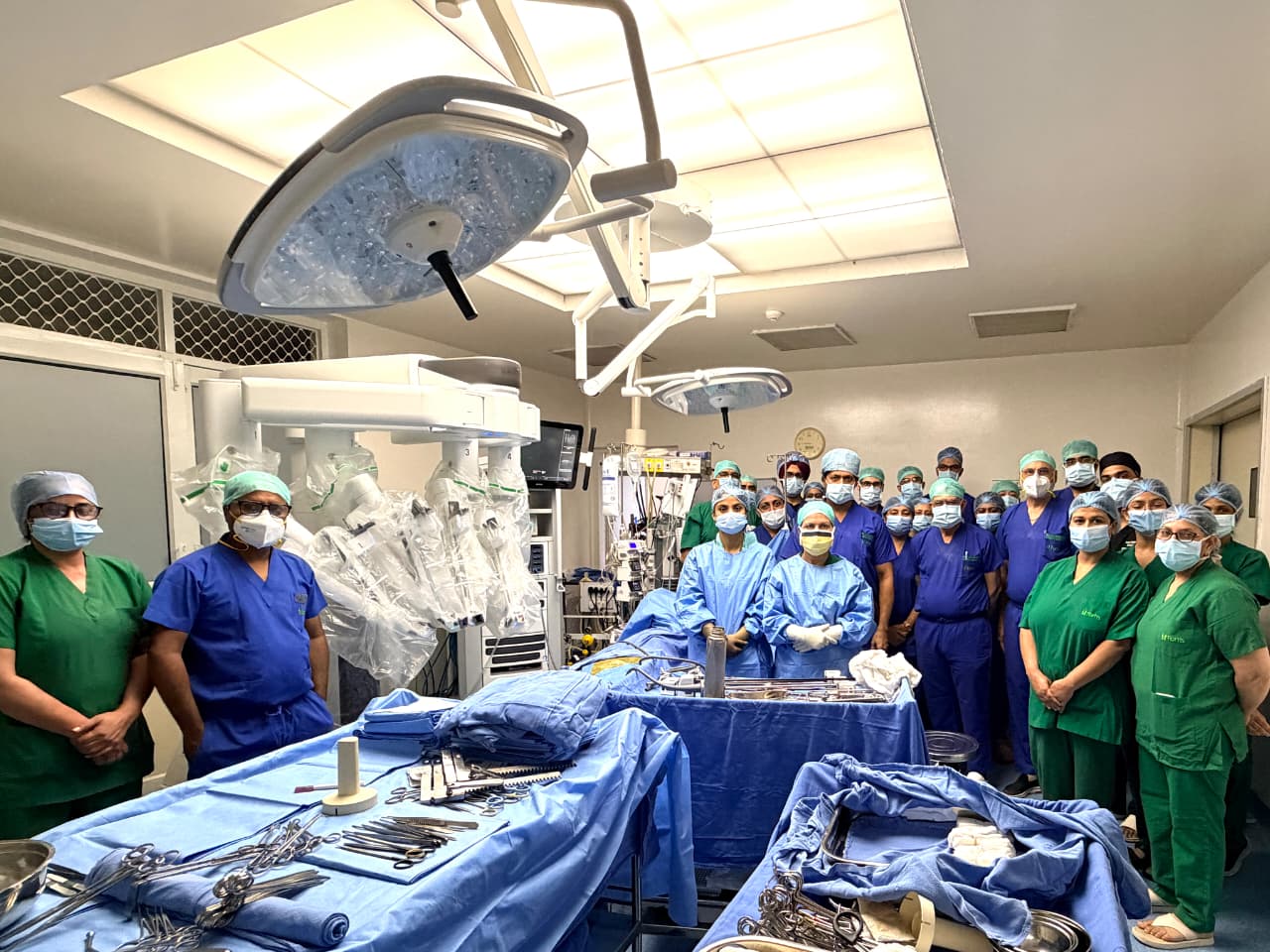
In October 2026, Dr T.S. Mahant and the cardiac surgery team at Fortis Hospital, Mohali performed the hospital's first robotic-assisted coronary artery bypass graft surgery, using the da Vinci Xi surgical system.
The patient, a 72-year-old man, had severe blockage in his LAD artery, confirmed on coronary angiography. After review by the heart team, he was assessed as suitable for a robotic approach.
The team used the da Vinci Xi to harvest the left internal mammary artery through small ports and joined it to the blocked LAD. The breastbone was not divided. The patient was discharged on day 4 after surgery.
The surgical team
- Cardiac surgeons: Dr T.S. Mahant (MS, MCh, MNAMS), Dr Ambuj Choudhary (MS, MCh), Dr Alok Suryavanshi (MS, MCh) and Dr Manish Mahant (DNB, Cardiovascular and Thoracic Surgery)
- Cardiac anaesthetists: Dr Manoranjan Sahoo and Dr Alka Rani Kochar
They were supported by the perfusion, OT nursing and critical care teams.
"For decades, bypass surgery has meant opening the breastbone. Robotic assistance lets us give selected patients the same proven LIMA graft through a much smaller opening. The robot doesn't replace surgical judgement, but in the right patient it can make recovery easier."
— Dr T.S. Mahant
Who may be suitable for robotic-assisted CABG?
Robotic bypass isn't for everyone. It's usually considered for patients who:
- have a significant blockage in the LAD artery that is best treated with a bypass graft
- have disease in more than one artery, where a hybrid plan (robotic LIMA–LAD bypass plus stents) is appropriate
- are stable enough for a planned (elective) operation
- may benefit from avoiding a breastbone incision, such as some people with diabetes or obesity, in whom breastbone wound healing can be a concern [5]
It may not be suitable for patients who:
- need emergency surgery or are unstable
- need several grafts that can't be done safely through a minimally invasive approach
- have had previous surgery on the left side of the chest, or have lung disease that limits the working space
- have target arteries that are very small, buried in the heart muscle or heavily calcified
The final decision rests with a heart team of cardiac surgeons and cardiologists. International guidelines recommend this heart team approach for complex revascularisation decisions. [6]
What recovery looks like
Recovery depends on the procedure and on each patient's health, but a typical path looks like this:
- Day of surgery to day 1: monitoring in the cardiac ICU, sitting up and starting breathing exercises.
- Days 2–5: walking on the ward, removal of chest drains, pain control and discharge planning.
- Weeks 2–4: a gradual return to everyday activities, as advised by the surgical team. There are no breastbone precautions, but heavier lifting is built up slowly.
- Weeks 4–12: cardiac rehabilitation, medicines and control of risk factors such as blood pressure, diabetes, cholesterol and smoking.
In one large US series of robotic beating-heart TECAB, the average ICU stay was about 1.2 days, the average hospital stay about 2.4 days, and patients returned to full activities at around 2 weeks. [5] These figures come from a specialised high-volume centre and won't apply to every patient.
A bypass treats the blockage, not the disease that caused it. Lifelong medicines and lifestyle changes remain essential after any type of bypass surgery.
Is robotic bypass surgery safe?
No heart operation is free of risk. Robotic-assisted CABG carries the risks of any bypass surgery, including bleeding, irregular heart rhythm (atrial fibrillation), infection, kidney injury, heart attack and stroke. Occasionally the surgeon needs to switch to a larger incision or a conventional sternotomy to finish the operation safely. This is a planned safety step, not a failure.
The evidence so far is encouraging for carefully selected patients at specialised centres:
- A systematic review of 44 studies reported early mortality of about 1.0% after robotic-assisted MIDCAB and 1.7% after off-pump TECAB. [3]
- In a US national database analysis, patients having robotic-assisted CABG were younger and had fewer other illnesses, and operative death was not significantly different from conventional CABG. [4]
Large randomised trials comparing robotic and conventional bypass are still lacking, [3] and results depend heavily on the experience of the whole surgical team. [7] That's why patient selection and a structured robotic program matter as much as the technology.
Why choose Fortis Mohali for robotic bypass surgery?
- Decades of cardiac surgery experience: Dr T.S. Mahant has more than 45 years of experience in cardiothoracic surgery and, according to his Fortis profile, has performed over 40,000 open-heart operations. The department's experience includes minimally invasive bypass surgery (MIDCAB).
- An established robotic program: Fortis Mohali has performed robotic surgery on the da Vinci Xi since 2017, with more than 4,000 robotic procedures across specialties and two da Vinci Xi systems.
- A recognised robotic training site: in July 2026, Intuitive designated Fortis Mohali a Total Program Observation (TPO) site, the second in India and the first outside a metro city.
- Round-the-clock cardiac backup: on-site cardiac surgery, cardiac anaesthesia, perfusion and mechanical circulatory support, including IABP and VA-ECMO, are available 24/7.
- One heart team: cardiac surgeons and interventional cardiologists plan care together, including hybrid procedures that combine bypass and stents.
Myth vs Fact
Myth: "The robot performs the surgery."
Fact: The surgeon controls every movement from a console. The robot provides a magnified 3D view and steady, wristed instruments.
Myth: "A smaller cut means minor surgery."
Fact: It's still major heart surgery, with the same goal and similar risks. Only the access is smaller.
Myth: "Robotic bypass uses a weaker graft."
Fact: It uses the same LIMA graft that has long been the standard for the LAD artery. [2] In experienced centres, early LIMA–LAD graft patency has been very high. [5]
Myth: "Anyone who needs bypass can have it robotically."
Fact: Suitability depends on anatomy, the number of blockages and overall health. Conventional CABG remains the right choice for many patients.
Myth: "Robotic surgery is only for young, fit patients."
Fact: Published series include older patients and people with diabetes or obesity. [5] Careful individual assessment is what matters.
Has your doctor advised bypass surgery?
Find out whether robotic-assisted CABG could be an option for you. Book a consultation with Dr T.S. Mahant and the Cardiac Surgery team at Fortis Hospital, Mohali.
Call 72728 72728
Fortis Hospital, Sector 62, Phase VIII, Mohali, Punjab 160062
References
- India State-Level Disease Burden Initiative CVD Collaborators. The changing patterns of cardiovascular diseases and their risk factors in the states of India: the Global Burden of Disease Study 1990–2016. Lancet Glob Health. 2018;6(12):e1339–e1351. doi:10.1016/S2214-109X(18)30407-8
- Loop FD, Lytle BW, Cosgrove DM, et al. Influence of the internal-mammary-artery graft on 10-year survival and other cardiac events. N Engl J Med. 1986;314(1):1–6. doi:10.1056/NEJM198601023140101
- Cao C, Indraratna P, Doyle M, et al. A systematic review on robotic coronary artery bypass graft surgery. Ann Cardiothorac Surg. 2016;5(6):530–543. doi:10.21037/acs.2016.11.08
- Whellan DJ, McCarey MM, Taylor BS, et al. Trends in robotic-assisted coronary artery bypass grafts: a study of The Society of Thoracic Surgeons Adult Cardiac Surgery Database, 2006 to 2012. Ann Thorac Surg. 2016;102(1):140–146. doi:10.1016/j.athoracsur.2015.12.059
- Nisivaco S, Bhasin R, Kitahara H, et al. Bilateral internal thoracic artery grafting in robotic beating-heart totally endoscopic coronary artery bypass: 10-year outcomes. Ann Cardiothorac Surg. 2024;13(4):354–363. doi:10.21037/acs-2024-rcabg-0016
- Lawton JS, Tamis-Holland JE, Bangalore S, et al. 2021 ACC/AHA/SCAI guideline for coronary artery revascularization: a report of the American College of Cardiology/American Heart Association Joint Committee on Clinical Practice Guidelines. Circulation. 2022;145(3):e18–e114.
- Patrick WL, Iyengar A, Han JJ, et al. The learning curve of robotic coronary arterial bypass surgery: a report from the STS database. J Card Surg. 2021;36(11):4178–4186. doi:10.1111/jocs.15945
Disclaimer: This article is for general education only and is not a substitute for medical advice, diagnosis or treatment. Suitability for robotic-assisted CABG, and its benefits and risks, can only be decided after an individual assessment by a qualified cardiac surgeon. Please consult your doctor before making any decision about your treatment.
Categories
Clear allMeet the doctor

- Cardiac Sciences | Adult CTVS (Cardiothoracic and Vascular Surgery) | Paediatric CTVS (Cardiothoracic and Vascular Surgery)
-
 40 Years
-
 1250
Related Blogs
View all






FAQs
What is robotic-assisted CABG?
It's coronary artery bypass surgery in which the surgeon uses a robotic system, such as the da Vinci Xi, to perform part or all of the operation through small openings between the ribs, without dividing the breastbone.
Is robotic bypass surgery available at Fortis Hospital, Mohali?
Yes. Dr T.S. Mahant's team performed the hospital's first robotic-assisted CABG in October 2026. Each patient is assessed individually to decide whether a robotic approach is suitable.
Will my breastbone be cut?
Not in a robotic-assisted CABG. The surgeon works through ports and, in some techniques, a small incision between the ribs. Rarely, the team may need to switch to a conventional incision for safety.
How long does the operation take?
Robotic bypass usually takes several hours, and operating time can be longer than for conventional surgery. Your surgeon will explain what to expect in your case.
How soon can I go home and return to work?
Many patients in published series go home within a few days and return to everyday activities within a few weeks. Your timeline depends on your health, the procedure performed and the kind of work you do.
I already have stents. Can I still have robotic bypass?
Possibly. Previous stents don't automatically rule out robotic CABG. The heart team will review your angiogram to decide the best option.
Is robotic bypass more expensive than conventional bypass?
Robotic surgery usually costs more because of the specialised instruments and system time, and insurance coverage varies by policy. Call 72728 72728 for an estimate based on your case.
What should I bring to my consultation?
Your latest angiography report and CD, echocardiogram report, list of current medicines, and reports for other conditions such as diabetes or kidney disease.

Keep track of your appointments, get updates & more!

