
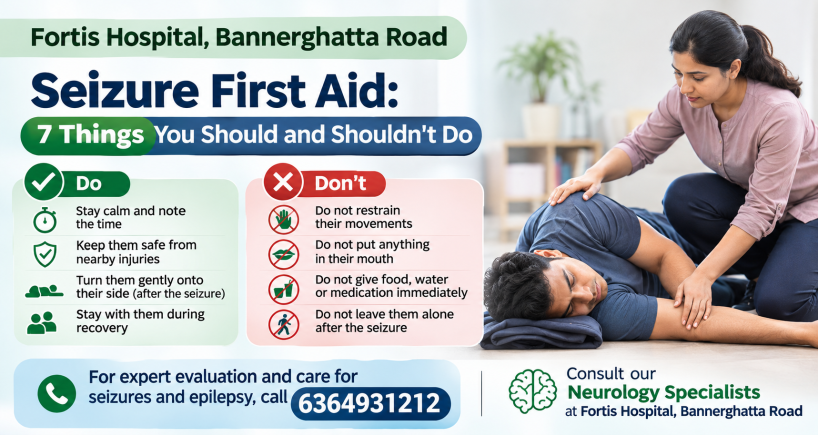


Seizure First Aid 7 Things You Should and Should not Do
Witnessing someone experience a seizure can be frightening, especially when you are unsure how to respond. However, knowing the right first-aid steps can help prevent injuries, protect the person and ensure they receive timely medical attention.
Seizures occur due to sudden, abnormal electrical activity in the brain. They may cause involuntary movements, muscle stiffness, temporary loss of awareness, unusual sensations or changes in behaviour. While some seizures last only a few seconds, others may require immediate medical intervention.
Understanding seizure first aid is important for everyone, including family members, caregivers, teachers and colleagues. Here are seven essential things you should and shouldn't do when someone experiences a seizure.
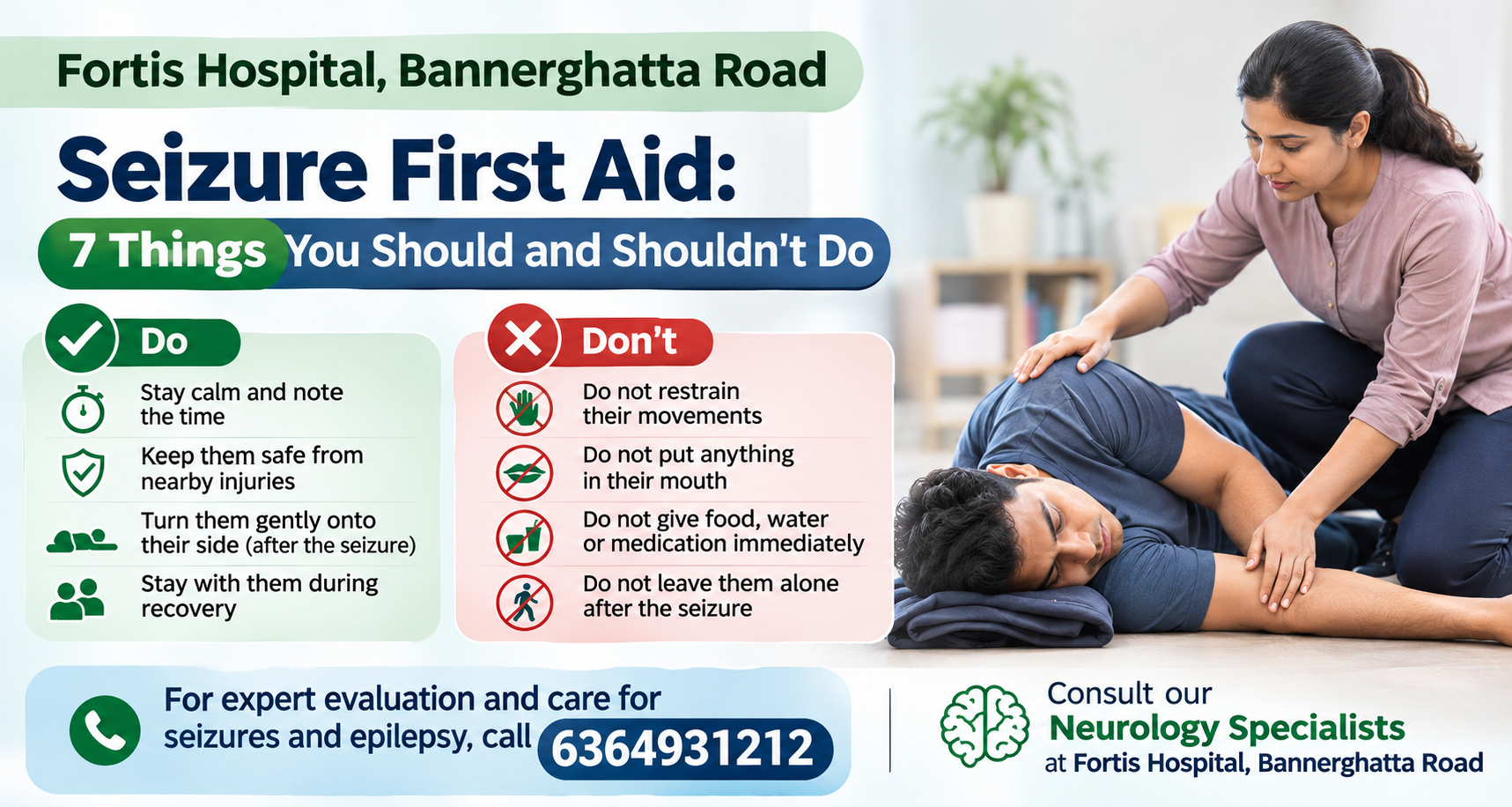
1. Stay Calm and Note the Time
What you should do:
- Stay calm and reassure people around you.
- Note the exact time the seizure begins.
- Observe the person's movements and symptoms.
- Stay with them until they regain awareness.
What you shouldn't do:
- Do not panic or crowd around the person.
- Do not try to restrain their movements.
Most seizures stop on their own within a few minutes. However, timing the seizure is important because a seizure lasting five minutes or longer is a medical emergency.
2. Protect the Person from Nearby Injuries
What you should do:
- Gently move furniture, sharp objects and other hazards away.
- Place something soft, such as a folded jacket, under their head.
- Loosen tight clothing around the neck.
- Remove spectacles if they are wearing them.
What you shouldn't do:
- Do not forcefully hold the person down.
- Do not attempt to stop their jerking movements.
- Do not move them unnecessarily unless they are in immediate danger.
The primary goal is to prevent accidental injuries while allowing the seizure to run its course.
3. Turn the Person Gently onto Their Side When Possible
What you should do:
- Once the jerking movements stop, gently turn the person onto their side.
- Position their mouth slightly downward to allow saliva or fluids to drain.
- Check that they are breathing normally.
What you shouldn't do:
- Do not forcefully turn them during active convulsions.
- Do not leave them lying flat on their back once the seizure has stopped if they are not fully alert.
The recovery position can help maintain an open airway and reduce the risk of choking.
4. Never Put Anything Inside Their Mouth
What you should do:
- Allow the seizure to pass naturally.
- Keep the person's mouth area clear of nearby objects.
- Protect their head and monitor their breathing.
What you shouldn't do:
- Never put fingers, spoons, cloth, water or medicines inside their mouth.
- Never attempt to pull out their tongue.
A common misconception is that people can swallow their tongues during a seizure. This is not true. Putting objects or fingers inside the mouth can cause serious injuries, including broken teeth and choking.
5. Do Not Give Food, Water or Medication Immediately
What you should do:
- Wait until the person is fully awake and able to swallow safely.
- Speak gently and reassure them as they regain awareness.
- Follow their prescribed seizure-management plan, if available.
What you shouldn't do:
- Do not offer water, food or oral medication while they are unconscious, confused or not fully alert.
- Do not attempt to administer medication by mouth during a seizure.
Giving anything orally before the person has fully recovered can increase the risk of choking.
6. Know When to Call for Emergency Medical Help
What you should do:
Call emergency medical services (112 in India) if:
- The seizure lasts five minutes or longer.
- Another seizure begins before the person regains consciousness.
- The person has difficulty breathing or does not regain awareness after the seizure.
- It is their first known seizure.
- They are injured during the seizure.
- The seizure occurs in water.
- The person is pregnant or has another significant medical concern.
What you shouldn't do:
- Do not assume every seizure is harmless.
- Do not delay emergency assistance when warning signs are present.
Prompt medical attention can be critical in prolonged or complicated seizures.
7. Stay with the Person During Recovery
What you should do:
- Stay with them until they are fully alert and oriented.
- Explain calmly what happened.
- Allow them time to rest.
- Check for injuries and seek medical evaluation when appropriate.
- Record how long the seizure lasted and what you observed.
What you shouldn't do:
- Do not leave the person alone immediately after the seizure.
- Do not expect them to return to normal instantly.
- Do not force them to stand, walk or resume activities immediately.
People may experience temporary confusion, tiredness, headache or muscle soreness following a seizure. Reassurance and appropriate medical assessment are important.
When Should You Consult a Neurologist?
A seizure should never be ignored, even if it stops on its own. A medical evaluation helps identify the underlying cause and determine whether further investigations or treatment are necessary.
Consult a neurologist if you or someone you know experiences:
- A first-time seizure.
- Repeated episodes of unexplained loss of awareness.
- Sudden jerking movements or unusual body sensations.
- Brief periods of staring or unresponsiveness.
- Recurrent seizures despite taking prescribed medication.
Depending on the individual's symptoms and medical history, the doctor may recommend investigations such as an EEG (Electroencephalogram), brain imaging or blood tests.
Can Epilepsy Be Treated?
Yes. Many people with epilepsy can achieve good seizure control with appropriate treatment and regular medical follow-up.
Treatment options may include:
- Anti-seizure medications.
- Dietary therapies in selected patients.
- Epilepsy surgery for suitable patients whose seizures do not respond adequately to medication.
- Other specialised treatments based on the type and cause of epilepsy.
Early diagnosis, medication adherence and regular neurological consultations play an important role in managing seizures.
Expert Neurological Care at Fortis Hospital, Bannerghatta Road
At Fortis Hospital, Bannerghatta Road, Bengaluru, patients can access specialised neurological evaluation and care for seizures, epilepsy and other neurological conditions.
Our neurology team focuses on accurate diagnosis, individualised treatment planning and ongoing care to help patients manage neurological conditions and improve their quality of life.
If you or a loved one experiences seizures or unexplained episodes of loss of awareness, seek medical advice from a qualified neurologist.
Don't panic. Don't restrain. Don't put anything in the mouth. Know the right first aid and act promptly.
Book a Neurology Consultation at Fortis Hospital, Bannerghatta Road, Bengaluru.
For Enquiries: 6364931212
Medical disclaimer: This article is intended for general health education and does not replace professional medical advice, diagnosis or emergency treatment. If a seizure lasts five minutes or longer, seek emergency medical assistance immediately.
Categories
Clear allMeet the doctor

- Neurology | Neurology
-
 10 Years
-
 1200
 Available at 1 different locations

Related Blogs
View all



FAQs

Keep track of your appointments, get updates & more!

