
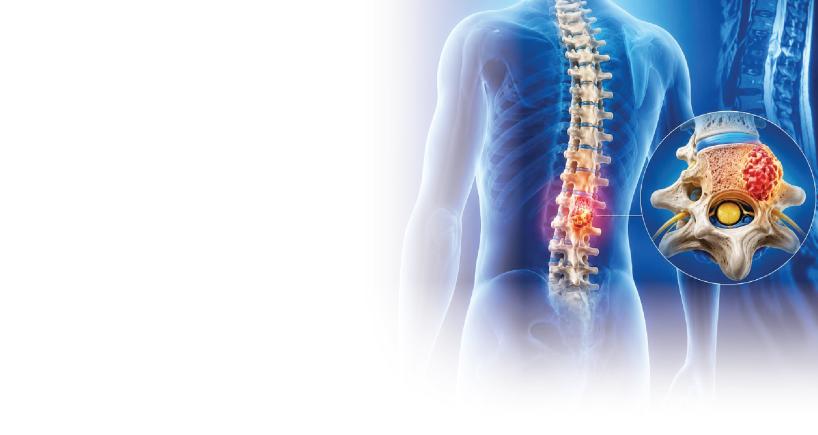


Understanding Spine Tumour
What is a Spine Tumour?
A Spine Tumour is an abnormal growth of cells within or around the spinal nerves cord and spine. These tumours may be benign (non-cancerous) or malignant (cancerous). Depending on their size and location, spine tumours can affect the spinal cord, nerves, bones, and surrounding tissues, leading to pain and neurological symptoms.
Common Symptoms
Symptoms of a spine tumour may develop gradually and can vary depending on the location of the tumour. Common signs include:
- Persistent back or neck pain
- Pain worsening at night
- Weakness in arms or legs
- Numbness or tingling sensation
- Difficulty walking or balancing
- Loss of bladder or bowel control
- Muscle weakness
- Paralysis in severe cases
Causes and Risk Factors
The exact cause of spine tumours is often unknown. Certain factors may increase the risk, including:
- Previous history of cancer
- Genetic disorders
- Exposure to radiation
- Family history of tumours
Diagnosis
Doctors may recommend the following tests to diagnose a spine tumour:
- Neurological examination
- MRI Spine(contrast enhanced)
- CT Scan
- X-rays
- Biopsy
Types of spine tumors
There are 3 types of spine tumors basesd on there location
- Bony spine tumors – They arise inside bone and gradually increase in size. They are cancers in most cases and need urgent treatment.
- Intra-dural extra – Medullary tumors (IDEM)-they are most often non-cancerous and ned excision only. Usually they are neurofibroma or meningioma.
- Intra-medullary tumor- They are located inside the spinal cord and difficult to treat . They can be cancerous in half of the cases.
Treatment Options
Treatment depends on the type, size, and location of the tumour as well as the patient’s overall health. Treatment options may include:
- Surgery
- Minimally invasive spine surgery
- Radiation therapy
- Chemotherapy
- Targeted therapy
- Rehabilitation and physiotherapy
Why Early Diagnosis Matters
Early detection and treatment can help prevent permanent nerve damage, preserve mobility, and improve quality of life. Hence, Persistent back pain or neurological symptoms should never be ignored.
Recovery and Follow-Up
Recovery depends on the type of tumour and treatment performed. Regular follow-up visits, imaging scans, and rehabilitation may be required for optimal recovery.
When to Seek Immediate Medical Help
Seek urgent medical attention if you experience:
- Sudden weakness in the arms or legs
- Difficulty walking
- Loss of bladder or bowel control
- Severe back pain with numbness
- Sudden paralysis
Categories
Clear allMeet the doctor

- Neurosurgery | Neurosurgery | Neuro and Spine Surgery
-
 20 Years
-
 1500
1500
 Available at 1 different locations

Related Blogs
View all

Head Injury: Better Be Safe Than Sorry



Traumatic Brain Injury: Symptoms, Causes and Management





FAQs
Are all spine tumours cancerous?
No. Some spine tumours are benign, while others may be malignant and require specialized treatment.
Can spine tumours be treated successfully?
Many spine tumours can be managed effectively with surgery, radiation, or other advanced therapies.
Can spine tumours cause paralysis?
If left untreated, some spine tumours may compress the spinal cord and lead to serious neurological complications.
What are the gadgets needed for a successful spine tumor surgery?
We need an Operational microscope, Neuro-navigation, Neuro-monitoring, CUSA, specialised cautry and suction machine along with intra-operative fluoroscopy for a good spine tumor surgery.

Keep track of your appointments, get updates & more!

