
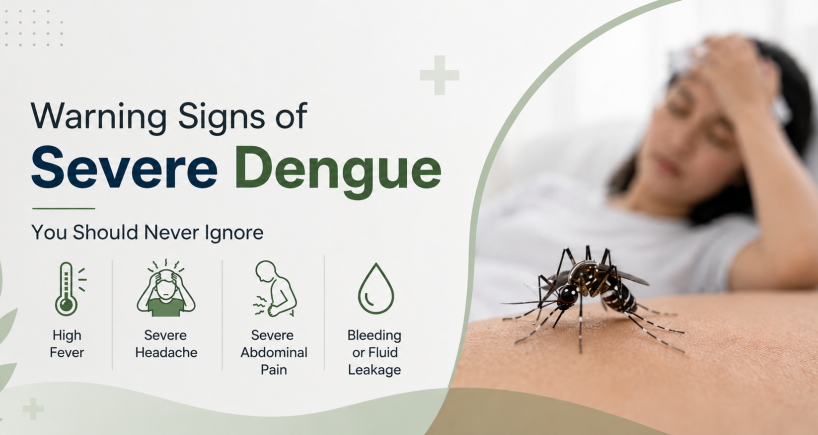


Warning Signs of Severe Dengue You Should Never Ignore
Every monsoon, hospitals across Gurugram and Manesar see a sharp rise in dengue cases. Most patients recover fully with rest, fluids, and monitoring. But in a small percentage of cases, dengue can progress into a life-threatening condition called severe dengue (dengue hemorrhagic fever/dengue shock syndrome) — and recognizing the warning signs early can mean the difference between a full recovery at home and a critical hospital admission.
As an internal medicine specialist at Fortis Hospital Manesar, I see this pattern every season: patients feel like their fever is "getting better" right before the dangerous phase begins. This is the most misunderstood — and most critical — part of dengue.
The Three Phases of Dengue Fever
Understanding the disease timeline helps explain why warning signs are so easy to miss.
- Febrile phase (Day 1–3): High fever, body aches, headache, and fatigue.
- Critical phase (Day 3–7): Fever may drops — this is the phase where severe dengue develops, often mistaken for recovery.
- Recovery phase (Day 7 onward): Fluid reabsorption and gradual improvement, if no complications occurred.
The critical phase is where warning signs must be watched most closely — not the days of high fever.
Warning Signs of Severe Dengue You Should Never Ignore
Seek immediate medical attention at your nearest hospital emergency department if you or a family member experiences any of the following:
- Severe abdominal pain or persistent vomiting
- Bleeding from the gums, nose, or blood in vomit/stool
- Rapid breathing or difficulty breathing
- Fatigue, restlessness, or irritability
- Cold, clammy skin
- Sudden drop in body temperature after high fever, followed by lethargy
- Liver enlargement or tenderness
- A rapid decrease in platelet count along with rising hematocrit levels
- Reduced urine output
- Fainting or loss of consciousness
If any of these symptoms appear — especially between day 3 and day 7 of illness — do not wait for a scheduled follow-up. This is the window where dengue shock syndrome can develop rapidly.
Understanding Platelet Count in Dengue
One of the most common questions I get from patients and families in Manesar and Gurugram is: "What platelet count is dangerous in dengue?"
While platelet count alone doesn't determine severity, a rapid drop combined with warning signs (not the number in isolation) is what matters clinically. This is why self-monitoring at home without medical supervision can be risky — regular blood tests and clinical evaluation together give a complete picture, not the platelet count alone.
Who Is at Higher Risk of Severe Dengue?
- Children and elderly patients
- Pregnant women
- People with diabetes, hypertension, or other chronic conditions
- Patients who have had dengue before (secondary dengue infection carries higher risk)
- Anyone with delayed diagnosis or treatment
When to Visit Fortis Hospital Manesar for Dengue Care
If you or a family member in Manesar, Gurugram, or the surrounding NCR region is experiencing fever during monsoon season along with any of the warning signs above, prompt evaluation matters more than home remedies or waiting it out.
At Fortis Hospital Manesar, our internal medicine and critical care teams are equipped for:
- Rapid dengue NS1/IgM testing
- Platelet and hematocrit monitoring
- IV fluid management for dehydration
- ICU-level care for dengue shock syndrome, if required
Prevention Tips for This Monsoon Season
- Eliminate standing water around your home (coolers, flower pots, terraces)
- Use mosquito repellents and nets, especially during early morning and dusk
- Wear full-sleeved clothing during peak mosquito activity hours
- Keep surroundings clean — report stagnant water in your locality to municipal authorities
Categories
Clear allMeet the doctor

- Internal Medicine | Internal Medicine
-
 21 Years
-
 1200
1200
Related Blogs
View all






FAQs
How do I know if my dengue is turning severe?
Watch for the critical phase (day 3–7), especially warning signs like abdominal pain, bleeding, breathlessness, or restlessness — even if fever has reduced.
Can dengue be fatal?
Severe dengue can be fatal without timely treatment, but with early recognition and proper hospital care, most patients recover fully.
Is there a dengue specialist near Manesar?
Yes. Dr. Hatinder Jeet Singh Sethi, Internal Medicine Specialist at Fortis Hospital Manesar, evaluates and manages dengue cases including complicated and severe presentations.
What should I eat during dengue recovery?
Hydration is key — coconut water, ORS, and soft, easily digestible foods. Your treating doctor may recommend specific dietary guidance based on your platelet trend and symptoms.

Keep track of your appointments, get updates & more!

