
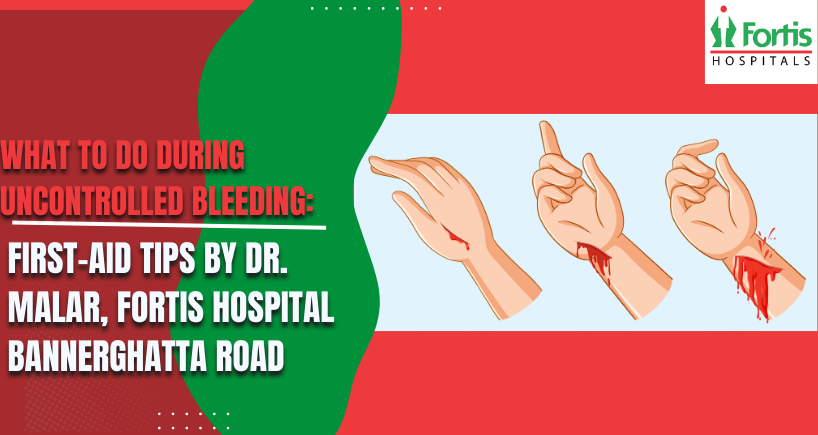


What to Do During Uncontrolled Bleeding: First-Aid Tips by Dr. Malar, Fortis Hospital Bannerghatta Road
Uncontrolled bleeding can be alarming, whether it occurs due to an accident, injury, or a sudden medical emergency. Quick and correct first-aid measures can help prevent excessive blood loss and stabilize the patient until professional medical help is available.
In this blog, Dr. Malar from Fortis Hospital Bannerghatta Road shares simple, life-saving steps you can follow if you encounter someone with uncontrolled bleeding—especially in the arms or legs.
1. Stay Calm and Apply Immediate Pressure
The very first step in managing bleeding is applying firm, direct pressure on the wound.
- Use a clean cloth or sterile gauze.
- Press gently but firmly on the bleeding area.
- This helps in slowing down or stopping blood flow.
2. Layer, Don’t Remove
If the bleeding continues:
- Do not remove the initial cloth or gauze — removing it can worsen the bleeding.
- Instead, add more layers on top of the first one and continue applying pressure.
3. Use a Pressure Bandage if Needed
When bleeding is persistent despite pressure and layering, you may apply a pressure bandage:
- Wrap the area firmly but not too tight.
- Ensure circulation is not completely cut off unless absolutely necessary.
Once bandaged, rush the patient to the nearest hospital for further evaluation and treatment.
4. Elevate the Affected Limb
If the injury is on the arm or leg:
- Elevate the limb above heart level, if possible.
- This reduces blood flow to the area and helps minimize blood loss.
5. Use a Tourniquet Only If You Are Trained
Tourniquets are specialized, belt-like devices used to stop severe bleeding when other methods fail.
- Apply only if you are trained and aware of the correct technique and time duration.
- Incorrect use can cause nerve or tissue damage.
If you are not trained, avoid using a tourniquet and rely on pressure, elevation, and quick transfer to a medical facility.
6. Seek Immediate Medical Attention
First aid can slow bleeding, but professional medical care is essential.
After giving initial care, take the patient to the nearest medical center or emergency room at Fortis Hospital Bannerghatta Road for proper treatment and evaluation.
When to Visit Fortis Hospital Bannerghatta Road
- Persistent or heavy bleeding
- Deep cuts or injuries
- Suspected fractures with bleeding
- Bleeding that does not stop after 5 to 10 minutes of pressure
- Signs of shock (dizziness, fainting, pale skin)
Fortis Hospital Bannerghatta Road offers 24×7 emergency care with expert trauma physicians, advanced facilities, and rapid response teams to ensure timely, specialized medical attention.
Categories
Clear allRelated Blogs
View all







Keep track of your appointments, get updates & more!

