
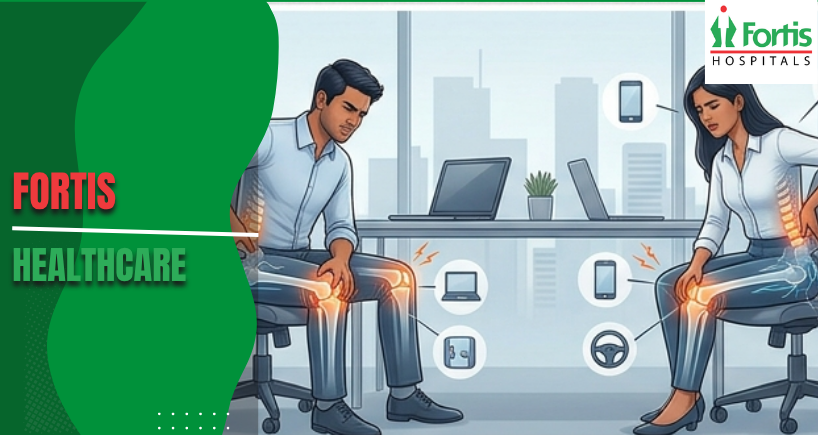


Why More Young Indians Are Experiencing Joint Pain
For many years, joint pain was mostly linked with ageing. Today, however, doctors are seeing a very different pattern. A growing number of younger Indians are developing persistent pain in their knees, neck, shoulders, and lower back much earlier in life.
Long hours spent sitting, reduced physical activity, rising obesity levels, poor posture, stressful routines, and excessive screen exposure are changing the way musculoskeletal problems appear in younger adults. Many people in their 20s and 30s now complain of stiffness, back discomfort, and movement-related pain that earlier generations often experienced much later.
Unfortunately, these symptoms are frequently ignored or brushed aside as routine tiredness. Over time, however, untreated strain on joints and muscles can start affecting mobility, productivity, sleep quality, and overall quality of life.
Understanding Joint Pain
Joints are the areas where two bones meet and move together. They allow the body to bend, rotate, walk, lift, and perform everyday movements smoothly.
Pain can develop when:
- Cartilage wears down
- Muscles become weak
- Ligaments are strained
- Inflammation develops
- Joints are overloaded repeatedly
Joint discomfort may appear suddenly after injury or slowly over time due to lifestyle habits and repetitive stress.
Why Younger Adults Are Developing Joint Problems Earlier
Several modern lifestyle patterns are contributing to this shift.
Reduced Daily Movement
One of the biggest contributors is physical inactivity.
Many young professionals spend most of the day:
- Sitting at desks
- Working on laptops
- Driving long distances
- Using phones for hours
- Avoiding physical activity due to busy schedules
When the body remains inactive for prolonged periods, muscles supporting the joints gradually weaken. This places additional pressure on bones, joints, and ligaments.
Poor Sitting Habits and Body Alignment
Incorrect posture places constant strain on the spine and surrounding joints.
Common issues include:
- Leaning toward screens
- Slouching while sitting
- Working without back support
- Looking downward at mobile phones for long periods
These habits can slowly affect the neck, shoulders, upper back, and lower spine.
Weight Gain and Increased Joint Pressure
Extra body weight places continuous pressure on joints that support movement, especially:
- Knees
- Hips
- Ankles
- Lower back
Even a small increase in body weight can increase stress on the knee joints during walking and climbing stairs.
With obesity rates rising among younger Indians, orthopaedic concerns are also increasing rapidly.
Exercise Without Proper Technique
While fitness awareness has improved, injuries related to improper exercise are also becoming common.
Young adults often:
- Start intense workouts suddenly
- Skip warm-ups
- Use incorrect form
- Overtrain without recovery
This may lead to:
- Muscle strain
- Ligament injuries
- Knee pain
- Shoulder instability
- Spine-related discomfort
Vitamin Deficiencies
Deficiency of vitamin D and calcium is another overlooked factor.
Low vitamin D levels can affect:
- Bone strength
- Muscle function
- Joint support
- Recovery from physical stress
Urban indoor lifestyles and limited sunlight exposure are worsening this problem in India.
Stress and Lack of Sleep
Stress can increase muscle tightness and inflammation in the body.
People under constant work pressure often experience:
- Neck stiffness
- Shoulder tightness
- Back pain
- Reduced physical recovery
Poor sleep can further worsen pain sensitivity and muscular fatigue.
Symptoms That Should Not Be Ignored
Occasional soreness after physical activity is common, but persistent symptoms may require evaluation.
Warning signs include:
- Joint stiffness in the morning
- Pain during walking or climbing stairs
- Neck pain after screen use
- Swelling around joints
- Reduced flexibility
- Clicking sounds during movement
- Difficulty standing for long periods
- Pain that keeps returning
Ignoring these signs may increase the risk of long-term joint problems.
Which Areas Are Commonly Affected?
Doctors commonly see pain involving:
- Knees
- Neck
- Lower back
- Shoulders
- Wrists
- Hips
Neck and spine discomfort has become particularly common among people working long hours on computers and mobile devices.
Can Young Adults Develop Arthritis?
Yes.
Although arthritis is often associated with ageing, some forms can affect younger adults as well.
Inflammatory conditions such as:
- Rheumatoid arthritis
- Ankylosing spondylitis
- Psoriatic arthritis
can develop earlier and may require long-term medical management.
Persistent swelling, severe morning stiffness, or pain affecting multiple joints should always be medically assessed.
When Is Medical Attention Necessary?
Consulting an orthopaedic specialist is important if:
- Pain lasts for several weeks
- Swelling does not improve
- Joint movement becomes difficult
- Pain affects sleep or daily activity
- Symptoms worsen gradually
- There is a previous injury history
Early diagnosis can help prevent worsening joint damage and improve recovery outcomes.
How Joint Pain Is Evaluated
Doctors usually begin with a detailed assessment of symptoms, posture, mobility, and medical history.
Physical Examination
This helps assess:
- Range of movement
- Joint stability
- Muscle strength
- Swelling and tenderness
Imaging Tests
Depending on symptoms, doctors may recommend:
- X-rays
- MRI scans
- CT scans
Blood Investigations
Blood tests may help identify inflammatory or autoimmune causes.
At Fortis Hospital Delhi, orthopaedic specialists use advanced diagnostics and personalised treatment planning to identify the exact cause of joint pain and improve long-term mobility.
Treatment Approaches for Joint Pain
Treatment depends on the severity and underlying cause.
Lifestyle Correction
Simple daily modifications can reduce pressure on joints:
- Taking movement breaks
- Improving sitting posture
- Using ergonomic workstations
- Managing body weight
- Increasing physical activity
Physiotherapy and Rehabilitation
Physiotherapy helps strengthen muscles supporting the joints and improves flexibility and posture.
It may help reduce:
- Stiffness
- Pain
- Muscle imbalance
- Restricted movement
Medication Support
Doctors may prescribe medicines to control:
- Pain
- Inflammation
- Muscle spasms
Medication should always be taken under professional supervision.
Advanced Orthopaedic Care
In some cases, specialised treatment may include:
- Joint injections
- Sports injury management
- Minimally invasive procedures
- Surgical intervention for severe joint damage
Protecting Joint Health at a Young Age
Preventive care can significantly reduce long-term joint problems.
Stay Physically Active
Regular movement helps maintain flexibility and muscle strength.
Maintain Correct Posture
Proper screen positioning and sitting alignment reduce strain on the spine.
Avoid Sitting Continuously
Taking short movement breaks throughout the day supports joint health.
Prioritise Nutrition
Adequate calcium, protein, and vitamin D intake support bones and muscles.
Exercise Carefully
Proper warm-up, recovery, and exercise technique are essential.
Conclusion
Joint pain among younger Indians is becoming increasingly common due to modern lifestyle habits, prolonged sitting, reduced physical activity, and rising stress levels. What may begin as mild discomfort can gradually develop into persistent mobility issues if ignored.
The encouraging part is that many joint-related problems can be managed or prevented through early intervention, healthy movement habits, posture correction, and timely medical care.
If joint pain has started interfering with your routine activities or quality of life, consulting an orthopaedic specialist at Fortis Healthcare can help identify the underlying issue and support long-term joint health.
Categories
Clear allMeet the doctor

- Orthopaedics | Sports Medicine | Orthopaedics and Spine Surgery | Orthopaedic Oncology | Robotic and Computer navigated Joint reconstruction | Orthopaedics and Joint Replacement
-
 25 Years
-
 1500
1500
Related Blogs
View all






FAQs
Why are young Indians experiencing joint pain more frequently?
Inactive lifestyles, obesity, prolonged sitting, poor posture, stress, and screen overuse are major contributing factors.
Can excessive screen use affect joints?
Yes. Long hours of screen use can strain the neck, shoulders, wrists, and spine due to poor posture.
Is joint pain at a young age reversible?
Many cases improve significantly with lifestyle changes, physiotherapy, posture correction, and timely treatment.
Can obesity worsen joint pain?
Yes. Excess body weight increases pressure on joints, especially the knees and lower back.
When should someone see an orthopaedic specialist?
Persistent pain, swelling, reduced movement, or symptoms affecting daily activities should be medically evaluated.

Keep track of your appointments, get updates & more!

