
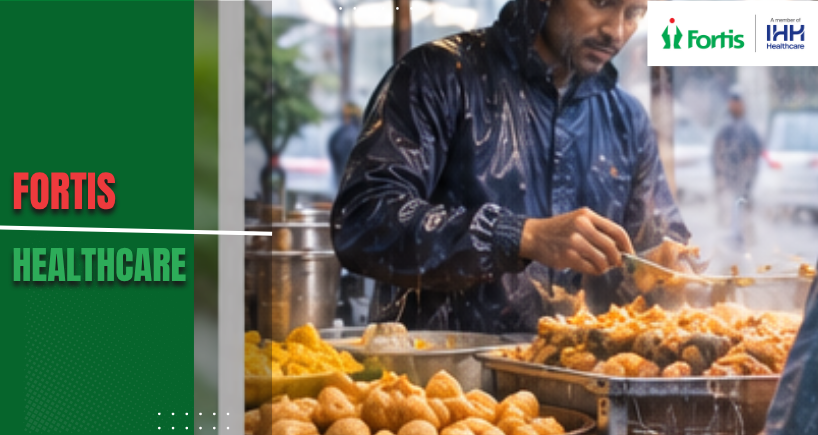


Why Street Food Becomes Riskier in the Rain Food Poisoning Explained
That plate of chaat on the way home, the roadside momos in the drizzle, the cut fruit at the corner stall — in the monsoon, the same street food you enjoy all year can carry a much higher risk of food poisoning. The rain doesn't just make the city wetter; it changes the conditions in which bacteria, viruses and contaminated water reach your food.
Most monsoon food poisoning isn't bad luck. It follows a predictable pattern of warmth, moisture and contamination that peaks in the rainy months — and understanding that pattern is the simplest way to protect yourself.
Quick takeaways
- Warmth and humidity in the monsoon let food-poisoning bacteria multiply far faster, so food spoils sooner than it looks or smells.
- Rain mixes sewage and runoff into water supplies, and that contaminated water reaches food through washing, ice and drinks.
- Cut fruit, chutneys, salads, cold cooked food and anything washed in untreated water are among the higher-risk monsoon items.
- Most cases settle with rest and rehydration, but blood in the stool, high fever, persistent vomiting or signs of dehydration need a doctor.
Why the monsoon changes the math on street food
In warm, humid weather, common food-poisoning bacteria can multiply rapidly when food is left out at around room temperature. Monsoon humidity keeps surfaces, utensils and ingredients damp, which helps bacteria and mould thrive.
At the same time, heavy rain overwhelms drains and can mix sewage with the water used to wash produce, make ice, rinse plates or prepare drinks. Waterlogging and flies do the rest, carrying germs from waste to open food.
Power cuts during storms break the 'cold chain', so chutneys, dairy, cut fruit and cooked food that should stay refrigerated sit out and spoil. None of this is visible — the food can look and smell perfectly normal.
| Monsoon factor | What happens | Why it raises your risk |
|---|---|---|
| Higher humidity & warmth | Bacteria multiply quickly on damp food and surfaces | Food spoils faster than it looks or smells |
| Contaminated water | Sewage and runoff mix into water used for washing, ice and drinks | Germs reach food even when it was cooked properly |
| Flies & waterlogging | Insects carry germs from waste to uncovered food | Open, roadside food is exposed repeatedly |
| Power cuts | Refrigerated items sit at room temperature | Cut fruit, dairy and cooked food turn unsafe |
The germs behind monsoon food poisoning
Food poisoning is an umbrella term for infection or irritation of the gut from contaminated food or water. In the monsoon, the usual culprits include bacteria such as Salmonella, E. coli, Shigella and Vibrio, and viruses such as norovirus, rotavirus and hepatitis A and E.
Different bugs cause slightly different illness — some bring watery diarrhoea, others fever and cramps, and a few (like hepatitis A and E) affect the liver and appear days to weeks later. Only a doctor, and sometimes a stool or blood test, can tell them apart when that matters.
'It looked fine and I felt fine' — why that isn't reassurance
Contaminated food usually looks, smells and tastes completely normal. You can't see bacteria, and many people who prepare or serve food while carrying an infection have no symptoms themselves.
Symptoms also take time to appear. Depending on the germ, food poisoning can start within a couple of hours or only after a day or two — which is why the meal you blame is often not the one that made you ill.
| Level | What you may notice | What to do |
|---|---|---|
| Mild | Loose stools, mild cramps, nausea, still hydrated and passing urine normally | Rest and rehydrate at home; see a doctor if it doesn't settle in a day or two |
| Moderate | Repeated vomiting, several loose stools a day, low-grade fever, feeling drained | Consult a doctor; oral rehydration is important |
| Severe / emergency | Blood in stool or vomit, high fever, severe stomach pain, little or no urine, dizziness or confusion | Seek medical care urgently |
Who needs to be extra careful
Anyone can get food poisoning, but some people are more likely to become seriously unwell and dehydrated. They should be especially cautious with monsoon street food.
- Infants, young children and older adults, who dehydrate quickly.
- Pregnant women, in whom some infections (such as hepatitis E and listeria) can be more serious.
- People with diabetes, kidney or liver disease, or a weakened immune system.
- Anyone recovering from a recent illness or surgery.
How to eat street food more safely in the monsoon
You don't have to give up street food entirely, but a few habits sharply reduce the risk during the rainy season.
- Choose food cooked fresh and served piping hot in front of you, over anything pre-cut or left sitting out.
- Skip raw items washed in untreated water — cut fruit, salads, sprouts and uncooked chutneys.
- Avoid ice and cold drinks from unknown water sources; prefer sealed bottled or boiled/filtered water.
- Watch for basic hygiene: covered food, clean surfaces, and the vendor not handling cash and food with the same hand.
- When in doubt, eat at home — pack a meal on days you know you'll be out in the rain.
Rehydration: the part that actually matters
Most food poisoning is self-limiting and improves in a day or two. The real danger is dehydration from fluid lost in vomiting and diarrhoea, especially in children and older adults.
Oral rehydration solution (ORS) and safe fluids help replace what's lost. If someone can't keep fluids down, is passing very little urine, or seems drowsy, they need medical care rather than home management — your doctor will guide treatment and whether any tests or medicines are needed.
Warning signs that need a doctor
- Blood in the stool or vomit.
- High fever, or fever lasting more than 2–3 days.
- Signs of dehydration: very little urine, dry mouth, dizziness, sunken eyes, drowsiness.
- Persistent vomiting that prevents keeping any fluids down.
- Severe or worsening abdominal pain.
- Yellowing of the eyes or skin (possible hepatitis).
- Symptoms in a baby, an older adult, a pregnant woman or someone with diabetes or low immunity.
Categories
Clear allMeet the doctor

- Gastroenterology and Hepatobiliary Sciences | Gastroenterology | Gastroenterology and Hepatobiliary Sciences
-
 5 Years
-
 1250
1250
Related Blogs
View all
When Is A Liver Transplant Recommended?
Alcoholic Liver Disease - Why Worry?

Binge Drinking Trend Is The New Silent Killer


Irritable Bowel Syndrome

Digestive Disorders And Prevention


FAQs

Keep track of your appointments, get updates & more!

